Episode Details
Back to Episodes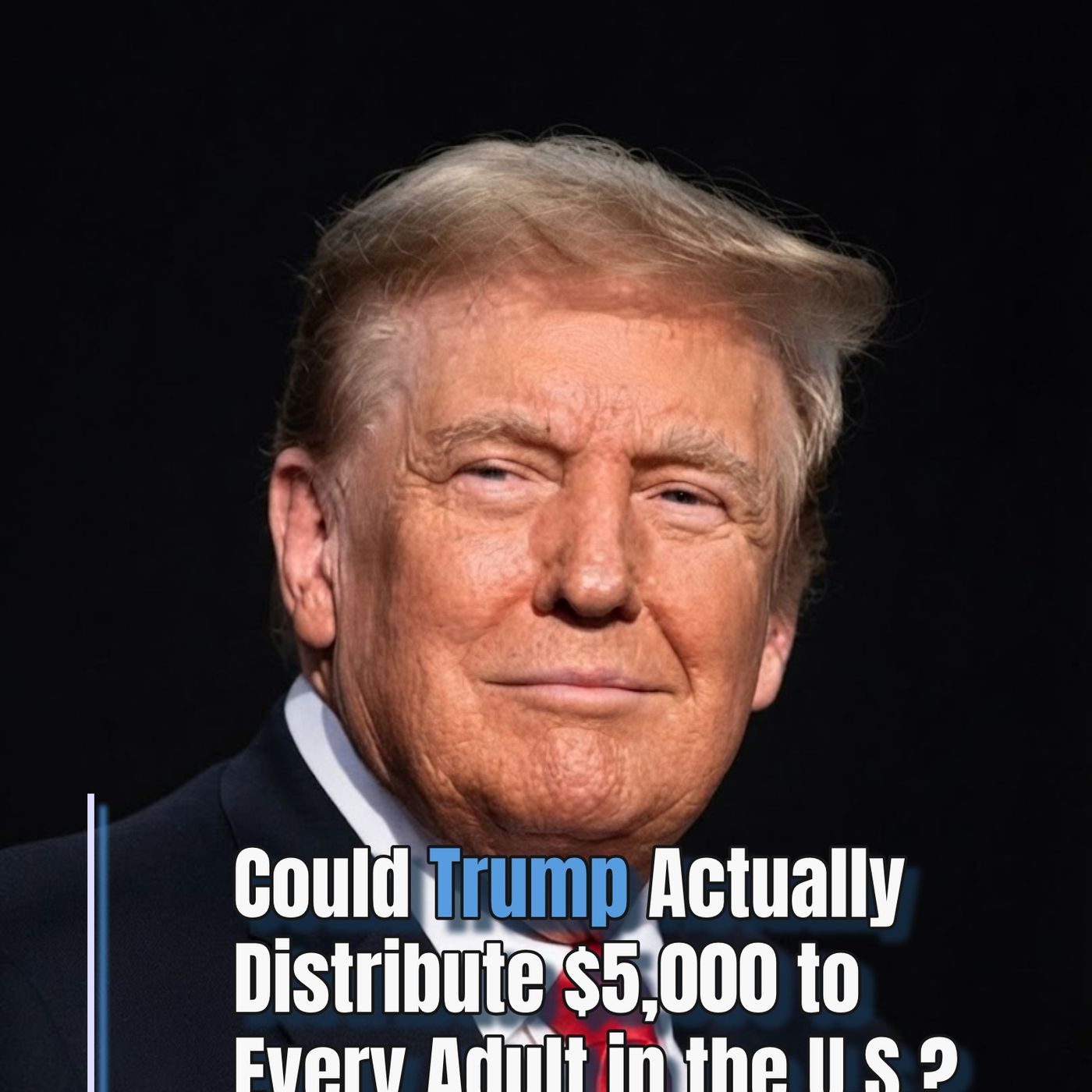
Opinion: Could Trump Actually Distribute $5,000 to Every Adult in the U.S.?
Published 2 weeks, 6 days ago
Description
President Donald Trump has genuinely pledged to distribute $5,000 to every American adult as part of his campaign, though this commitment comes with significant conditions.
He has branded this initiative the "Trump dividend" and explicitly made it contingent on Republicans securing complete control of both the House of Representatives and the Senate in the 2026 Midterm Elections. The payments would only materialize if this electoral outcome occurs.
The feasibility of executing this plan faces considerable obstacles.
Distributing $5,000 to every U.S. adult citizen would require an expenditure between $1.2 trillion and $1.3 trillion.
The President lacks the unilateral authority to authorize such a massive disbursement. Congressional legislation would be necessary, and such a bill would encounter formidable resistance stemming from inflation concerns and worries about expanding the national debt.
Trump has proposed that tariff revenue increases and robust economic growth could fund the initiative. Nonetheless, economists point out that existing U.S. tariff revenues fall substantially short of the trillion-plus dollars required to finance these checks.
Even prominent Republican figures harbor reservations. Florida Governor Ron DeSantis, for instance, has criticized the proposal, cautioning that it would trigger "additional debt and inflation." Conversely, Vice President JD Vance has suggested that high-income earners might eventually be ineligible for the payments.
Based on current polling data, voters approach the pledge with considerable doubt.
An early October 2026 Economist-YouGov Poll revealed that merely 21% of registered voters believe Trump would definitely or probably honor the promise, whereas 57% express skepticism regardless of a Republican electoral victory.
According to NBC News Poll data, only 21% of respondents stated that supporting the $5,000 check would increase their likelihood of voting for a candidate.
Though the $5,000 post-election check remains largely speculative campaign rhetoric, the Trump administration has been leveraging existing government resources to distribute considerably smaller, tangible payments.
A singular $90 direct deposit, drawn from the Medicare Improvement Fund, is set to reach 20.8 million beneficiaries. Simultaneously, Affordable Care Act recipients are receiving one-time $500 "refund" payments that are actively being sent to approximately 950,000 individuals who purchase full-price, unsubsidized health insurance plans via the federal marketplace.