Episode Details
Back to Episodes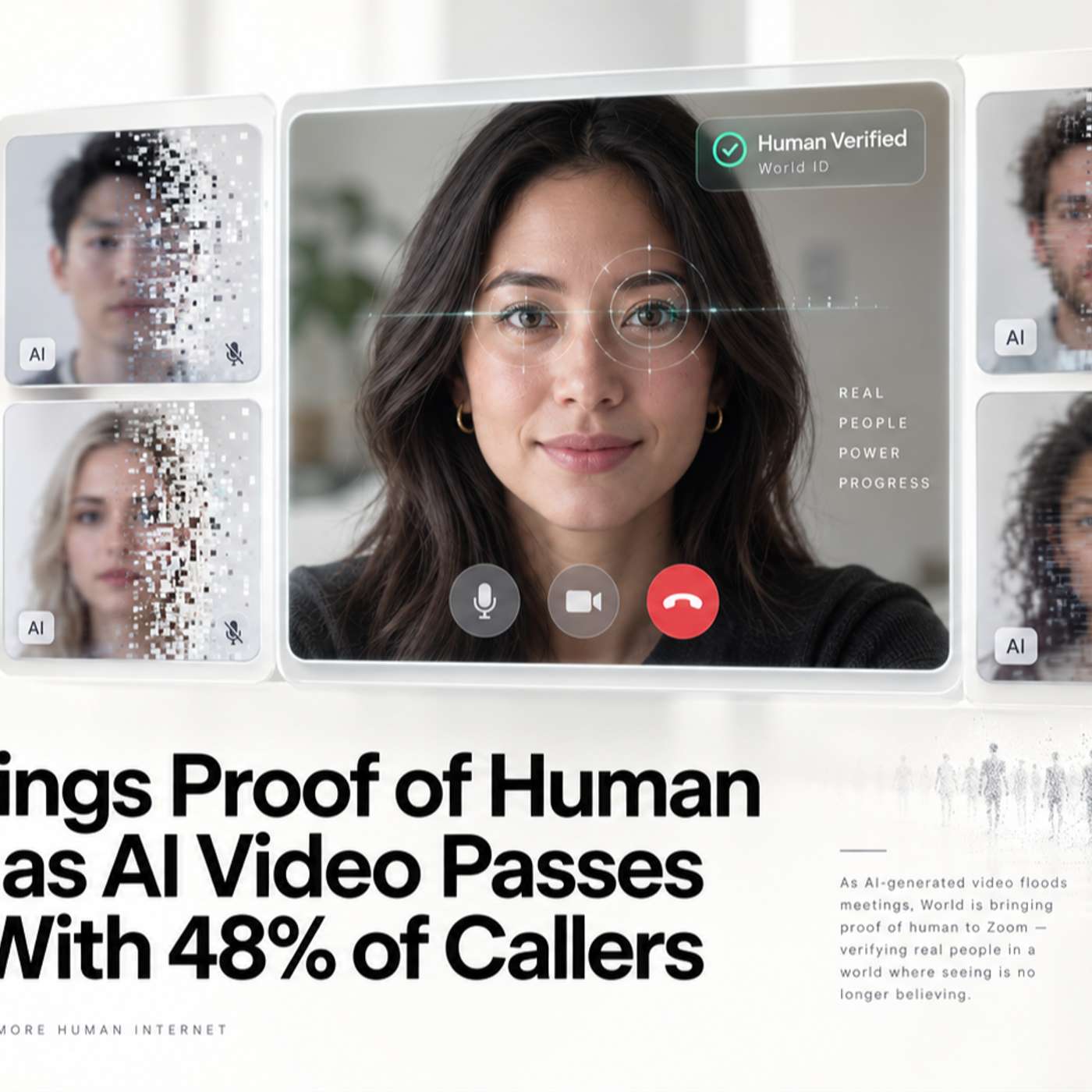
World Brings Proof of Human to Zoom as AI Video Passes for Real With 48% of Callers
Description
This story was originally published on HackerNoon at: https://hackernoon.com/world-brings-proof-of-human-to-zoom-as-ai-video-passes-for-real-with-48percent-of-callers.
World is bringing proof of human to Zoom calls and AI agents after a video model passed for human with 48% of callers. Here is how World ID works.
Check more stories related to undefined at: https://hackernoon.com/c/undefined.
You can also check exclusive content about #world, #ai-and-ml, #web3, #good-company, #technology, #turing-test, #ai-agents, #world-id, and more.
This story was written by: @ishanpandey. Learn more about this writer by checking @ishanpandey's about page,
and for more stories, please visit hackernoon.com.
Tavus says its Griffin-Lite model was judged human by 48% of people after a one-minute live video call, against 2.4% for its earlier system.
Griffin scores 3.83 out of 5 on NVIDIA's VideoFDB generation track against 3.92 for humans, closing 92% of the gap from the next-best system.
Meta's Muse and OpenAI's dots launched three weeks apart in September alongside the invite-only Instinct, putting personal AI agents into mainstream use.
Bots made up 51% of web traffic in 2024 while Deloitte expects generative AI to push US fraud losses to as much as $40 billion by 2027.
World ID for Zoom runs a three-way match of an Orb image, a phone selfie and the live video frame to show a Verified Human badge.
World ID for Agents lets a verified person delegate proof of human to an agent through zero-knowledge proofs, with Okta, Vercel, Exa and Browserbase building on it.
Nearly 18 million people across 160 countries have verified at a World Orb.