Episode Details
Back to Episodes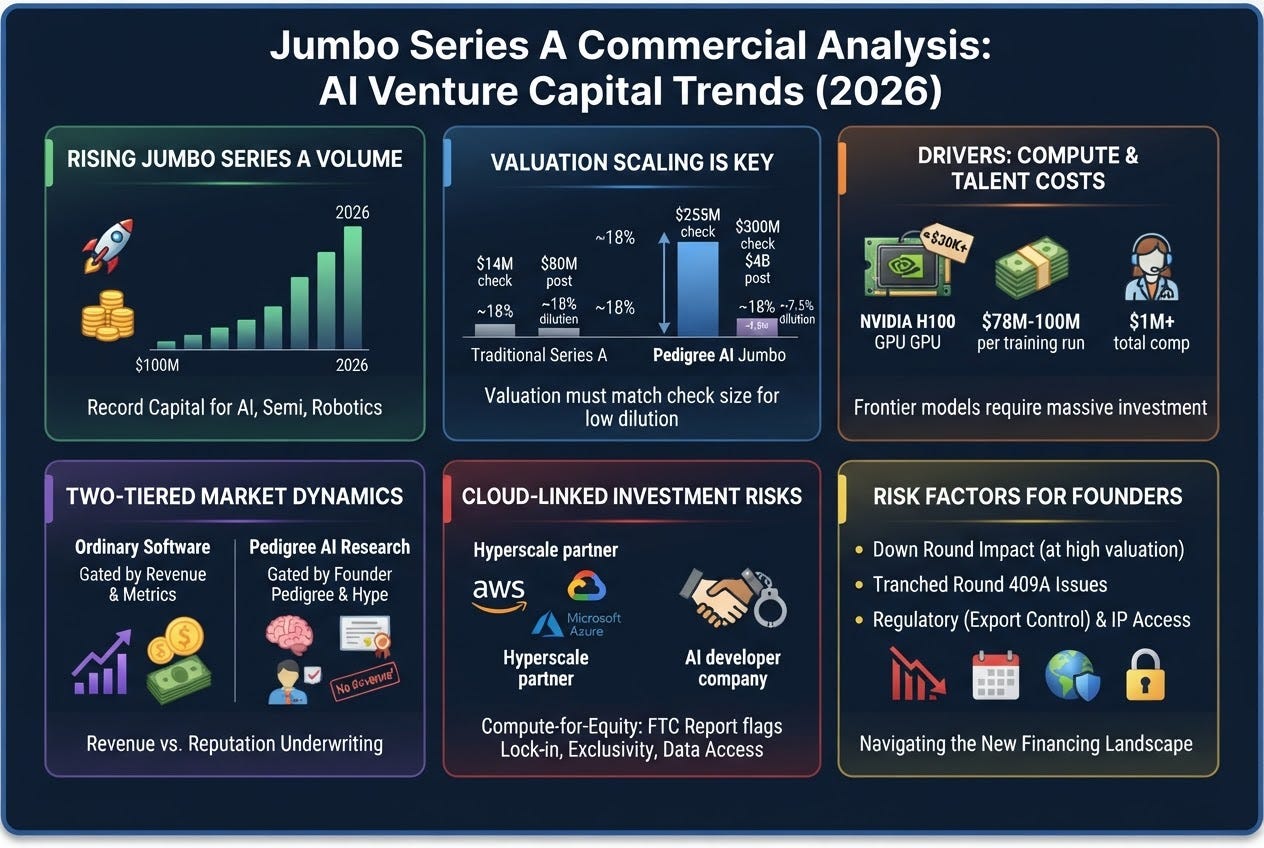
Nine Figure Series A Rounds
Description
A term sheet for two hundred fifty five million dollars arrived at Fundamental in February 2026 pricing the company at a one point four billion dollar post money valuation, and the founders gave up about eighteen percent of the business, the same percentage a traditional fourteen million dollar Series A has cost founders for years. That single fact answers the question most founders are asking backward. The size of the check does not set the price of the round. The credibility of the valuation does, and in 2026 that credibility is being extended almost entirely to teams with research pedigree from a handful of frontier laboratories.
Most founders read a headline about a nine figure Series A and ask whether they need one to compete. The better question is what the money actually buys, because the answer splits cleanly along a line most coverage of this trend skips. A company fine tuning an existing model, selling into an enterprise customer base, and growing revenue the way Series A companies have grown it since the term sheet was invented does not need nine figures, and raising that much against a valuation the business cannot support turns a defensive round into the worst financing decision a board can make. A company planning to train its own foundation model, or to hire away the researchers who know how, is playing an entirely different and more expensive game.
Start with compute. OpenAI’s GPT-4 training run has been estimated at between seventy eight million and one hundred million dollars, and a single NVIDIA H100 processor costs roughly thirty thousand dollars at retail, so a cluster large enough to matter runs into the tens of millions of dollars in hardware before anyone pays for power or data center space. Now add talent. A staff engineer at Anthropic carried total compensation of roughly one point twenty five million dollars in 2026, with about eight hundred forty three thousand dollars of that in equity, and Meta was reported to have offered signing packages as high as one hundred million dollars to individual researchers it tried to poach from OpenAI in 2025. A fourteen million dollar Series A, the reported 2026 median, covers neither one training run nor a research team paid at that scale. That gap, not a desire to chase headlines, is what pushed round sizes into nine figures for the companies actually competing on frontier research.
The ownership math is less brutal than it looks, for the companies that can command the premium. Ricursive Intelligence raised three hundred million dollars in February 2026 against a four billion dollar post money valuation, a dilution of roughly seven and a half percent, lower than what a traditional Series A costs a far smaller company. The arithmetic only turns punishing when the valuation does not keep pace with the check, the scenario a company raises into when it lacks the pedigree the market is currently paying a premium for and still needs the cash.
Pedigree, not product market fit, now sets the underwriting standard for a specific slice of the market, and one 2026 round makes the point starkly. A company founded by a former Google DeepMind scientist raised an eleven million dollar first tranche at roughly a fifty five million dollar pre money valuation, then closed a second tranche of one point one billion dollars at a four billion dollar pre money valuation within weeks, a markup exceeding seventy times, backed by a syndicate that included Lightspeed Venture Partners, Index Ventures, DST Global, and Sequoia Capital. The company had no revenue and no near term product launch. New employees joining after the second tranche closed were, by one founder’s own account common across this corner of the market, typically told only the final, higher valuation, not the price the earliest investors actually paid. In three decades of papering venture financings, I had not previously seen a single Series A price the same security twice at a seventy times sprea