Episode Details
Back to Episodes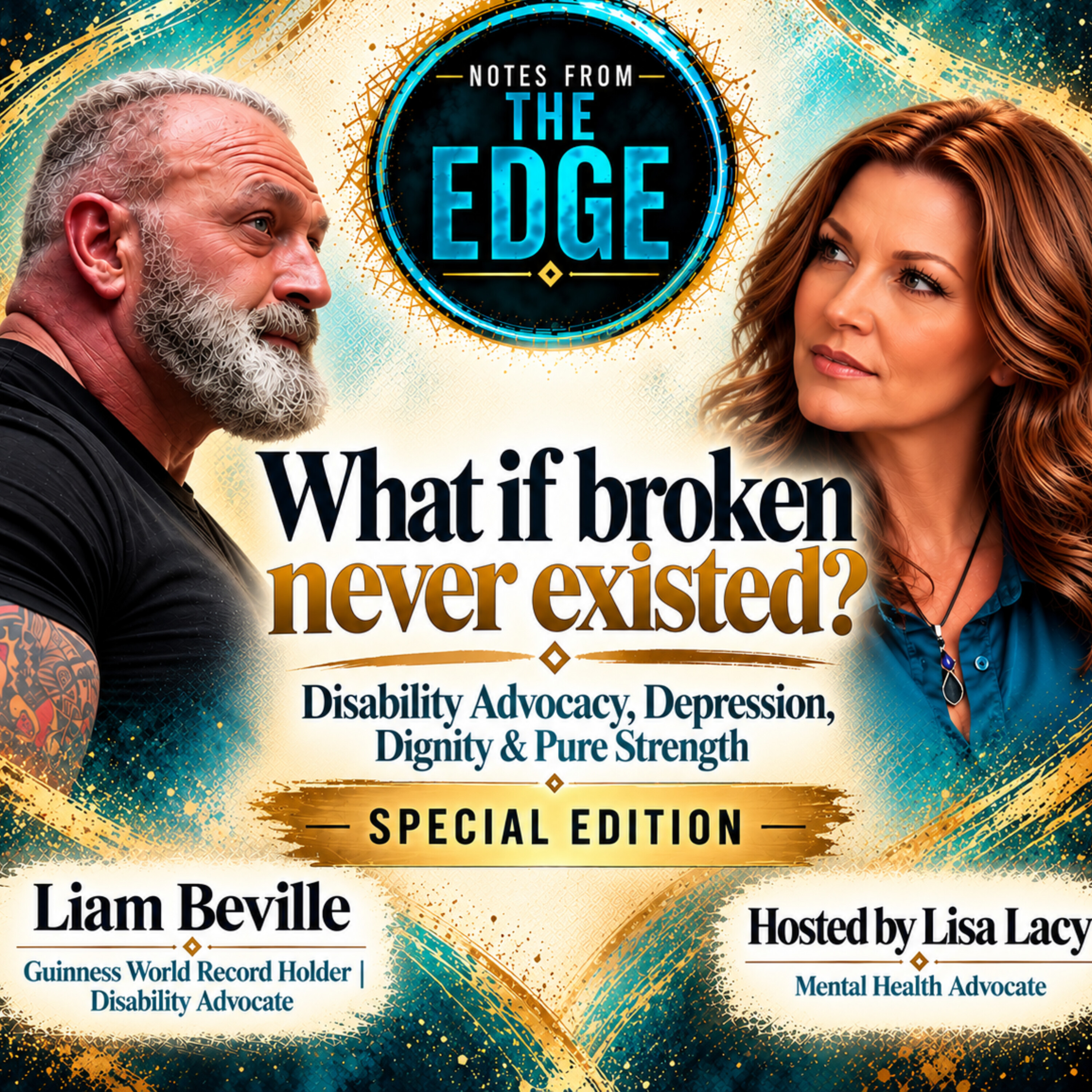
SPECIAL EDITION; The Unbroken Conversation with Liam Beville
Description
Why a special edition? Because every once in a while, a conversation happens at the Edge that feels too important to wait its turn on the calendar. This is one of those conversations.
At 18 years old, Liam Beville pushed a friend out of the path of a stolen car and took the impact himself. Both of his legs were shattered, his right knee was severely damaged, and he was told he might never walk again.
He did more than walk again.
Liam became an elite powerlifter, Guinness World Record holder, disability advocate, speaker and author. But underneath the records, the weights and four decades of competition was another story.
For years, Liam practiced the way he walked so people would not see his limp.
Strength became more than something he demonstrated. It became something he performed.
In this special edition of Notes From the Edge, Lisa Lacy and Liam talk about what happens when survival becomes identity, when resilience starts looking like a mask, and what it means to finally acknowledge the parts of ourselves we worked so hard to hide.
In this conversation:
• Why Liam focused on rebuilding his mind before rebuilding his body after catastrophic injury
• The depression, PTSD and loss of dignity that accompanied his recovery
• How rehabilitation eventually led him into 40 years of competitive powerlifting
• Why Liam spent years hiding his disability, including practicing how he walked so others would not see his limp
• What changed when he stopped seeing disability as something that diminished his strength and began allowing it to become part of his story
Liam is a Guinness World Record holder, internationally ranked powerlifter, disability advocate and brand ambassador for Active Disability Ireland. His upcoming memoir, Unbroken: The Liam Beville Story, tells the larger story of survival, performance, identity and resilience.
Connect with Liam Beville:
Connect with Lisa Lacy:
Listener’s Note:
Resilience is not the absence of pain, disability, fear or limitation. Sometimes the strongest thing we can do is stop performing strength long enough to acknowledge what happened to us.
Liam’s story is a reminder that adapting is not surrender, asking for help is not weakness, and accepting the parts of yourself that changed does not erase who you were before. Survival may require a performance for a season. Healing often begins when you realize you no longer have to keep performing it.
What did you perform in order to survive?
Welcome to the Edge.
See Privacy Policy at https://art19.com/privacy and California Privacy Notice at https://art19.com/privacy#do-not-sell-my-info.