Episode Details
Back to Episodes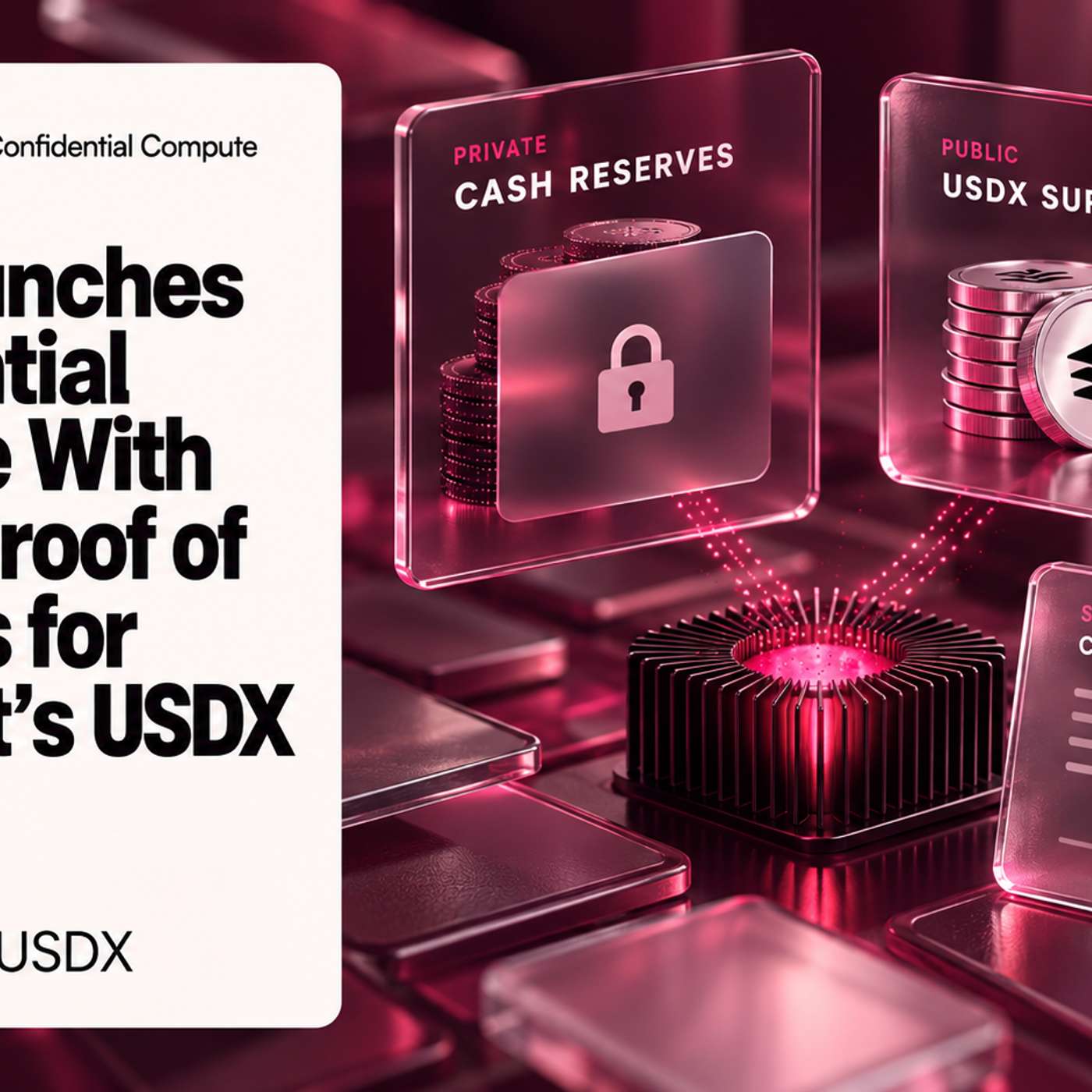
Flare Launches Confidential Compute With Private Proof of Reserves for Hex Trust's USDX
Description
This story was originally published on HackerNoon at: https://hackernoon.com/flare-launches-confidential-compute-with-private-proof-of-reserves-for-hex-trusts-usdx.
Flare launches Confidential Compute on Songbird so smart contracts can verify private institutional data, starting with Proof of Reserves for Hex Trust's USDX.
Check more stories related to tech-stories at: https://hackernoon.com/c/tech-stories.
You can also check exclusive content about #flare, #usdx, #tokenization, #web3, #good-company, #fintech, #stablecoin, #hex-trust, and more.
This story was written by: @ishanpandey. Learn more about this writer by checking @ishanpandey's about page,
and for more stories, please visit hackernoon.com.
Flare, the blockchain for data, has brought Flare Confidential Compute (FCC) to Songbird, its canary network, to process private institutional data and return signed results that smart contracts can verify onchain without the data itself becoming public.
Hex Trust's USDX is the first stablecoin to use the technology through a Proof of Reserves extension that checks a public reserves amount and a restricted cash reserves amount against USDX supply inside a trusted execution environment and publishes only whether USDX is backed one for one or better.
USDX is a collateral asset in the FAssets system on Songbird and its feed is migrating to the reserve-based reference, which also gives decentralised exchanges a basis for pricing the token.
Each result is signed by a machine running code whose hash has been approved onchain, with every instruction authorised by a weighted majority of the data providers that already operate the Flare Time Series Oracle and the Flare Data Connector.
FCC went live on Songbird after the acceptance of STP.13 in July 2026 on machines running on Google Cloud confidential computing and operated by the Flare Foundation, with a Flare mainnet deployment to follow separately and the framework opening to builders later in the bootstrap period.
Other planned applications include lending markets that combine public prices with private coverage data, tokenised funds that calculate verifiable net asset values from undisclosed holdings and credit or compliance records that must stay private.