Episode Details
Back to Episodes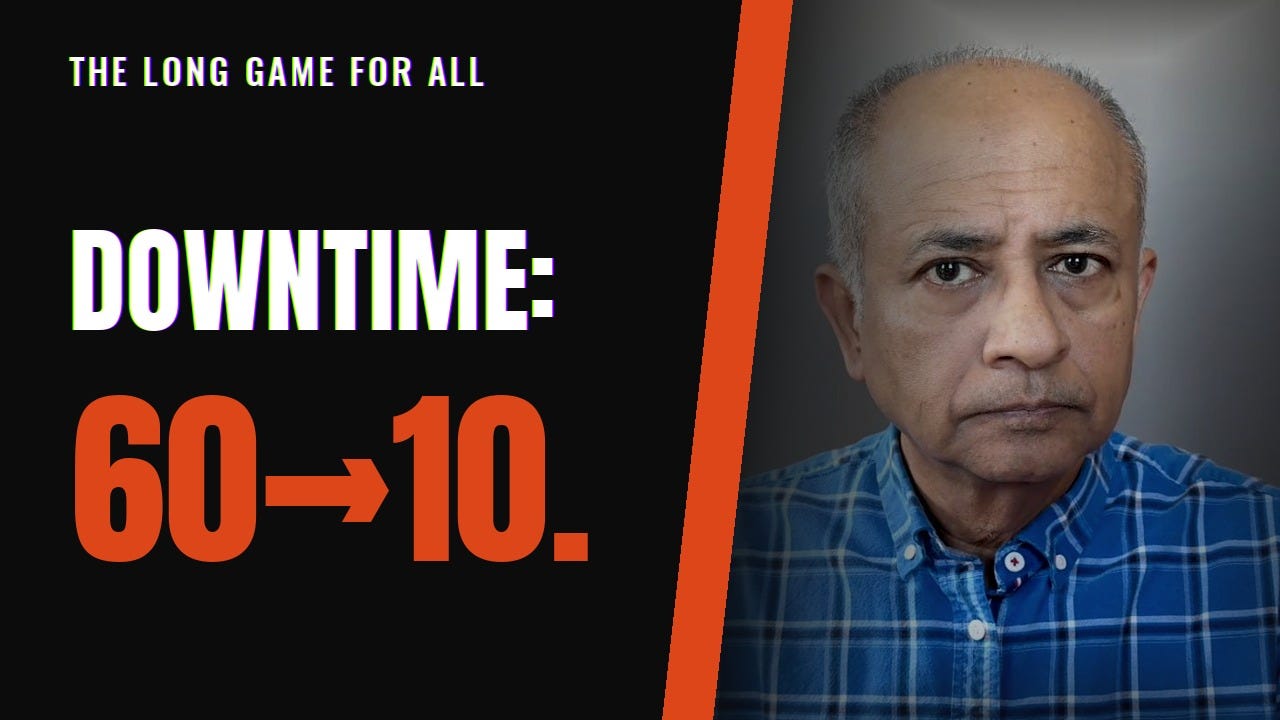
Charan Didn't Say What You Heard
Description
Reacting to: Vibhas Ratanjee, “The Old Career Mindset Is Dead. The System Already Knows. Most Leaders Don’t,” Forbes, July 16, 2026.
Trim 2 on nights was the bottleneck at Lansing Delta Township. Fifty to sixty minutes of downtime through a nine-hour shift, week after week. A succession of supervisors had worked on it, and everybody up the chain had worked on it, and I was on that chain, and none of us fixed it.
Then Abdelhak Radjai came to run Trim 1 and 2 on nights, and inside a month the shift was closing under ten minutes.
What he did to get there is the most valuable thing he did for General Motors, and it appears in the accounts of General Motors as nothing at all.
This summer an eighty-seven-year-old man told a researcher from Gallup that the years it takes to become the kind of supervisor who can do that are now optional.
That man was Ram Charan, who co-wrote the book that gave large companies the architecture they still run on — six leadership passages, manager to enterprise leader, each requiring a values shift. Not a skill upgrade. A values shift. That book sits on the shelf of nearly every Chief Human Resources Officer in the Fortune 500.
The researcher had three numbers. Average spans of control have gone from 8.2 to 12.1. More than eighty percent of what supervisors used to do is now done by something else. Sixty people report directly to Jensen Huang.
Charan reframed the question before it finished and said the number is three now. Not six.
The headline that resulted announced that the old career mindset is dead.
I want to enter a defense of Ram Charan against the reading of Ram Charan.
He didn’t kill the passages. He kept them.
Read the sentence nobody is quoting: “The values shifts are still happening. They have to.“
Hold that. A man with every incentive to defend his own framework did the rarer thing. He gave up the timeline. He kept the passages.
Most thinkers at that altitude defend the edifice. Charan revised it at eighty-seven with a researcher watching. That is a Gardener’s move, not an opponent’s. On Sunday I argued that formation is a reserve being drawn down with no depletion charge, and the most-cited pipeline architect in American management just said, unprompted, that the reserve is load-bearing and cannot be skipped.
He is the defense witness. He is being quoted as the executioner.
Now — they have to is not evidence. It is necessity by assumption, and in a Live Spar I would mark it and press. But notice which way the assumption runs. Charan is not assuming formation away. He is assuming it is structural: that if it is skipped, nobody is standing at the far end.
He is right. He has never been asked what it costs.
He can tell you the passages must occur. He cannot tell you what a passage is made of — how long the shortest honest one takes, who has to be standing there while it happens, what it costs to skip. Not because he is careless. Because nobody built the instrument.
Radjai
His strength was where he came from. For years before this he had been one of the most successful team leaders on that floor, and he never stopped behaving like one. He would get on a job — any job on his line — to give somebody a bathroom break. Anyone who has stood on a floor knows what that is worth. It is the highest-value currency there is, it cannot be faked, and it cannot be delegated. You either get on the job or you don’t.
That bought him the standing to do the two things that actually fixed Trim 2.
One of his team leaders was new. She had not yet mastered the six jobs on her team, and she was spending her shift out chasing repairs — which is what a team leader does when she does not yet feel solid enough to stand in front of her own people. Radjai read it. He had another team leader cover