Episode Details
Back to Episodes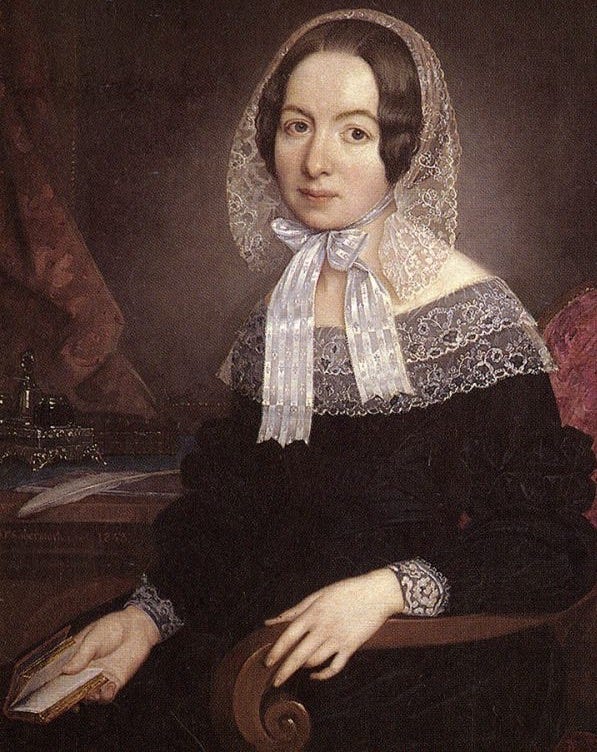
1856: The Year of Mighty Books
Description
The pleasure of reading lies in time travel—when I lend my imagination to the page and arrive in worlds that have vanished entirely. I am not talking about historical fiction, far from it, but about works that were, back in the day, groundbreaking and revolutionary. For surely not all my attention should be squandered on the incessant trickle of novelties, trivialities, and insubstantial drivel paraded across bookstore displays, fueling the fear of missing out. Missing out on what? Is literature ephemeral? I don’t think so.
Last week, I combed Gustave Flaubert’s walrus mustache—strictly from a personal, intimate, and evocative perspective, of course. I also made a few observations regarding his harsh, chauvinistic disposition as an unrepentant whoremonger, which was common currency in his time. Who among us hasn’t heard the term “The French Pox” used to describe those suffering from syphilis? An attentive reader shared a clever pun with me, describing Flaubert simply as “a flawed person.”
His greatest contribution to literature was his full embrace of Realism—which, as he wrote to his favorite correspondent, demanded a narrator who “must be in his work like God in creation, invisible and all-powerful; felt everywhere, but nowhere seen.” After the stylistic excesses of Romanticism, it was a welcome return to common sense.
Hence, his crowning achievement was dissecting the adultery and eventual ruin of a woman married to a country doctor in a small town in Normandy in Madame Bovary. It is not my intention today to linger on that fatalistic mammoth of a novel; nearly everyone has had occasion to read it.
An avid reader of novels—especially one willing to run the risk of writing them—derives the greatest joy from weaving them together across time, nationality, and style, uncovering unexpected connections and shared currents. An author without references beyond their immediate horizon has little to offer save for their own audacious ignorance.
Back in 1856, in Second Empire France, Gustave Flaubert scandalized his readers to such a degree that he was put on trial for offenses against public morality—a trial that provided Madame Bovary with invaluable free publicity. That very same year, the Swedish writer Fredrika Bremer ignited a widespread public debate, resonating even across America, known as Kvinnofrågan—the Woman Question. What a time, when a novel was a portal of human consciousness!
With Hertha, Fredrika Bremer does not merely portray a domestic drama; she raises a blistering indictment against the legal guardianship system that condemned unmarried women to perpetual legal minority. Under the absolute authority of a father or an appointed male guardian, a woman possessed no legal standing whatsoever. In the novel, Director Falk is no mere household tyrant; he is the very incarnation of the paternalistic state. By hijacking his daughter’s maternal inheritance to crush her spirit, he turns the home into a financial prison and obedience into a life sentence.
There is a bitter paradox at the foundation of this drama: centuries before the adoption of Roman law and state codification locked women inside the cage of legal guardianship, High Middle Ages Scandinavia granted them an autonomy unheard of in the rest of the continent. The mistress of the estate during the Viking Age, carrying the keys to the homestead at her belt, managed property, exercised the right to divorce, and held sole ownership of her wealth. The confinement of 1856 was not the inertia of an ancient tradition, but the refined craft of modern paternalism, which had reduced women to perpetual minors. Seen in this light, Fredrika Bremer’s outcry in Hertha demanded no unthinkable utopia, but the restoration of an ancient sovereignty buried by law.
One must not misjudge the weight of faith in the North. If Catholic dogmatism built an insurmountable wall against female aut