Episode Details
Back to Episodes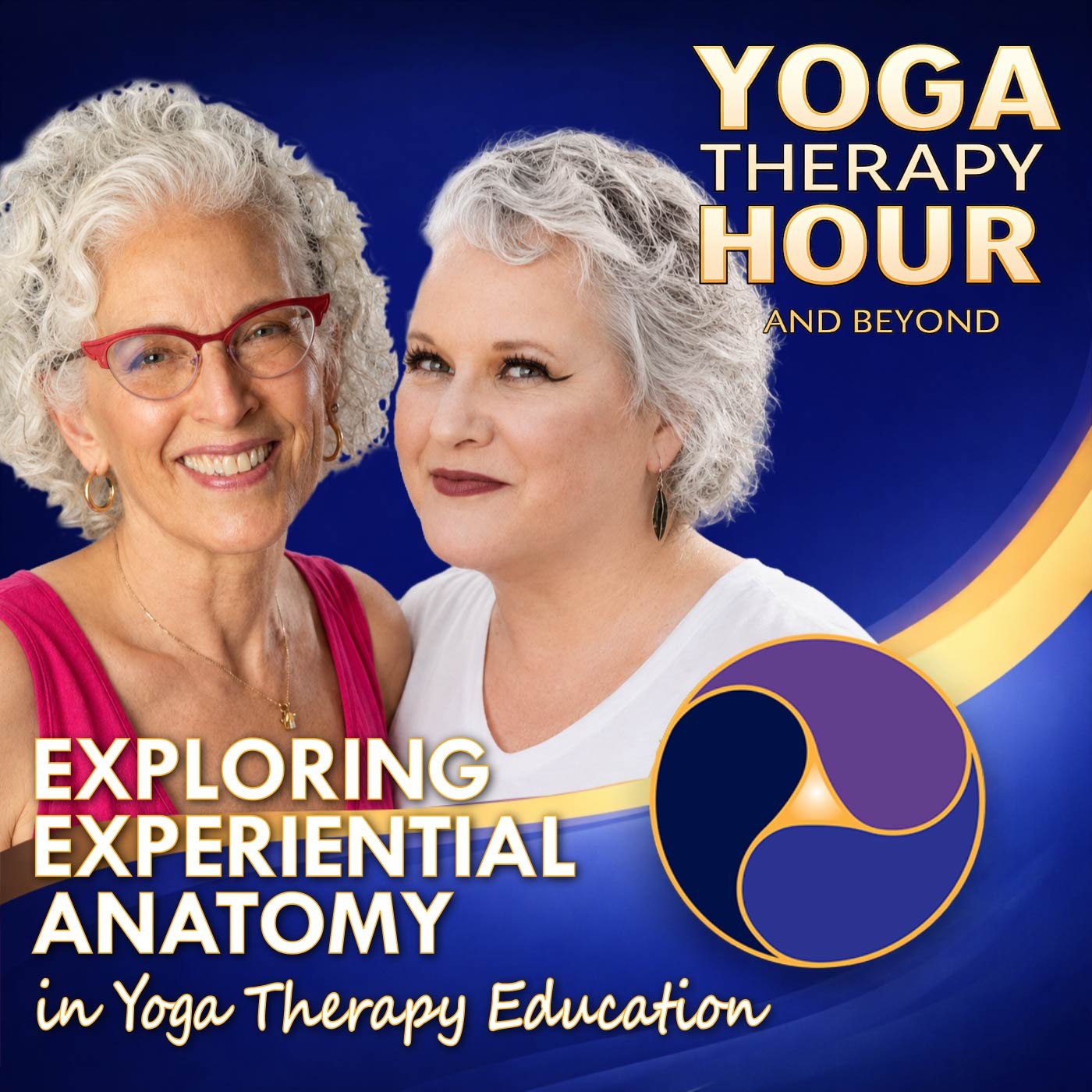
Exploring Experiential Anatomy in Yoga Therapy Education
Description
In this episode of The Yoga Therapy Hour, Amy welcomes two guests whose work intersects at the heart of yoga therapy education: Leila Stuart and Kimberly Searl from the School of Integrative Health at Notre Dame of Maryland University.
The conversation centers on the integration of Experiential Anatomy into a graduate-level yoga therapy curriculum, and what it means to move beyond memorization of anatomy into direct, embodied understanding.
Rather than approaching anatomy as static knowledge, this dialogue explores anatomy as a lived, perceptual experience—something that can be sensed, refined, and integrated into clinical practice.
In This Conversation
Amy, Leila, and Kimberly reflect on how experiential anatomy supports the development of skilled, perceptive yoga therapists. They explore how students shift from learning about the body to learning through the body.
The discussion highlights the value of integrating subjective experience with objective anatomical knowledge. This approach allows future practitioners to better understand their clients, not just structurally, but relationally and perceptually.
There is also a thoughtful look at how anatomy education can support interoception, clinical reasoning, and therapeutic presence—skills that are essential in yoga therapy but often underdeveloped in traditional anatomy courses.
Key Themes
Embodied Learning in Anatomy
Anatomy becomes more meaningful when it is felt and explored internally, rather than only studied intellectually.
Bridging Science and Experience
The conversation clarifies how experiential anatomy complements traditional biomedical models without replacing them.
Clinical Application
Students trained in this way develop a more nuanced ability to observe, listen, and respond to the lived experience of their clients.
Education that Transforms Practice
The integration of this textbook into a master’s program offers a model for how yoga therapy education can evolve to meet the needs of modern healthcare environments.
Why This Matters
For yoga therapists and educators, this episode offers a clear direction: anatomy education can support deeper awareness, more refined clinical skills, and stronger therapeutic relationships.
For those training practitioners, it raises an important consideration—how we teach anatomy shapes how practitioners perceive and work with the human system.
About the Guests
Leila Stuart is the author of Experiential Anatomy, a text that invites readers into a direct, felt understanding of the body through guided inquiry and exploration. https://leilastuart.com
Kimberly Searl teaches anatomy within the Yoga Therapy Master’s program at Notre Dame of Maryland University, where she integrates experiential methods into graduate-level education. https://kimsearl.offeringtree.com
Closing Reflection
This episode invites a shift in perspective—from seeing anatomy as information to be mastered, toward experiencing it as a dynamic, living process. That shift has implications not only for education, but for the quality of care offered in yoga therapy settings.
Contact Amy Wheeler:
Optimal State App for iPhone:
https://apps.apple.com/us/app/optimal-state/id1604424804
The Yoga Therapy Hour Podcast: