Episode Details
Back to Episodes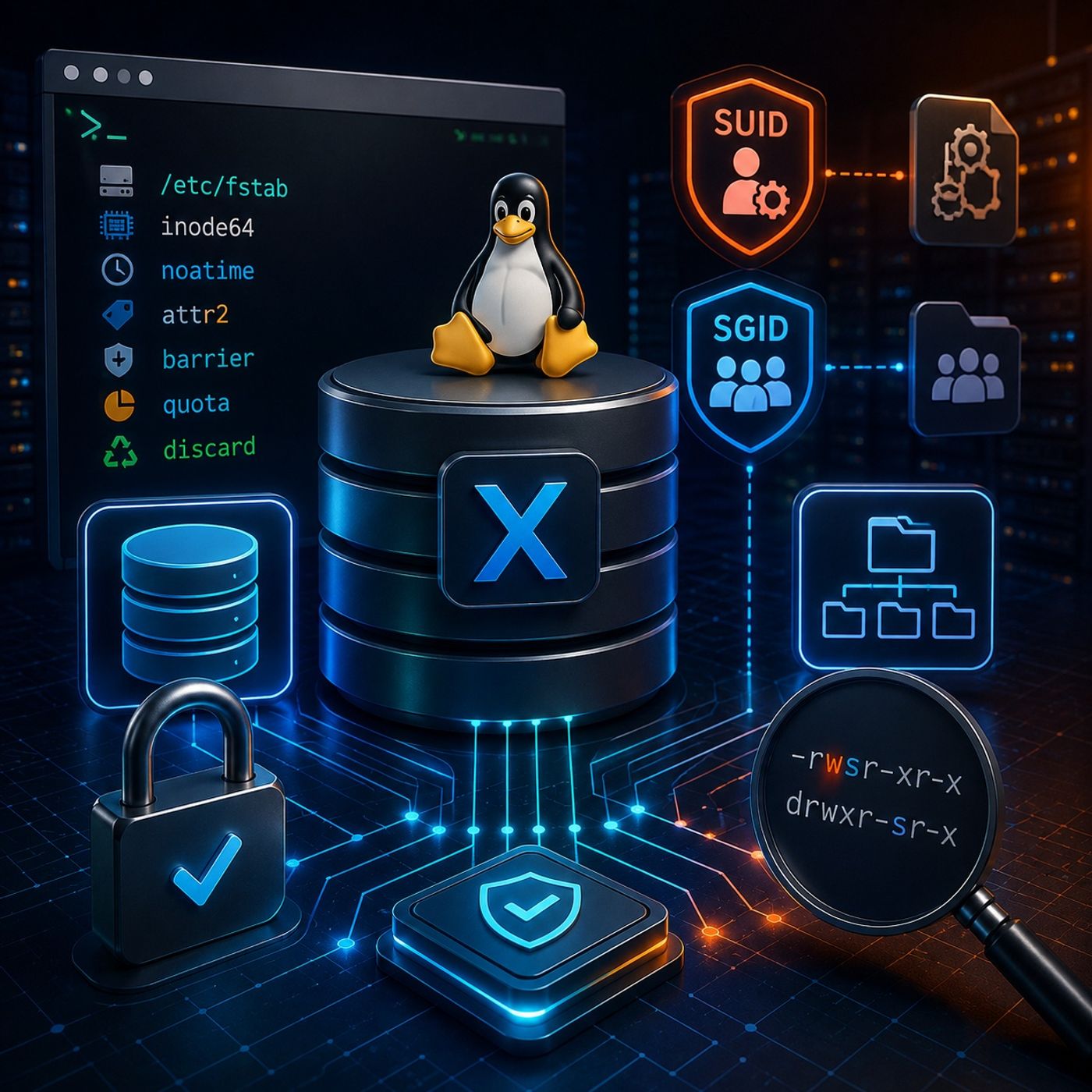
Course 44 - RH Security Specialist | Episode 5: Mastering Linux Permissions
Published 1 month ago
Description
Advanced Linux administration requires a deeper understanding of both filesystem behavior and Unix permission mechanisms. In this episode, we explore the powerful capabilities of the XFS filesystem and examine special permission mechanisms that can significantly influence how users and applications interact with the operating system.We begin with XFS administration, focusing on filesystem mount options, auditing precision, storage quotas, SSD optimization, and large-volume performance. We then transition into SUID (Set User ID) and SGID (Set Group ID), exploring how these special permissions affect executable files and shared directories.Through practical examples and command-line exercises, this episode demonstrates how seemingly small filesystem and permission settings can have major consequences for security, performance, and multi-user system administration.1. Exploring the XFS File SystemWe begin by examining the architecture and administrative characteristics of XFS, a filesystem widely associated with enterprise Linux environments.The discussion focuses on why XFS became an important default filesystem choice in Red Hat Enterprise Linux 7 and how its design supports large-scale storage and demanding workloads.Key topics include:
- XFS filesystem characteristics.
- Large-volume scalability.
- Filesystem mount configuration.
- Performance-oriented filesystem options.
- Security and integrity considerations.
- User and group storage limits.
- Preventing individual accounts from consuming excessive disk space.
- Monitoring filesystem usage.
- The relationship between quotas and multi-user environments.