Episode Details
Back to Episodes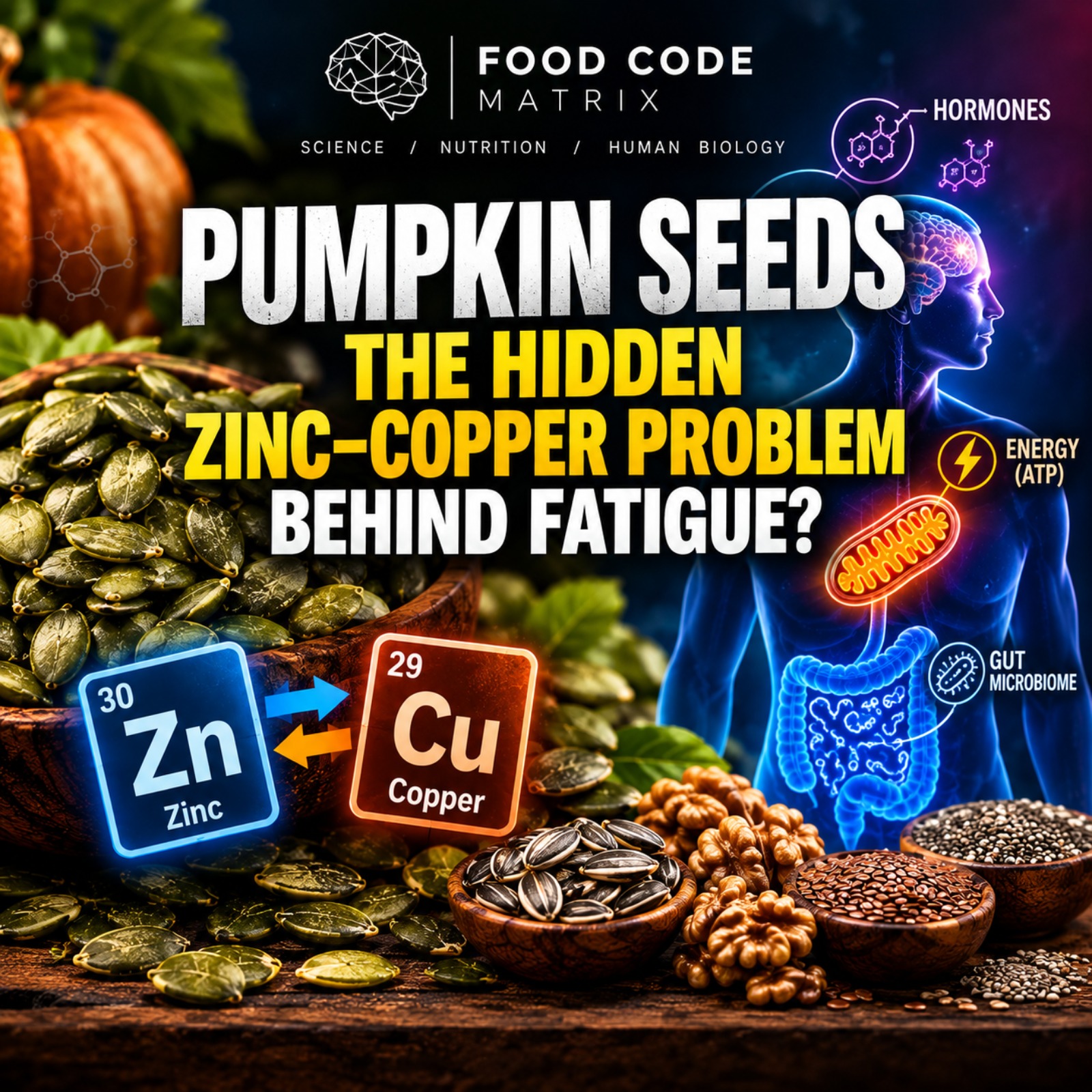
Pumpkin Seeds, Zinc, Copper & the Hidden Biochemistry of Fatigue
Description
Hey! I'd love to hear your thoughts, send me a voice note.
Pumpkin seeds are often considered one of the healthiest everyday snacks. They are rich in minerals, protein, healthy fats and other bioactive compounds. But could the amount we consume matter more than we think?
In this episode of Food Code Matrix, we explore the biochemistry of pumpkin seeds and examine the proposed connections between zinc, copper metabolism, mitochondrial energy production, hormones, plant lignans and the gut microbiome.
We begin with the familiar afternoon energy crash and investigate why copper matters for mitochondrial function and cytochrome c oxidase, an essential component of cellular respiration.
We then examine zinc–copper interactions, including the role of metallothionein in intestinal mineral metabolism. The discussion moves into the more complex territory of aromatase, testosterone and estrogen metabolism, followed by the metabolism of plant lignans such as secoisolariciresinol and lariciresinol.
Finally, we explore the gut microbiome and why people may metabolise the same dietary compounds differently.
The practical takeaway is not that pumpkin seeds are inherently “bad”. Instead, the episode asks a broader nutritional question: what happens when a food that is nutrient-dense becomes a repetitive and concentrated part of the diet?
We also discuss dietary variety and alternative sources such as sunflower seeds, walnuts, flaxseed and chia seeds.
This episode is an educational exploration of nutrition science and biochemical mechanisms. Proposed mechanisms and research findings should not automatically be interpreted as evidence that ordinary pumpkin-seed consumption causes disease or hormonal dysfunction.
Topics: • Pumpkin seed nutrition • Zinc and copper metabolism • Metallothionein • Copper and mitochondrial ATP production • Cytochrome c oxidase • Aromatase and hormone metabolism • Plant lignans • Estrogen receptors • Gut microbiome • Nutritional diversity • Food science and human metabolism
Food Code Matrix explores the science behind everyday foods, cooking, nutrition, food chemistry and human biology.