Episode Details
Back to Episodes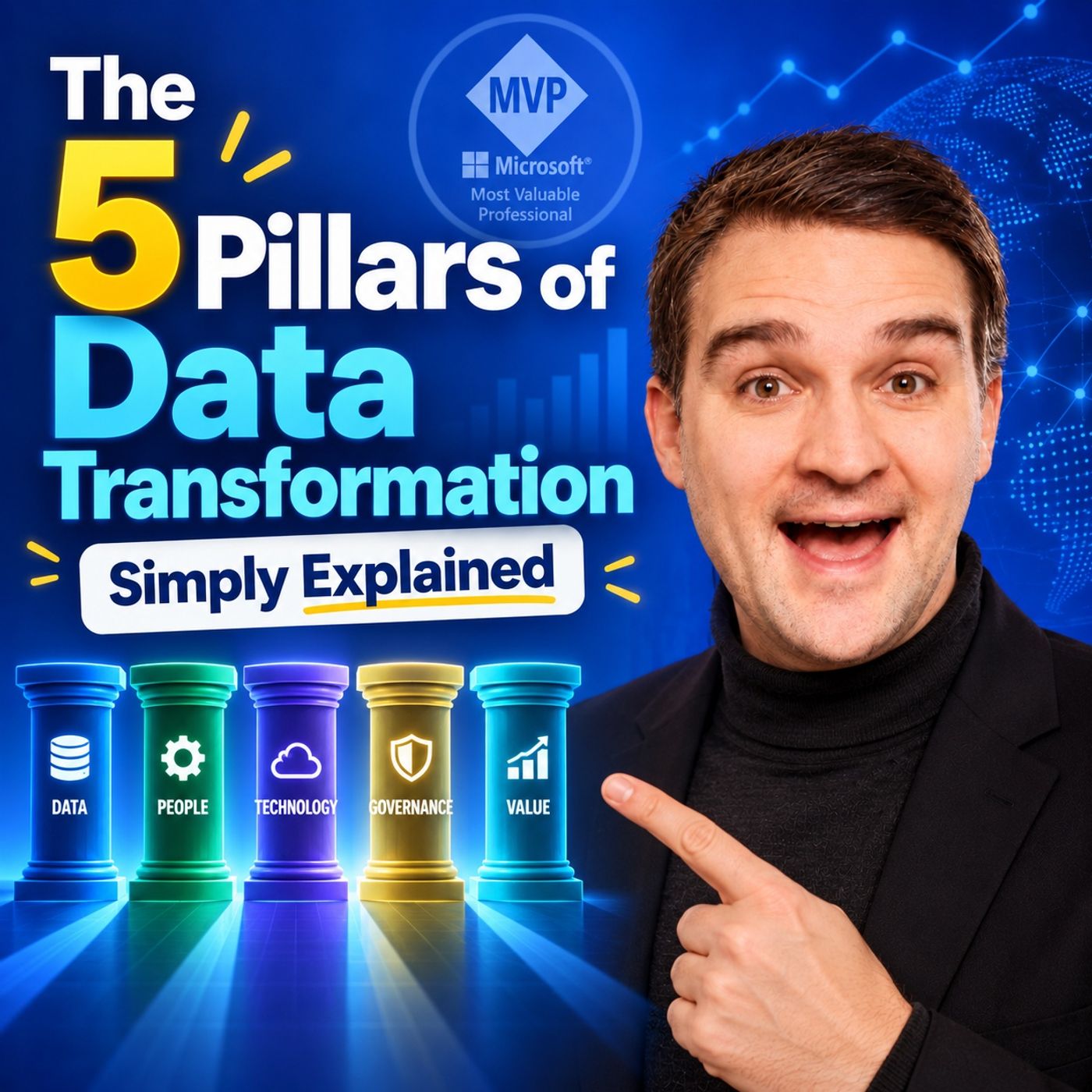
The 5 Pillars of Data Transformation - Simply Explained
Season 3
Published 1 month, 1 week ago
Description
AI was supposed to clear the backlog, accelerate decisions, and give every team a smarter way to work. Instead, many organizations now have Microsoft Copilot, Power BI, Microsoft Fabric, AI agents, and more data than ever before—while important decisions still crawl through meetings because nobody fully trusts the numbers or knows who can act on them. The technology spend keeps rising. The action does not. The problem is often not a lack of AI. It is the absence of an operating model connecting data, meaning, governance, technology, people, and accountability. In this episode of M365 FM – Simply Explained, we break down the five pillars organizations need to build a reliable foundation for data transformation and AI.
WHAT YOU WILL LEARN
In this episode, we explore:
Data governance often sounds like policies, compliance meetings, documentation, and bureaucracy. In practice, governance answers a few very simple questions:
WHAT HAPPENS WHEN AI ENTERS THE PICTURE?
Now imagine someone asks an AI agent: “Which sales region is falling behind?” The answer may arrive within seconds. But it could be based on:
WHAT YOU WILL LEARN
In this episode, we explore:
- Why AI cannot compensate for unreliable data
- How data governance creates trust before automation begins
- Why data quality should depend on the decision being made
- How Microsoft Purview can support governance and data discovery
- How Microsoft Fabric supports modern analytics and data platforms
- Why semantic models matter for Power BI and AI
- How conflicting definitions create conflicting dashboards
- Why business glossaries matter for humans and AI agents
- How data ownership affects AI readiness
- Why access, security, and permissions must be defined before AI scales
- How Copilot and AI agents depend on trusted business context
- Why human accountability remains critical even when AI generates the answer
Data governance often sounds like policies, compliance meetings, documentation, and bureaucracy. In practice, governance answers a few very simple questions:
- Who owns this data?
- Who is allowed to access it?
- Where did the data come from?
- Can we trust it for this particular use case?
- What are people allowed to do with it?
- What are AI systems allowed to do with it?
- The CRM contains one version of revenue
- The finance system contains another
- Manual exports introduce additional differences
- Nobody owns the definition of revenue
- Nobody owns the quality of the source data
- Nobody can clearly explain which number should drive the forecast
WHAT HAPPENS WHEN AI ENTERS THE PICTURE?
Now imagine someone asks an AI agent: “Which sales region is falling behind?” The answer may arrive within seconds. But it could be based on:
- Duplicate customer records
- Outdated account assignments
- Missing opportunities
- Incorrect forecast stages
- Old data
- Incorrect permissions
- Information the user should not have been able to access
- Named data owners
- Clear responsibilities
- Data classifications
- Access rules
- Source-system documentation
- Data quality expectations
- Auditability
- Policies for sensitive information
- Rules for AI and automation