Episode Details
Back to Episodes“Did Galileo mistake Saturn’s rings for Jupiter’s Moons?” by Alfred Harwood
Description
tl;dr: No
I intended to read Richard Ngo's Agency Curriculum today. Unfortunately I didn't get more than halfway through the first reading of the first week of the curriculum.
The reading is the blogpost 'The Copernican Revolution from the Inside' by Jacob Lagerros. Broadly, it outlines the Copernican Revolution and explains all of its messiness. One of the things it argues is that, while correct (the earth does indeed orbit the sun), Galileo was overconfident and made many mistakes. So, on the subject of mistakes...
Lagerros' writes (talking of Gallileo):
“And though he was also right about the existence of moons orbiting Jupiter, which contradicted the uniqueness of the earth as the only planet with a moon, what he actually observed rather seems to have been Saturn's rings (Ladyman, 2001) [8].”
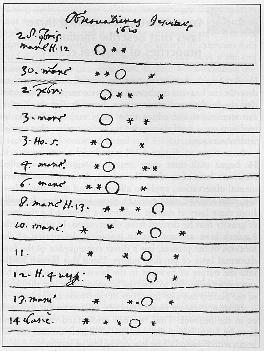
How could Galileo (an astronomer) get confused between Saturn and Jupiter? And if you look at Galileo's notebook sketches of Jupiter's moons (included in Lagerros' blogpost) then they clearly show 4 moons, changing their positions.
How could someone who was observing Saturn's rings make sketches that look like this?
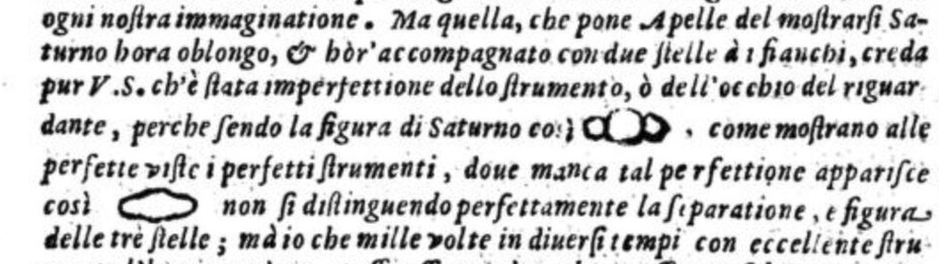
Ladyman's book Understanding Philosophy of Science is cited for this claim. The relevant quote from this book is as [...]
---
First published:
September 17th, 2026
---
Narrated by TYPE III AUDIO.
---
Images from the article:
Apple Podcasts and Spotify do not show images in the episode description. Try Pocket Casts, or another podcast app.