Episode Details
Back to Episodes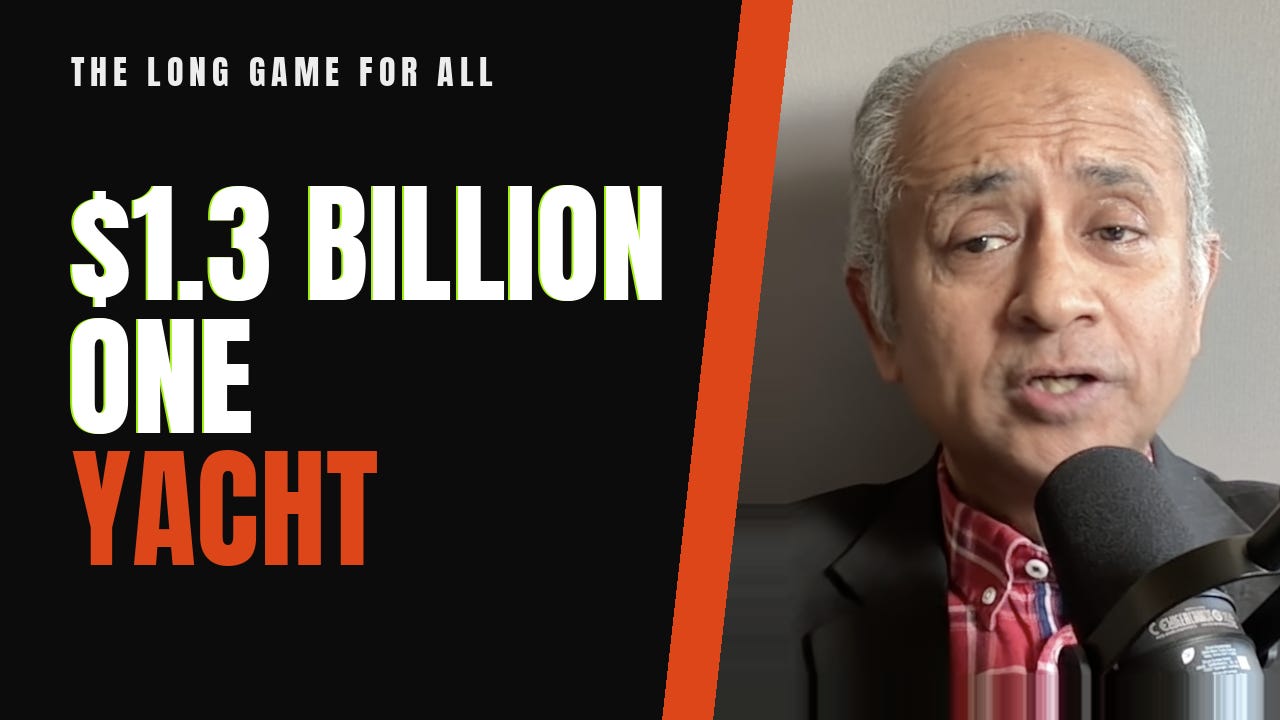
The Hospital They Looted
Description
Evidence They Can’t Defend — Essay 6 of 13
The doctors knew exactly what to do. That was never the problem.
A woman was bleeding to death from her liver, one day after giving birth. Her heart had already stopped once, and the team had brought her back. They had a plan — an embolization coil, a small device that goes in and closes the bleed. Standard. The kind of thing a hospital that delivers babies simply has on the shelf.
The hospital did not have it. Weeks earlier, the manufacturer had come and taken its coils back, because the hospital’s owner had not paid the bill. Some of the staff had feared exactly this and said so, out loud, to the people above them. The warning did not reach the operating room in time. She was moved to a second hospital, arrested again about an hour later, and could not be brought back.
Her name was Sungida Rashid. She was thirty-nine. Her daughter was one day old.
The people who took the coil away were not doctors. They had never penned a note or walked a patient. They owned the hospital the way a strip-miner owns a mountain — for what could be pulled out of it. The firm was Cerberus Capital Management. The hospital was St. Elizabeth’s in Boston. And by the time Sungida Rashid bled out, Cerberus and the men who ran the system it built had already pulled roughly $1.3 billion out of it. One of them bought a $40 million yacht.
That’s the argument. Here is how it was done — and here is the one thing they could never load onto the boat.
The Extraction Architecture
In 2010, Cerberus bought a nonprofit Catholic hospital network in Massachusetts — Caritas Christi, a mission system that existed to treat the poor. They converted it to for-profit, renamed it Steward, and promised to expand care.
Then they engineered the extraction. In 2016, Steward sold the land under its hospitals to a real-estate trust, Medical Properties Trust, at an inflated price, and leased the buildings back at rents it could never sustainably carry. The sale threw off a wave of cash. That cash did not go into the hospitals. Steward’s own audited statement shows $789 million paid out in dividends in 2016 alone — roughly $682 million to Cerberus, about $73 million to CEO Ralph de la Torre, the rest split among insiders. Nearly $800 million, in a single year, pulled out of a system serving low-income communities.
The yacht came after. Two private jets. A private suite at the arena in Dallas. And the hospitals, meanwhile, could not pay for embolization coils.
The Human Price
The coil that would have saved Sungida Rashid was made by a company called Penumbra. Court filings show Steward owed Penumbra about $2.5 million, and the company had sued over the unpaid bills weeks before she died. She was not an accident of the system. She was the system working as designed — returns flowing up, risk flowing down, until the risk reached a delivery room.
Senator Elizabeth Warren later walked Cerberus’s founder through what his ownership had done to one hospital, Quincy Medical Center: before Cerberus, a full medical center — surgery, specialty care, urgent care, a VA clinic; after, an emergency room and nothing else. Warren’s arithmetic on the decade was that Cerberus investors took something like 23 percent a year while nurses’ pay barely moved. Two years after the takeover, nurses in Massachusetts had filed more than a thousand unsafe-staffing complaints. When the Senate subpoenaed de la Torre to answer for it, he refused to appear, and was held in criminal contempt — the first time in decades.
What They Could Not Take
Here is the one thing none of them could put on the yacht, because it was never theirs and never sat on any page they could sell.
My sister is an ophthalmologist — Dr. Padma Paul, a professor at Christian Medical College in Vellore, a hospital founded in 1900 by Ida Scudd