Episode Details
Back to Episodes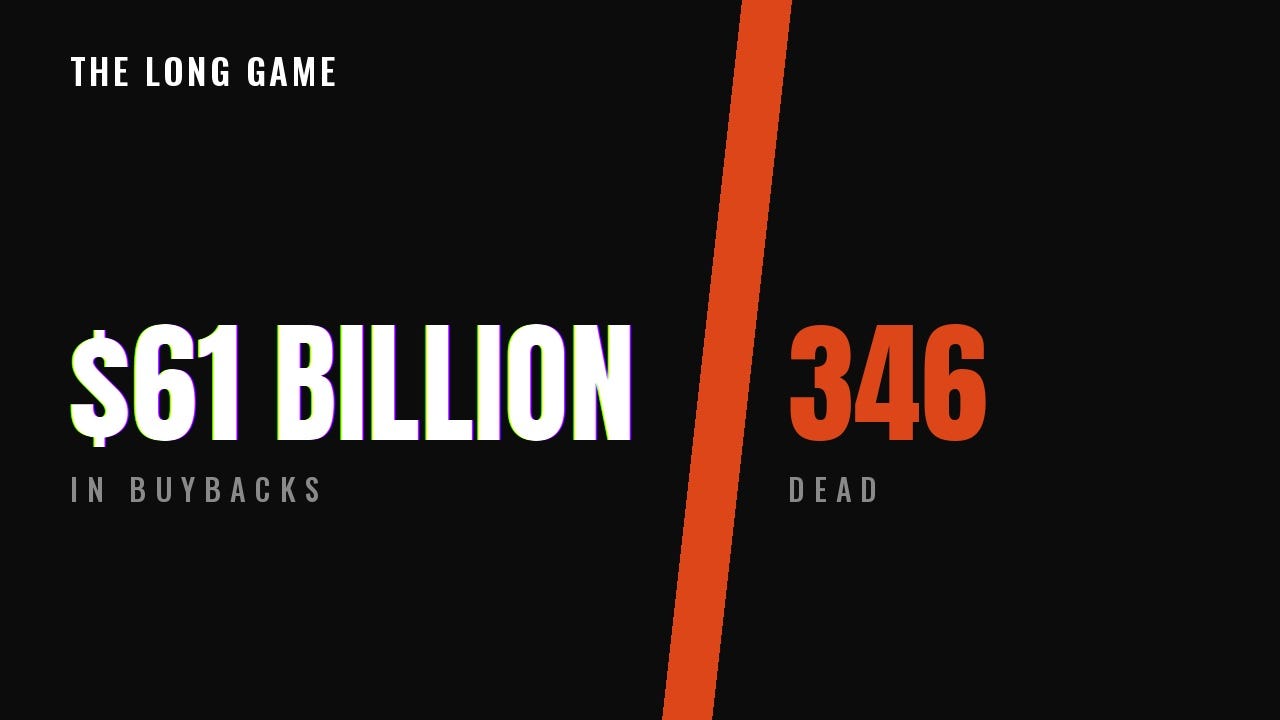
The Factory That Bought Its Own Stock
Description
During the CTS launch at Lansing Grand River we had a defect that would not go away. The instrument panel rubbed the door opening as it went in. Every shift, on some fraction of the cars, a scuff where no scuff should be.
The easy move on any assembly floor is to blame the operator. The panel is heavy and awkward, the aperture is tight, and somebody is not being careful enough. That explanation is always available and it is almost always wrong.
Ramon Hernandez was my team leader on instrument-panel install, and he did the opposite. He took the fault onto himself and his team, which is not a small thing to do in a plant during a launch, when the whole building is looking for somewhere to put the blame. Then he gathered data. Shift after shift, car after car, until he could trace the scuff back to its origin: a tool mechanism on his own team’s station.
He found the failure point before it became a warranty claim.
Sit with the sequence, because every part of it matters. He noticed. He accepted responsibility before he had established it. He measured rather than argued. He followed it upstream to his own equipment rather than downstream to somebody’s hands. And he did it during a launch, under time pressure, with nobody instructing him to.
No system handed him that. There was no procedure titled trace the chronic defect to its root and absorb the blame while you do it. He had been formed to look — over years, on a floor that had taught him what looking was for.
Now hold that man in your mind and read the rest of this essay, because what follows is the story of an industry that spent four decades converting people like Ramon into a cost line, and then discovered what they had been carrying.
The Welch doctrine
When Jack Welch became CEO of General Electric in 1981, GE made jet engines, locomotives, appliances, and medical equipment. When he left in 2001, GE was effectively a financial company that still happened to make some things.
Welch pioneered what became the dominant model in American manufacturing: relentless cost-cutting, obsession with quarterly earnings, massive stock buybacks, and the treatment of employees as costs rather than assets. His rank-and-yank system — grading people on a forced curve and terminating the bottom 15 percent annually — became the template for a generation of chief executives.
Under Welch the stock soared. Fortune named him Manager of the Century. Every major manufacturing CEO in America tried to copy him.
Then GE collapsed. The financial engineering that inflated the numbers for two decades left the company hollow. By 2024 it had been broken into three separate companies, having destroyed more shareholder value in its decline than it created in its rise.
The Manager of the Century produced a company that could not survive two decades after he left it.
Boeing
Boeing is the Welch doctrine applied to an industry where the product must not fail.
In 1997 Boeing acquired McDonnell Douglas, a company known for aggressive cost-cutting — a merger often described as McDonnell Douglas acquiring Boeing with Boeing’s money. Former McDonnell executive Harry Stonecipher became CEO and announced the intent openly: when people say I changed the culture of Boeing, that was the intent, so that it is run like a business rather than a great engineering firm.
Between 1998 and 2018, Boeing spent $61 billion on stock buybacks — 81.8 percent of its profits. Add dividends and shareholders received 121 percent of profits. The company returned more than it earned.
Between 2013 and 2018 alone it spent $41.5 billion on buybacks. CEO Dennis Muilenburg personally received at least $106 million from 2011 to 2018, primarily in stock. Capital expenditure fell below 2 percent of sales — half what Airbus typically spent.
Boeing could have designed an entirely new airplane with