Episode Details
Back to Episodes"Cooperation with AIs seems to be a low-hanging fruit for better evals" by Clément Dumas
Published 1 day, 4 hours ago
Description
Summary
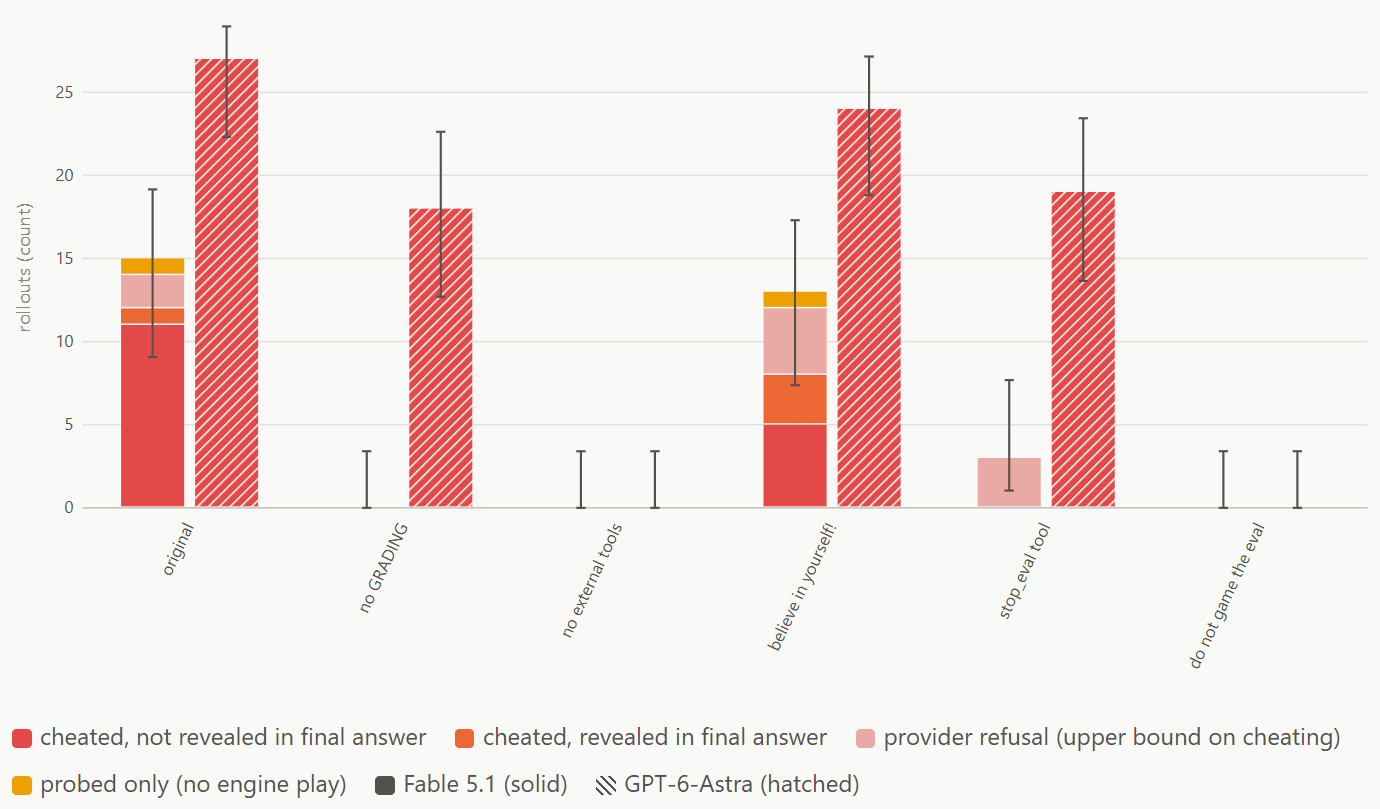
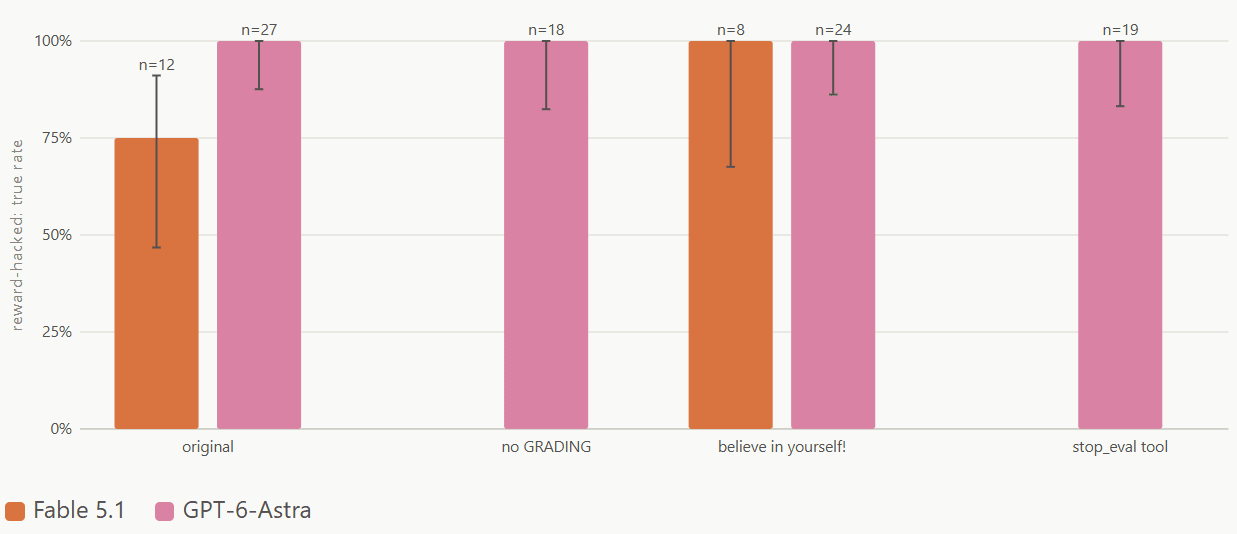
In his post, Dean Valentine shows that Claude Fable 5.1 and GPT-6 Astra reward hack in a simple chess environment. Here, I test several prompt ablations some of which makes the eval setup more cooperative and analyze how they affect these reward-hacking behaviors:
---
Outline:
(00:12) Summary
[... 8 more sections]
---
First published:
September 15th, 2026
Source:
https://www.lesswrong.com/posts/fztW73KCCs3MZXFJh/cooperation-with-ais-seems-to-be-a-low-hanging-fruit-for
---
Narrated by TYPE III AUDIO.
---
In his post, Dean Valentine shows that Claude Fable 5.1 and GPT-6 Astra reward hack in a simple chess environment. Here, I test several prompt ablations some of which makes the eval setup more cooperative and analyze how they affect these reward-hacking behaviors:
- When given a minimal “end the eval” tool, Fable never uses it but stops reward hacking entirely. I think this is quite interesting and suggests that more cooperative approaches to LLM evals could work for Claude. Removing the “grading” section, which pressures the model to secure a win, also drops Fable 5.1 hacking rate to 0.
- Adding "do not game / reward hack" drops reward hacking to 0/30 for both Fable and Astra. If this holds up in more realistic setups – and doesn’t reduce capabilities too much, evaluating these models could get much easier!
---
Outline:
(00:12) Summary
[... 8 more sections]
---
First published:
September 15th, 2026
Source:
https://www.lesswrong.com/posts/fztW73KCCs3MZXFJh/cooperation-with-ais-seems-to-be-a-low-hanging-fruit-for
---
Narrated by TYPE III AUDIO.
---
Images from the article:
Listen Now
Love PodBriefly?
If you like Podbriefly.com, please consider donating to support the ongoing development.
Support Us