Episode Details
Back to Episodes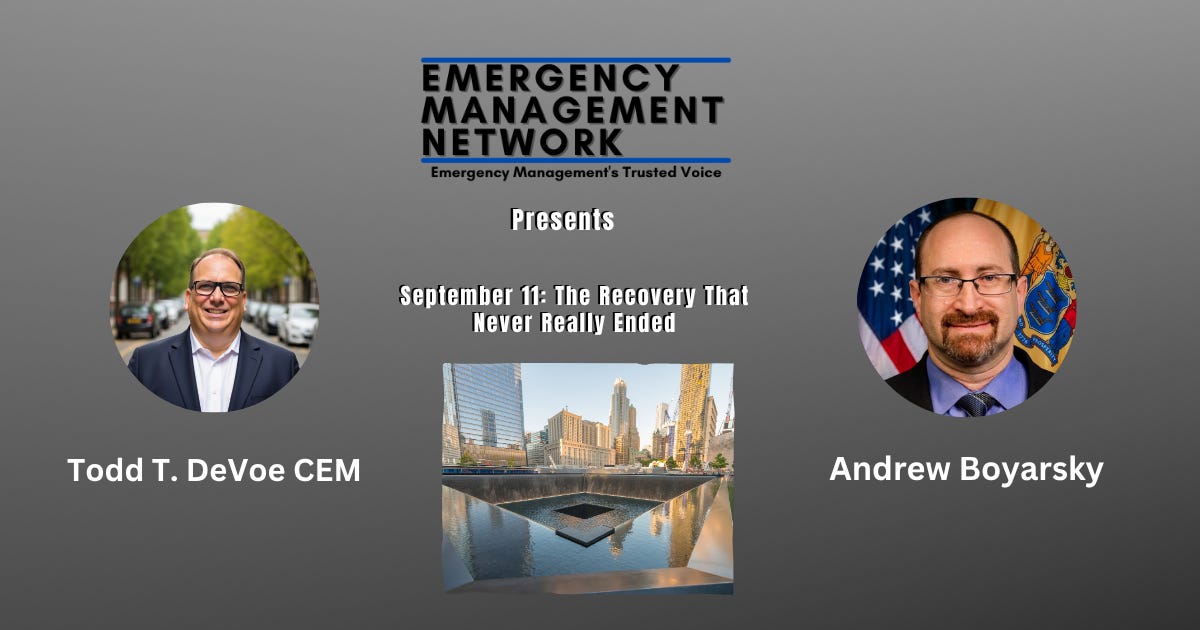
September 11: The Recovery That Never Really Ended
Description
Episode Description
September 11: The Recovery That Never Really Ended
Twenty-five years after the attacks of September 11, 2001, the skyline of Lower Manhattan has been rebuilt—but recovery is about far more than buildings.
In this episode of Emergency Management Network, Todd DeVoe examines the long aftermath of 9/11: rebuilding Ground Zero, caring for responders and survivors, confronting World Trade Center-related illnesses, preserving memory, and understanding why the emotional wounds of that morning remain so powerful a quarter-century later.
Recent confrontations near Ground Zero during the 25th anniversary observances remind us that disaster memory does not follow an emergency manager’s recovery timeline. Places become symbols. Grief becomes generational. Anger can survive long after debris has been removed.
The episode also explores a sobering reality of long-term recovery: more FDNY members have now died from World Trade Center-related illnesses than were killed in the attacks themselves. Thousands of responders and survivors continue to receive monitoring and treatment, while researchers are still examining health consequences that may span generations.
September 11 challenges the way emergency managers think about recovery. Infrastructure can be restored. Businesses can reopen. Memorials can be built. But how do we measure the recovery of people?
Perhaps the lesson 25 years later is that we need to add something to “Never Forget.”
Never stop recovering.
Show Notes
Emergency Management Network
Episode: September 11: The Recovery That Never Really EndedSubtitle: 25 Years of Rebuilding, Recovery, Memory, and HealingHost: Todd DeVoe
Twenty-five years after September 11, 2001, this episode looks beyond the attacks themselves and examines what happened afterward.
The World Trade Center site has been rebuilt. Lower Manhattan has transformed. Transportation, businesses, residences, and public spaces returned. The 9/11 Memorial and Museum now preserve the physical memory of what happened there.
But rebuilding a place and recovering from a disaster are not necessarily the same thing.
In This Episode
Todd examines September 11 through the lens of long-term disaster recovery, including the physical reconstruction of Lower Manhattan and the much longer process of human recovery.
The episode explores the continuing health consequences facing firefighters, police officers, construction workers, volunteers, survivors, residents, and others exposed to the World Trade Center disaster environment.
It also considers the idea of the long disaster—that deaths and consequences associated with a catastrophic event may continue years or even decades after the response phase has ended.
The 25th anniversary also demonstrated how powerful disaster memory remains. Confrontations near Ground Zero during anniversary demonstrations showed that the site is more than a geographic location. For many Americans, responders, survivors, and families, it remains sacred ground connected to grief, sacrifice, anger, and national memory.
That raises an important question for emergency managers:
When does recovery actually end?
Key Themes
Recovery is not reconstruction.Rebuilding roads, buildings, transportation systems, businesses, and infrastructure is essential, but physical reconstruction represents only one dimension of recovery.
Disaster mortality can continue for decades.World Trade Center-related illnesses demonstrate that the human consequences of a disaster may emerge long after debris removal and official recovery operations have ended.
Responder health is a recovery responsibility.<