Episode Details
Back to Episodes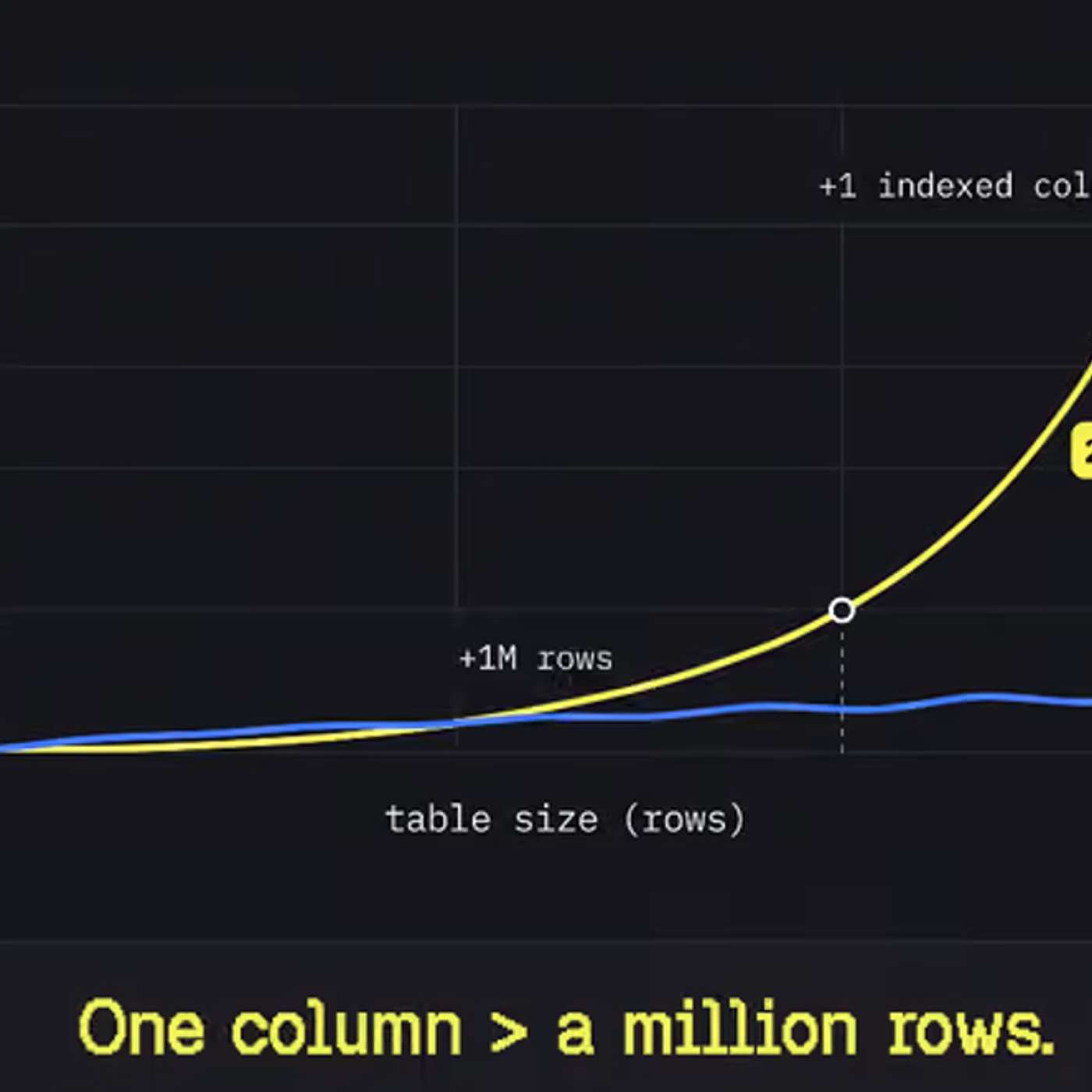
Time-Series Cardinality: Why One More Indexed Column Costs More Than a Million More Rows
Description
This story was originally published on HackerNoon at: https://hackernoon.com/time-series-cardinality-why-one-more-indexed-column-costs-more-than-a-million-more-rows.
Learn how high-cardinality time-series data affects PostgreSQL index size, query planning, and ingest performance, and how schema normalization can help.
Check more stories related to undefined at: https://hackernoon.com/c/undefined.
You can also check exclusive content about #postgresql-high-cardinality, #postgresql-index-width, #postgresql-extended-statistics, #postgres-time-series, #composite-index-performance, #time-series-schema-design, #timescaledb-cardinality, #good-company, and more.
This story was written by: @tigerdata. Learn more about this writer by checking @tigerdata's about page,
and for more stories, please visit hackernoon.com.
High cardinality does not automatically mean PostgreSQL has reached its scaling limit. This benchmark shows how adding one indexed dimension can increase index size, reduce ingest throughput, and worsen planner estimates far more than adding a million rows. The article explains why wide time-series schemas amplify these costs and how moving stable descriptors into a metadata table can reduce index width, improve query performance, and keep the workload in Postgres.