Episode Details
Back to Episodes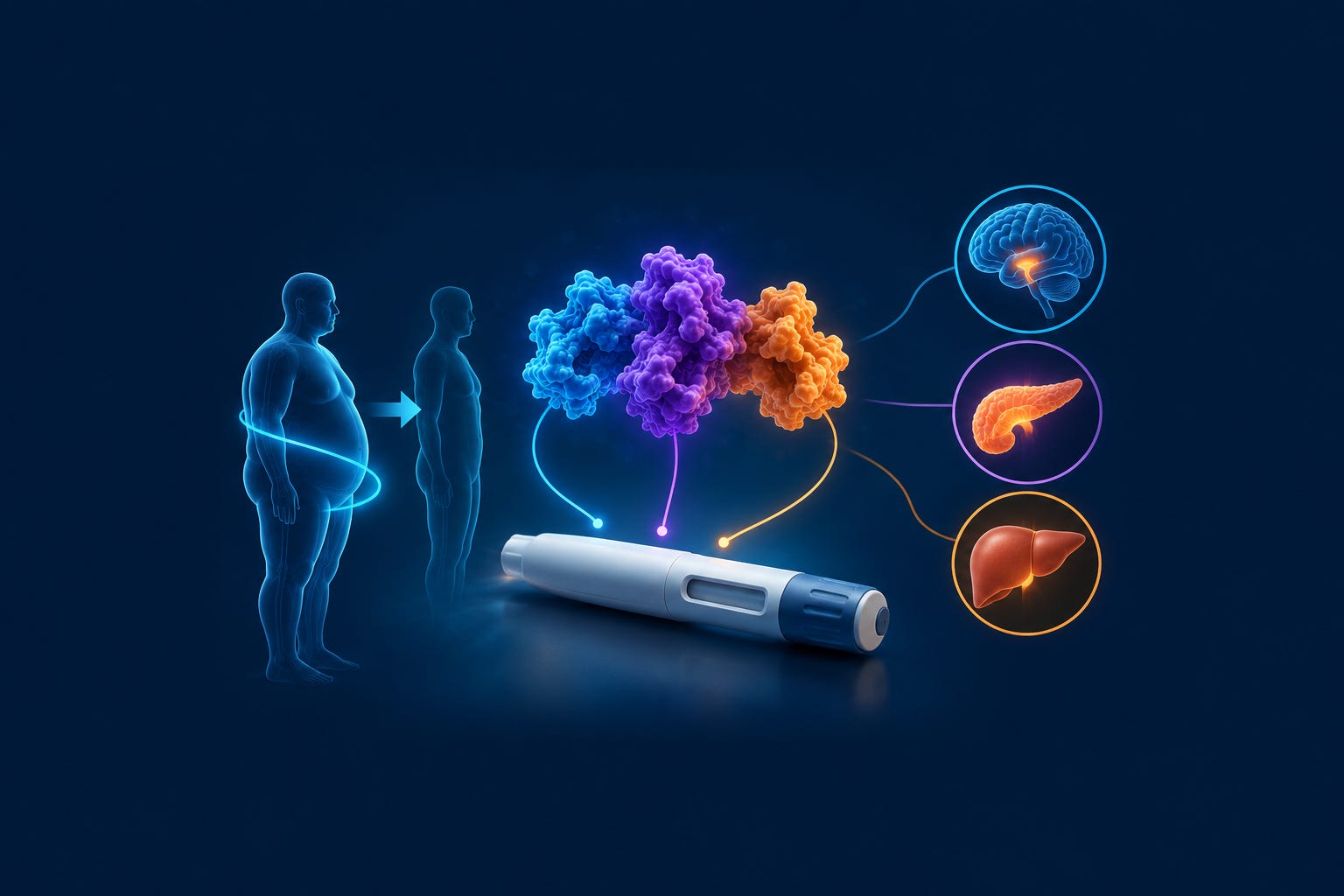
How does a GLP-1, GIP, and glucagon triple agonist work?
Description
UBT251, the GLP-1, GIP, and glucagon triple agonist Novo Nordisk licensed for $200 million upfront in March 2025, produced 19.7 percent mean weight loss at 24 weeks. That result comes from a randomized, double blind, placebo controlled Phase 2 trial in 205 Chinese adults with overweight or obesity, reported in February 2026. A companion Phase 2 trial in 211 Chinese adults with type 2 diabetes, reported in March 2026, produced a mean HbA1c reduction of 2.16 percent against 1.77 percent for semaglutide 1 mg and 0.66 percent for placebo. UBT251 is a long acting synthetic peptide dosed once weekly by subcutaneous injection that activates three receptors at once, adding glucagon driven energy expenditure to the appetite suppression current incretin medicines provide.
The clinical rationale for triple receptor agonism is the addition of a catabolic arm to an anorectic one. GLP-1 agonism reduces food intake, slows gastric emptying, and enhances glucose dependent insulin secretion. GIP agonism augments insulin secretion in the fed state and appears to reduce the nausea burden of strong GLP-1 activity, which permits higher dosing. Glucagon receptor agonism raises resting energy expenditure and promotes hepatic fat oxidation. Together these are the pharmacological reasons a triple agonist can move weight further than a single or dual agonist at a comparable tolerability burden.
What is established for UBT251 is short duration efficacy in Chinese patients across two indications, with a gastrointestinal adverse event profile the sponsors describe as consistent with the incretin class. What is not established is everything else. There are no Phase 3 results, no cardiovascular outcome data, no body composition measurements separating fat mass from lean mass, no head to head trial against tirzepatide or retatrutide, and no data in a Western population. Mean baseline body mass index in the obesity trial was 33.1 kg/m2, roughly five points below the baseline in the registrational Western obesity trials, so percentage weight change does not transfer between the two settings without adjustment.
For clinicians the practical consequence today is that UBT251 changes nothing in patient management and a great deal in what to expect from the next generation of obesity pharmacotherapy. The molecule enters a field where Eli Lilly’s retatrutide has already reported 28.3 percent mean weight loss at 80 weeks in 2,339 patients. This report addresses the clinical medical evidence only. Regulatory approval pathways, reimbursement, and licensing law fall outside its scope.
Detailed Findings
How does a GLP-1, GIP, and glucagon triple agonist work?
UBT251 activates three receptors that regulate energy balance through separate pathways. GLP-1 receptor agonism acts on hypothalamic and brainstem circuits to reduce food intake, slows gastric emptying, and enhances glucose dependent insulin secretion from pancreatic beta cells. GIP receptor agonism augments insulin secretion in the fed state, influences adipose tissue handling of nutrients, and appears to blunt the nausea associated with strong GLP-1 receptor activity, which allows a higher tolerated dose.
Glucagon receptor agonism is the arm that separates this class from tirzepatide and semaglutide. Activation of the hepatic glucagon receptor raises resting energy expenditure and increases fatty acid oxidation in the liver, which reduces hepatic triglyceride content. The pharmacological problem is that glucagon also stimulates hepatic glucose output. A triple agonist works only when GLP-1 and GIP mediated insulin secretion offsets that glycemic penalty. The Phase 2 diabetes trial speaks directly to this point, because a badly balanced glucagon arm would show up as blunted glycemic benefit rather than as superiority over an active GLP-1 comparator.
Clinical trials of UBT251 have been authorized in China and the United States across four indications: type 2 diabetes,