Episode Details
Back to Episodes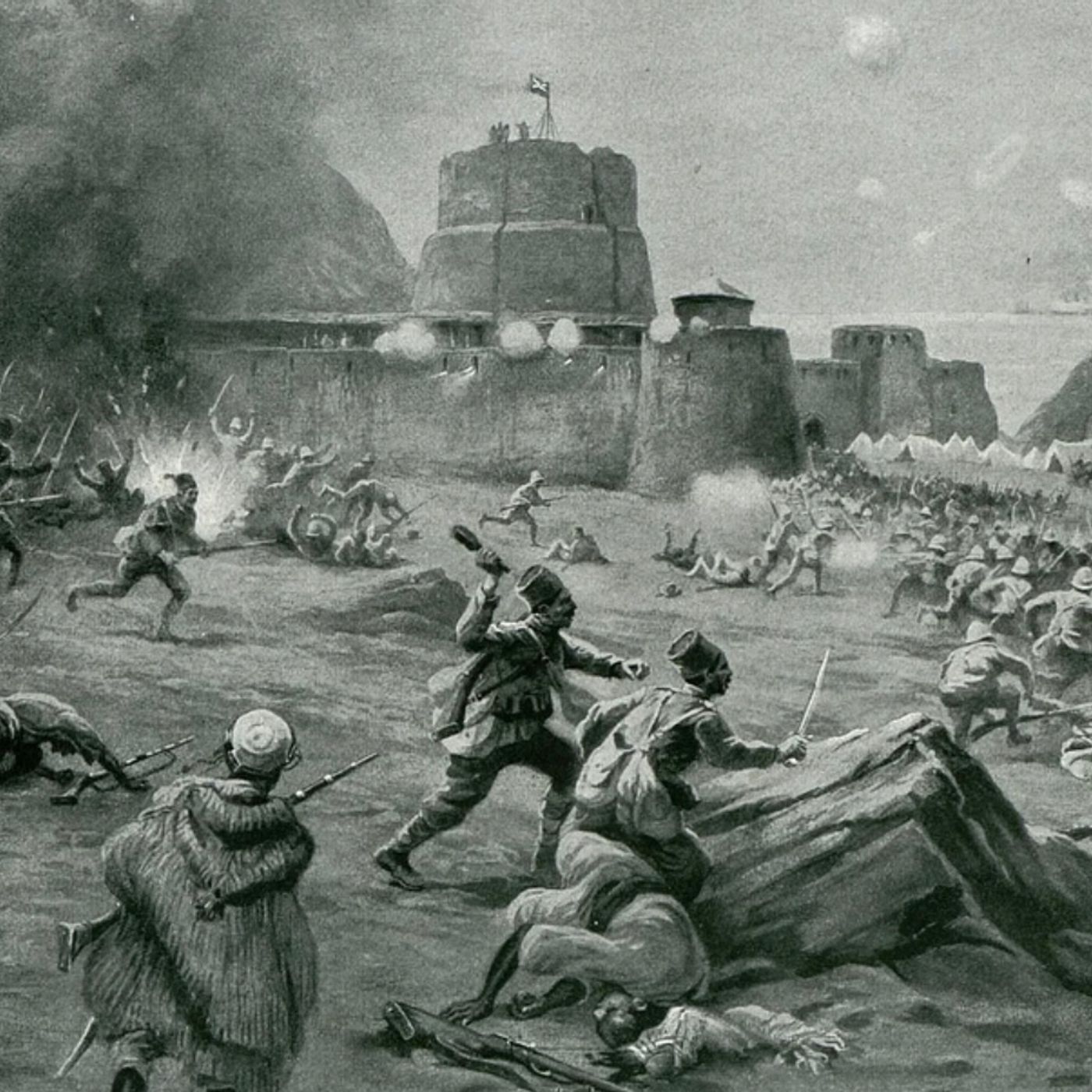
CONTENTS-JBS-9-14-2026
Published 1 month ago
Description
CAPTION 1916 YEMEN FIGHTING.
CONTENTS-JBS-9-14-2026
Houthis Expand Reach Across Strategic Waterways
Bridget Toomey discusses how Houthi rebels rapidly expanded control across Yemen's western coast, seizing the strategic port of Mocha and Perim Island in the Bab el-Mandeb choke point. Yemeni armed forces conducted counter-operations in a designated killbox around Mocha while displaying strikes on Houthi positions. Meanwhile, Saudi Arabiaclosed its critical oil pipeline following drone attacks attributed to Iran-backed Iraqi militias operating in coordination with the Houthis. The Trump administration continues offering intelligence support to Saudi Arabia while maintaining its policy of avoiding direct airstrikes under an existing mutual non-engagement agreement. (1)
Israeli Strikes Target Reconstituting Hamas Leadership
Samuel Ben-Ur analyzes recent Israel Defense Forces eliminations of key Hamas figures in Gaza, notably Khan Yuniscommander Muhammad Abdul Salam al-Yuzuri. Al-Yuzuri was actively attempting to rebuild the Qassam Brigadesand plan attacks prior to his elimination. Hamas maintains military dominance across thirty percent of the yellow line and remains heavily integrated within civilian population centers. Meanwhile, progress on the Board of Peace disarmament plan remains stalled until after Israeli elections due to political sensitivity surrounding territorial concessions. Ben-Ur notes that voluntary Hamas disarmament is improbable, highlighting alternative stabilization initiatives like pilot zones. (2)
Historical Roots Shape Modern Yemeni Conflict
Gregory Copley details the deep historical context of Yemen, tracing its lineage from the ancient Sabaean kingdom through the Mutawakkilite Kingdom. He explains how Saudi hostility toward Northern Yemen stems partly from historical Hashemite claims to Mecca and Medina. Copley emphasizes that Northern Yemeni forces are tough professional fighters rather than simple rebel groups, driven to fight for survival against Saudi strikes. He suggests that Washington and London should engage in separate diplomatic negotiations, leveraging Oman's Sultan as a discreet mediator during upcoming visits to negotiate an accommodation and establish regional peace. (3)
Latin American Leaders Engage European Forum
Ernesto Araújo and Alejandro Peña Esclusa discuss their participation in Slovenia's Bled Strategic Forum, highlighting growing Eastern European engagement with Latin America. Araújo draws parallels between Eastern Europe's 1989 liberation and Latin America's current struggle against narco-socialism. Regarding Venezuela, Peña Esclusa emphasizes that citizens reject interim president Delcy Rodríguez despite opposition leader María Corina Machado's primary victory. Turning to Brazil's upcoming election, Araújo outlines a major judicial scandal tying Supreme Court Justice Alexandre de Moraes to a fraudulent banker, severely impacting President Lula da Silva's reelection campaign against Flavio Bolsonaro. (4)
Israeli Forces Detonate Strategic Hezbollah Underground
David Daoud examines an Israeli detonation of Hezbollah's subterranean nerve center at Aita al-Shaab, which caused a 4.1 magnitude seismic event. The complex was originally designed for Hezbollah's planned invasion of the Galilee, a doctrine later mirrored by Hamas on October 7th. Daoud reports that Israeli forces are turning South Lebanon into a buffer zone to eliminate threats. However, he criticizes the Lebanese Armed Forces for failing to demonstrate real will to disarm Hezbollah, noting that 86% of reported LAF weapon seizures consisted merely of militarily insignificant bullets. (5)
Canada Explores Strategic European Union Alliance
Conrad Black evaluates Canadian Prime Minister Mark Carney's proposal for a unique associate alliance with the European Union. Black notes Canadians would support freer trade and cultura
CONTENTS-JBS-9-14-2026
Houthis Expand Reach Across Strategic Waterways
Bridget Toomey discusses how Houthi rebels rapidly expanded control across Yemen's western coast, seizing the strategic port of Mocha and Perim Island in the Bab el-Mandeb choke point. Yemeni armed forces conducted counter-operations in a designated killbox around Mocha while displaying strikes on Houthi positions. Meanwhile, Saudi Arabiaclosed its critical oil pipeline following drone attacks attributed to Iran-backed Iraqi militias operating in coordination with the Houthis. The Trump administration continues offering intelligence support to Saudi Arabia while maintaining its policy of avoiding direct airstrikes under an existing mutual non-engagement agreement. (1)
Israeli Strikes Target Reconstituting Hamas Leadership
Samuel Ben-Ur analyzes recent Israel Defense Forces eliminations of key Hamas figures in Gaza, notably Khan Yuniscommander Muhammad Abdul Salam al-Yuzuri. Al-Yuzuri was actively attempting to rebuild the Qassam Brigadesand plan attacks prior to his elimination. Hamas maintains military dominance across thirty percent of the yellow line and remains heavily integrated within civilian population centers. Meanwhile, progress on the Board of Peace disarmament plan remains stalled until after Israeli elections due to political sensitivity surrounding territorial concessions. Ben-Ur notes that voluntary Hamas disarmament is improbable, highlighting alternative stabilization initiatives like pilot zones. (2)
Historical Roots Shape Modern Yemeni Conflict
Gregory Copley details the deep historical context of Yemen, tracing its lineage from the ancient Sabaean kingdom through the Mutawakkilite Kingdom. He explains how Saudi hostility toward Northern Yemen stems partly from historical Hashemite claims to Mecca and Medina. Copley emphasizes that Northern Yemeni forces are tough professional fighters rather than simple rebel groups, driven to fight for survival against Saudi strikes. He suggests that Washington and London should engage in separate diplomatic negotiations, leveraging Oman's Sultan as a discreet mediator during upcoming visits to negotiate an accommodation and establish regional peace. (3)
Latin American Leaders Engage European Forum
Ernesto Araújo and Alejandro Peña Esclusa discuss their participation in Slovenia's Bled Strategic Forum, highlighting growing Eastern European engagement with Latin America. Araújo draws parallels between Eastern Europe's 1989 liberation and Latin America's current struggle against narco-socialism. Regarding Venezuela, Peña Esclusa emphasizes that citizens reject interim president Delcy Rodríguez despite opposition leader María Corina Machado's primary victory. Turning to Brazil's upcoming election, Araújo outlines a major judicial scandal tying Supreme Court Justice Alexandre de Moraes to a fraudulent banker, severely impacting President Lula da Silva's reelection campaign against Flavio Bolsonaro. (4)
Israeli Forces Detonate Strategic Hezbollah Underground
David Daoud examines an Israeli detonation of Hezbollah's subterranean nerve center at Aita al-Shaab, which caused a 4.1 magnitude seismic event. The complex was originally designed for Hezbollah's planned invasion of the Galilee, a doctrine later mirrored by Hamas on October 7th. Daoud reports that Israeli forces are turning South Lebanon into a buffer zone to eliminate threats. However, he criticizes the Lebanese Armed Forces for failing to demonstrate real will to disarm Hezbollah, noting that 86% of reported LAF weapon seizures consisted merely of militarily insignificant bullets. (5)
Canada Explores Strategic European Union Alliance
Conrad Black evaluates Canadian Prime Minister Mark Carney's proposal for a unique associate alliance with the European Union. Black notes Canadians would support freer trade and cultura