Episode Details
Back to Episodes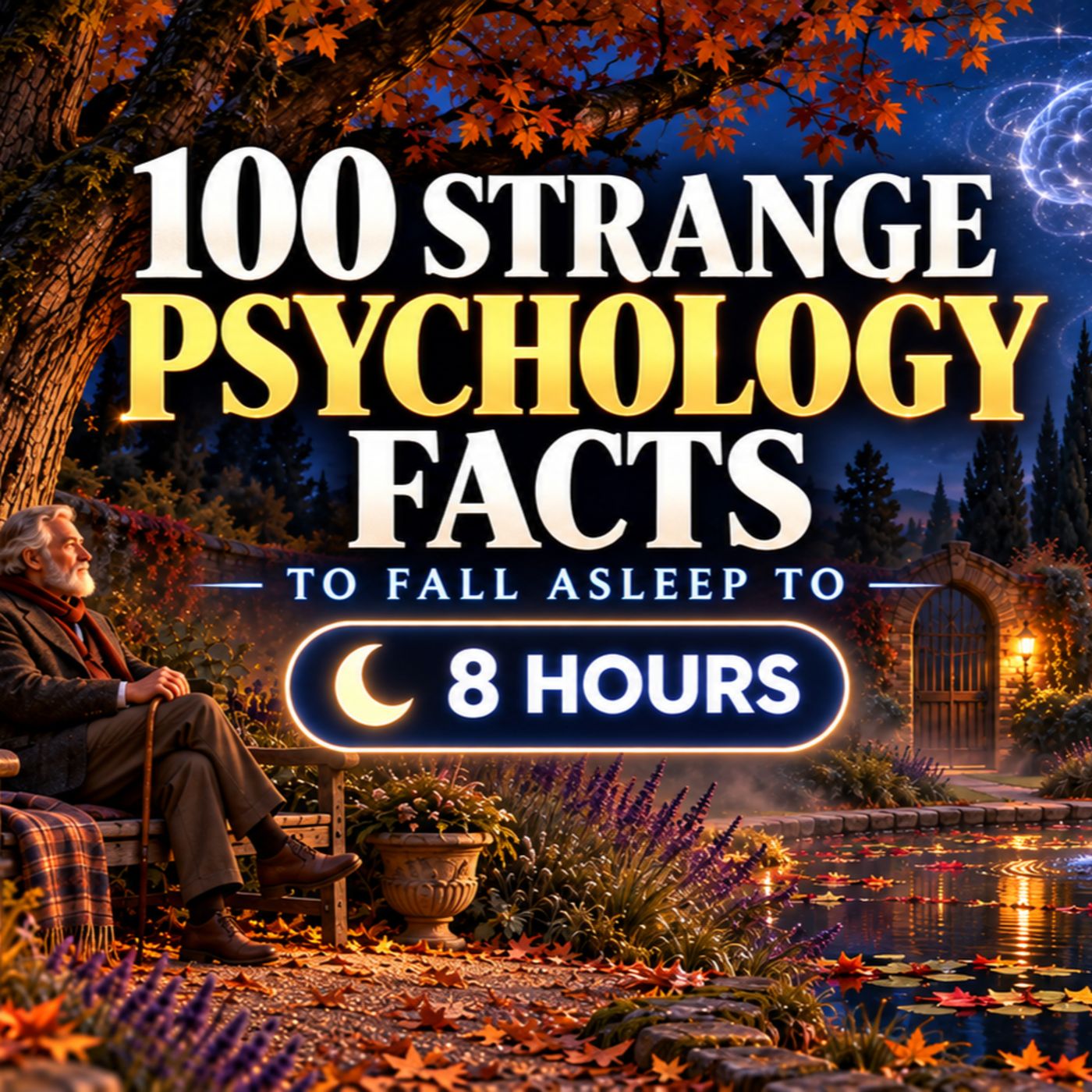
100 Strange Psychology Facts to Fall Asleep To | Psychology for Sleep
Published 1 month ago
Description
A calm, carefully researched bedtime journey through 100 strange and fascinating psychology facts about the human mind — exploring memory, perception, attention, behaviour, learning, the brain, sleep and the hidden processes shaping everyday life.
Tonight, we begin outside at the end of a long day. As darkness falls, we walk home through quiet streets before stepping inside and moving slowly through the house, discovering strange things about the mind along the way.
Why can a faint star disappear when you look directly at it?
Why can two people see different colours in the same photograph?
Why can walking through a doorway sometimes make a thought disappear?
Why do first impressions form so quickly?
And why is memory far less like a recording than it feels?
Along the way, explore some of the most intriguing findings from psychology and neuroscience about vision, faces, attention, memory, learning, perception and human behaviour.
Discover the blind spots your visual system quietly fills in, and how people can look directly at something unexpected without consciously noticing it.
Explore déjà vu and tip-of-the-tongue experiences, the reconstructive nature of memory, the shortcuts our minds use when making judgements, and the remarkable capacity of the adult brain to change through experience.
Some of the strangest features of the mind are also among the most ordinary.
Our eyes do not simply record everything in front of us. Attention is selective. Memories can change when they are recalled. Expectations influence what we notice. Familiarity can affect what feels true. And much of the work performed by the brain happens without entering conscious awareness at all.
Across 100 facts, we move gently between perception and memory, learning and behaviour, sleep and dreaming, decision-making, social psychology and the workings of the brain.
These facts are not presented as a complete account of psychology, and psychological research rarely reduces human behaviour to a single simple explanation. Some effects depend upon context, researchers continue to debate how particular findings should be interpreted, and our understanding of the mind continues to change as new evidence appears.
The aim tonight is much simpler: to spend a quiet evening discovering just how unusual the ordinary human mind can be.
There is nothing you need to memorise.
You do not need to count the facts, remember the studies or even remain awake for them.
Simply listen for as long as you like.
As the night continues, the streets become quieter. The rooms grow darker. The facts become gentler. And eventually, the mind we have been exploring can simply be allowed to rest.
Told slowly and gently for sleep, relaxation and peaceful late-night listening. Allow each idea to pass by without needing to hold onto it, and let the journey continue for as long as sleep allows.
The evening is imagined. The psychology is real.
Sleep Stories from the Pioneers is a series of calm, research-led journeys through the lives, ideas, histories and traditions that have changed how we understand ourselves and the world around us.
🌙 Prefer the extended sleep versions with hours of gentle nighttime ambience?
Explore Sleep Stories from the Pioneers on YouTube:
https://www.youtube.com/playlist?list=PLRypv-XVJDZk
☕ Support Sleep Stories from the Pioneers:
https://ko-fi.com/pioneersofhumanbehaviour
🌐 Explore Pioneers of Human Behaviour:
https://pioneersofhumanbehaviour.com/
Sleep well. 🌙
Stories to fall asleep to. Ideas worth waking up with.
Tonight, we begin outside at the end of a long day. As darkness falls, we walk home through quiet streets before stepping inside and moving slowly through the house, discovering strange things about the mind along the way.
Why can a faint star disappear when you look directly at it?
Why can two people see different colours in the same photograph?
Why can walking through a doorway sometimes make a thought disappear?
Why do first impressions form so quickly?
And why is memory far less like a recording than it feels?
Along the way, explore some of the most intriguing findings from psychology and neuroscience about vision, faces, attention, memory, learning, perception and human behaviour.
Discover the blind spots your visual system quietly fills in, and how people can look directly at something unexpected without consciously noticing it.
Explore déjà vu and tip-of-the-tongue experiences, the reconstructive nature of memory, the shortcuts our minds use when making judgements, and the remarkable capacity of the adult brain to change through experience.
Some of the strangest features of the mind are also among the most ordinary.
Our eyes do not simply record everything in front of us. Attention is selective. Memories can change when they are recalled. Expectations influence what we notice. Familiarity can affect what feels true. And much of the work performed by the brain happens without entering conscious awareness at all.
Across 100 facts, we move gently between perception and memory, learning and behaviour, sleep and dreaming, decision-making, social psychology and the workings of the brain.
These facts are not presented as a complete account of psychology, and psychological research rarely reduces human behaviour to a single simple explanation. Some effects depend upon context, researchers continue to debate how particular findings should be interpreted, and our understanding of the mind continues to change as new evidence appears.
The aim tonight is much simpler: to spend a quiet evening discovering just how unusual the ordinary human mind can be.
There is nothing you need to memorise.
You do not need to count the facts, remember the studies or even remain awake for them.
Simply listen for as long as you like.
As the night continues, the streets become quieter. The rooms grow darker. The facts become gentler. And eventually, the mind we have been exploring can simply be allowed to rest.
Told slowly and gently for sleep, relaxation and peaceful late-night listening. Allow each idea to pass by without needing to hold onto it, and let the journey continue for as long as sleep allows.
The evening is imagined. The psychology is real.
Sleep Stories from the Pioneers is a series of calm, research-led journeys through the lives, ideas, histories and traditions that have changed how we understand ourselves and the world around us.
🌙 Prefer the extended sleep versions with hours of gentle nighttime ambience?
Explore Sleep Stories from the Pioneers on YouTube:
https://www.youtube.com/playlist?list=PLRypv-XVJDZk
☕ Support Sleep Stories from the Pioneers:
https://ko-fi.com/pioneersofhumanbehaviour
🌐 Explore Pioneers of Human Behaviour:
https://pioneersofhumanbehaviour.com/
Sleep well. 🌙
Stories to fall asleep to. Ideas worth waking up with.