Episode Details
Back to Episodes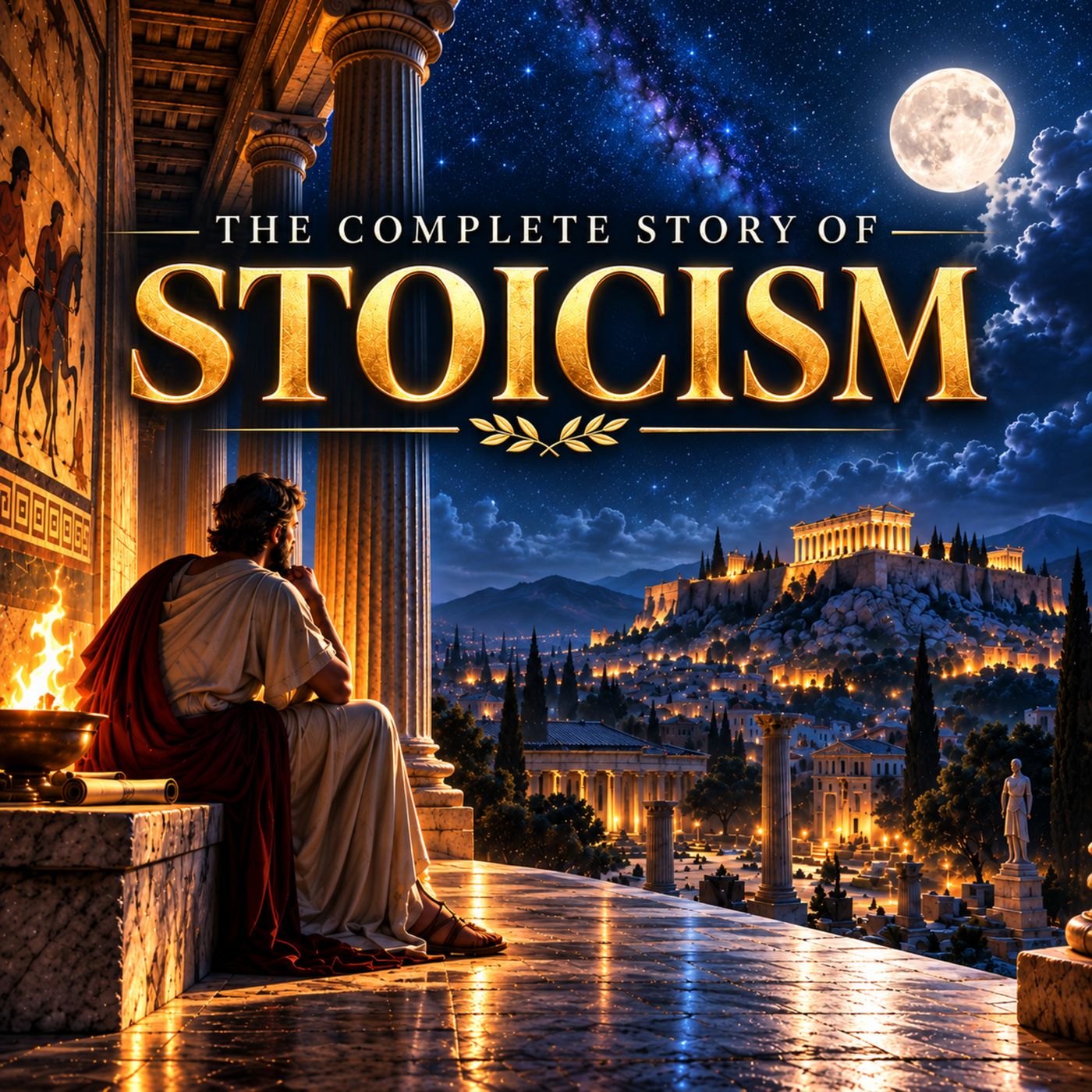
The Complete Story of Stoicism: Zeno to Marcus Aurelius | Philosophy for Sleep
Published 1 month ago
Description
A calm, carefully researched bedtime journey through the history and philosophy of Stoicism — from Zeno of Citium in ancient Athens to Seneca, Musonius Rufus, Epictetus and Marcus Aurelius.
Tonight’s story begins around 300 BCE beneath the Stoa Poikile, the Painted Porch in the Athenian Agora from which Stoicism took its name. Here, Zeno began teaching a philosophy that would develop into one of the most influential schools of the ancient Mediterranean world.
From Zeno, we move through Cleanthes and Chrysippus, whose work helped turn early Stoicism into a systematic philosophy embracing logic, physics and ethics. Much of their writing is lost, so our knowledge of the early school survives largely through fragments and later authors.
The journey then moves into the Roman world. We meet Seneca, the wealthy statesman and writer who reflected on anger, mortality and the use of time; Musonius Rufus, who treated philosophy as something to be practised in ordinary life; and Epictetus, who lived in slavery before becoming one of antiquity’s most influential Stoic teachers.
Along the way, we explore some of Stoicism’s central questions. What is genuinely good? What depends upon us, and what does not? How do our judgements shape emotional experience? What did the Stoics mean by living according to nature? How could they defend both fate and meaningful human agency? And why did they place virtue above wealth, status, health and comfort?
Ancient Stoicism is often simplified today as emotional suppression or simply “not caring.” That is misleading. The Stoics did aim to overcome destructive passions they understood as involving mistaken judgements, but they did not imagine the ideal person as numb or incapable of feeling. Their accounts also allowed for involuntary first reactions and for rational forms of joy, caution and goodwill.
Eventually, we reach Marcus Aurelius — Roman emperor, student of Stoic philosophy and author of the private writings now known as the Meditations. Written in Greek largely as exercises and reminders to himself, they show someone repeatedly trying to bring his conduct back into line with the philosophy he believed he should practise.
Stoicism changed across the centuries, and the surviving Roman texts do not preserve every aspect of the earlier Greek school. This journey therefore distinguishes between early Stoic doctrine, later Roman Stoicism and ideas now commonly presented under the Stoic name.
Told slowly and gently for sleep, relaxation and quiet late-night listening. There is nothing you need to memorise and nowhere you need to get to. Simply settle in and let the arguments, philosophers and ancient city streets drift quietly past.
Sleep Stories from the Pioneers is a series of calm, research-led journeys through the lives, ideas, histories and traditions that have changed how we understand ourselves and the world around us.
🌙 Prefer the full extended sleep version with hours of Mediterranean night ambience?
Watch The Complete Story of Stoicism on YouTube:
https://youtu.be/MHjlbeBGsCo
☕ Support Sleep Stories from the Pioneers:
https://ko-fi.com/pioneersofhumanbehaviour
🌐 Explore Pioneers of Human Behaviour:
https://pioneersofhumanbehaviour.com/
Sleep well. 🌙
Stories to fall asleep to. Ideas worth waking up with.
Tonight’s story begins around 300 BCE beneath the Stoa Poikile, the Painted Porch in the Athenian Agora from which Stoicism took its name. Here, Zeno began teaching a philosophy that would develop into one of the most influential schools of the ancient Mediterranean world.
From Zeno, we move through Cleanthes and Chrysippus, whose work helped turn early Stoicism into a systematic philosophy embracing logic, physics and ethics. Much of their writing is lost, so our knowledge of the early school survives largely through fragments and later authors.
The journey then moves into the Roman world. We meet Seneca, the wealthy statesman and writer who reflected on anger, mortality and the use of time; Musonius Rufus, who treated philosophy as something to be practised in ordinary life; and Epictetus, who lived in slavery before becoming one of antiquity’s most influential Stoic teachers.
Along the way, we explore some of Stoicism’s central questions. What is genuinely good? What depends upon us, and what does not? How do our judgements shape emotional experience? What did the Stoics mean by living according to nature? How could they defend both fate and meaningful human agency? And why did they place virtue above wealth, status, health and comfort?
Ancient Stoicism is often simplified today as emotional suppression or simply “not caring.” That is misleading. The Stoics did aim to overcome destructive passions they understood as involving mistaken judgements, but they did not imagine the ideal person as numb or incapable of feeling. Their accounts also allowed for involuntary first reactions and for rational forms of joy, caution and goodwill.
Eventually, we reach Marcus Aurelius — Roman emperor, student of Stoic philosophy and author of the private writings now known as the Meditations. Written in Greek largely as exercises and reminders to himself, they show someone repeatedly trying to bring his conduct back into line with the philosophy he believed he should practise.
Stoicism changed across the centuries, and the surviving Roman texts do not preserve every aspect of the earlier Greek school. This journey therefore distinguishes between early Stoic doctrine, later Roman Stoicism and ideas now commonly presented under the Stoic name.
Told slowly and gently for sleep, relaxation and quiet late-night listening. There is nothing you need to memorise and nowhere you need to get to. Simply settle in and let the arguments, philosophers and ancient city streets drift quietly past.
Sleep Stories from the Pioneers is a series of calm, research-led journeys through the lives, ideas, histories and traditions that have changed how we understand ourselves and the world around us.
🌙 Prefer the full extended sleep version with hours of Mediterranean night ambience?
Watch The Complete Story of Stoicism on YouTube:
https://youtu.be/MHjlbeBGsCo
☕ Support Sleep Stories from the Pioneers:
https://ko-fi.com/pioneersofhumanbehaviour
🌐 Explore Pioneers of Human Behaviour:
https://pioneersofhumanbehaviour.com/
Sleep well. 🌙
Stories to fall asleep to. Ideas worth waking up with.