Episode Details
Back to Episodes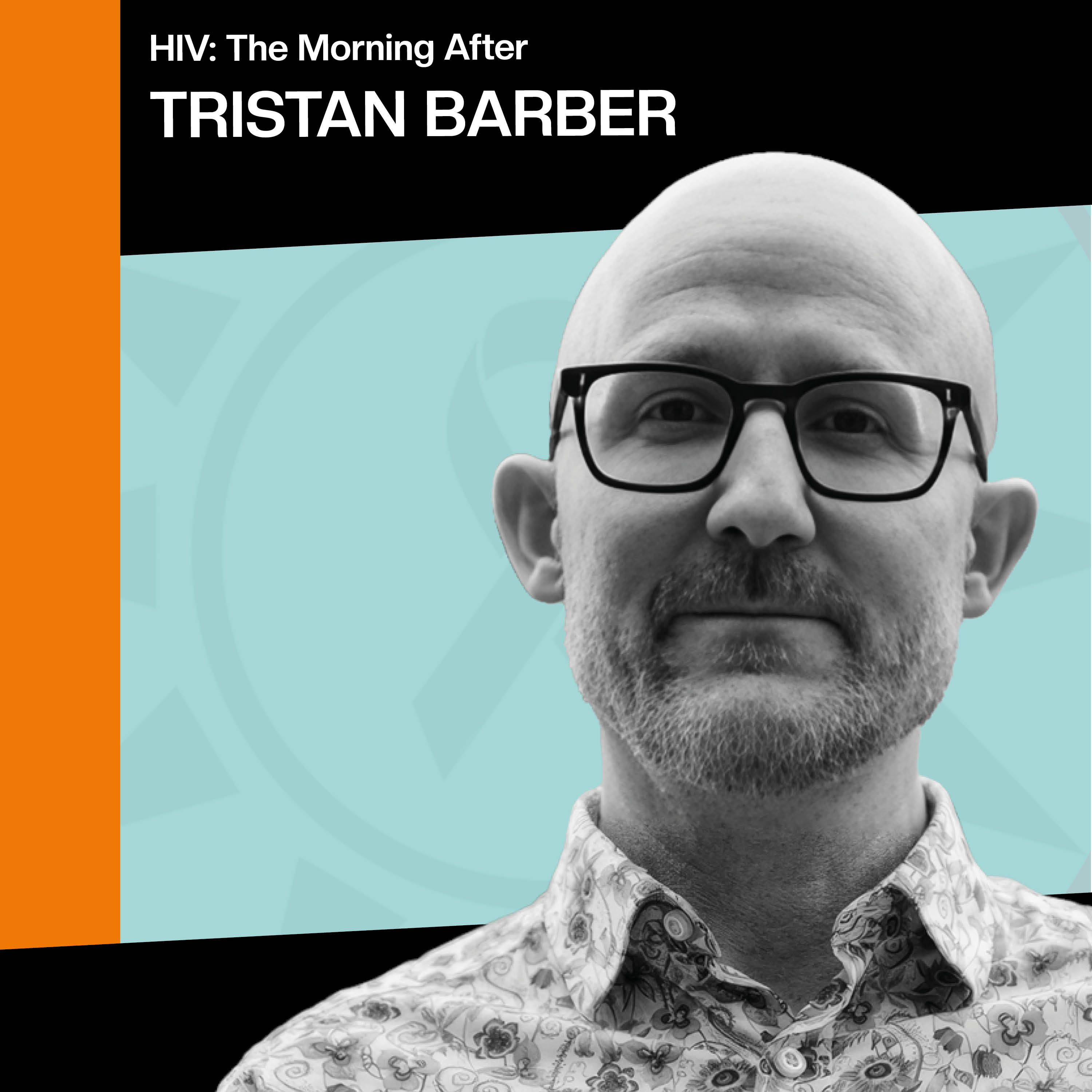
Dr Tristan Barber: Prescription, Patient, Pioneer
Description
A leading HIV consultant who went from writing prescriptions to needing them in the summer of 2002 - and became the first person living with HIV to lead the British HIV Association.
Summary
Tristan Barber was born in Cornwall in 1975, took his A-levels at 16, and arrived in London in September 1992 as a gay man from a rural county where nobody was out. Medical school felt like a small homophobic village. London in the 90s did not. He went to clubs every night, nearly failed his studies from enjoying himself almost too much, and eventually landed his first job in sexual health and HIV at a busy East London clinic in 2002 - the year everything changed.
Towards the end of that rotation, Tristan got sick. A ten-day viral illness in the middle of summer. His GP prescribed antibiotics and didn't ask anything else. Tristan went for an HIV test himself, struggled to find a clinic where he didn't know anyone working, and bumped into an old colleague in the waiting room who asked why he was there. The test was positive. He enrolled in a seroconverter trial at Imperial College - four drugs for three months - and became rapidly undetectable. Then the trial required him to stop treatment, his viral load rebounded, and a small depression set in. That was his summer of 2002.
What followed was a career that took in research at Imperial, clinical trials recycling old drugs for people who had run out of options, an elective in San Francisco where HIV drugs were advertised on bus stops, and fieldwork in rural Nepal supporting doctors who were delivering HIV care with a manual and a telephone line. In 2018, he set up a dedicated HIV and ageing service at the Royal Free Hospital - the first of its kind - built around the idea that your birthday age and your HIV age are not the same thing.
He became the first person living with HIV to chair the British HIV Association, led the campaign to allow people with HIV to donate sperm and eggs, and helped change Civil Aviation Authority rules so commercial pilots with HIV could fly. He is clear-eyed about the mixed messaging in HIV medicine: one pill once a day does not mean it's sorted.
Key Moments
- [01:26] The summer of 2002 - starting a first job in HIV medicine at a busy East London clinic, and the ten-day illness that made him suspect something was wrong
- [03:23] Finding somewhere to test - the difficulty of getting an anonymous HIV test when you work in the field, and bumping into a colleague in the waiting room
- [04:18] The seroconverter trial - quadruple therapy at Imperial College, rapid undetectability, treatment interruption, viral rebound, and the deflation that followed
- [05:41] Shame and sex - why we can't shame people for having sex or for acquiring STIs, and the fact that most sexual activity globally is condomless
- [08:07] Cornwall to London - A-levels at 16, arriving in 1992, and the 90s gay scene: Love Muscle, Popstarz, and smoking in every pub
- [12:12] From Brighton to San Francisco - Martin Fisher as a leading light, HIV drugs advertised at bus stops in 1998, and a city still in shock
- [14:42] Coming back to HIV - leaving the field for A&E, thinking it was too obvious a career choice for a gay man, then realising it was the perfect fit
- [15:20] Two waves of optimism - 1996 and triple therapy, then the mid-2000s when drugs became well-tolerated and effective against resistant virus
- [19:14] Being your own field of expertise - the privilege and the complication of clinical literacy after diagnosis, and the newspaper articles his father left on the kitchen table
- [30:35] HIV and the ageing brain - Tristan's MD research into cognitive impairment, and the finding that most people on contemporary treatment do no