Episode Details
Back to Episodes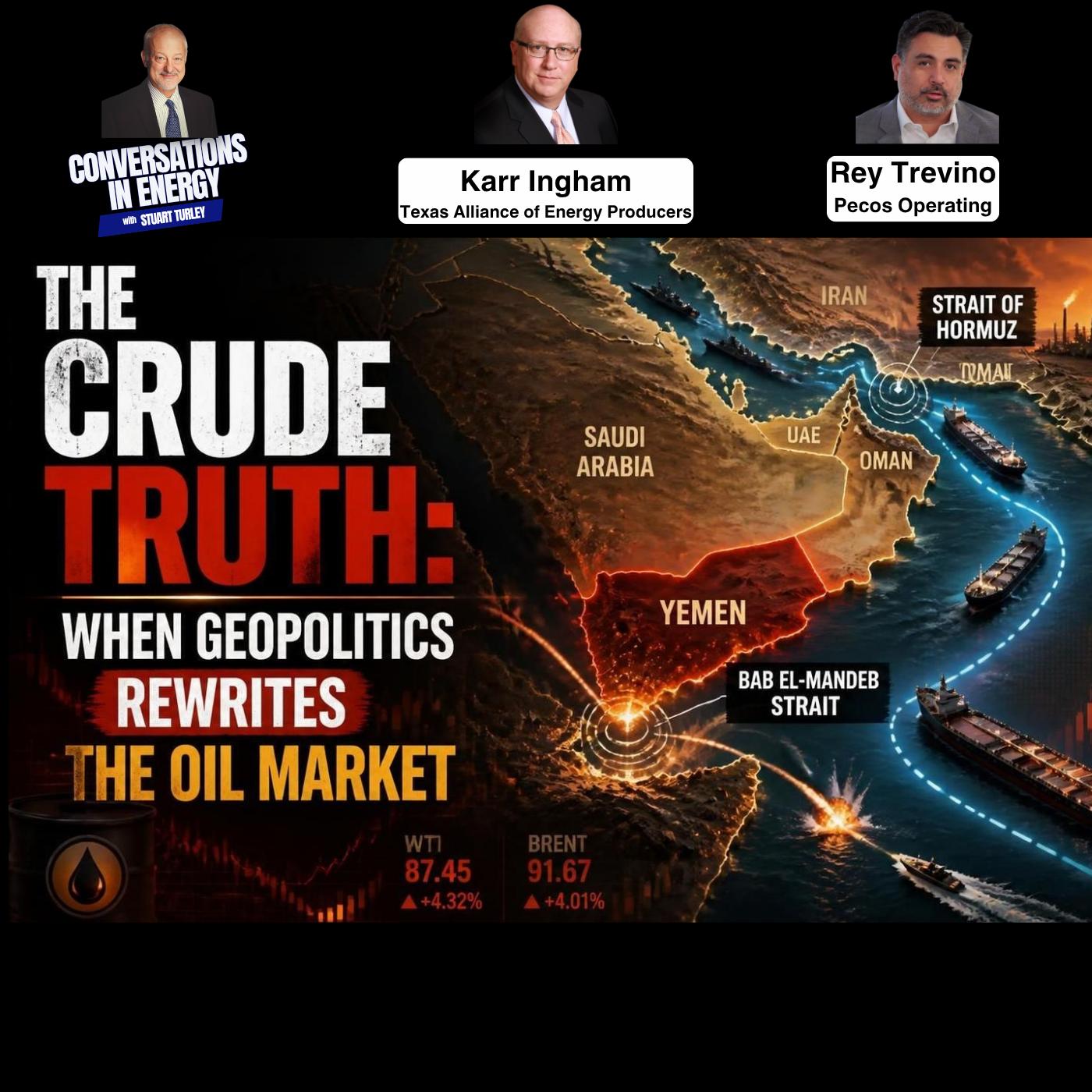
The Crude Truth: When Geopolitics Rewrites the Oil Market
Description
In early 2026, the global oil market experienced a seismic shift. When geopolitical tensions with Iran escalated, crude prices surged—and Texas responded. In this episode, economist Karr Ingham, oil producer Rey Trevino, and energy journalist Stu Turley break down how a single conflict triggered a cascade of market changes: rig counts climbing for the first time in years, jobs returning to the industry, and a historic deal securing 65 billion barrels of Venezuelan oil. But here's the real story: how these moves reshape energy independence, refinery infrastructure, and consumer prices for the next decade.
Check out the Texas Alliance of Energy Producers: https://www.texasalliance.org
Connect with Karr on his LinkedIn https://www.linkedin.com/in/karr-ingham-9b62333a/
Connect with Rey on his LinkedIn https://www.linkedin.com/in/reytrevinoiii/
1. Global Oil Market Transformation
The hosts discuss dramatic shifts in global oil supply and demand, particularly focusing on:
China's changing import patterns (buying Russian oil at elevated prices, reduced purchases from Iran and Iraq)
The impact of the Iran conflict on crude oil prices and market dynamics
Russia's refinery capacity reduction (down 40%) due to drone strikes
Global diesel shortage and its economic implications
2. Venezuela's Oil Resources & U.S. Policy
A significant focus on the recent U.S. deal securing 65 billion barrels of Venezuelan oil over 25 years:
The removal of Maduro and its impact on oil production potential
Secretary Chris Wright's role in facilitating investment opportunities for Chevron, Exxon, and independents
Plans to increase Venezuelan production by 1 million barrels per day
The strategic importance of liberating these resources for global markets
3. Texas Oil & Gas Production Trends
Detailed analysis of Texas's response to market changes:
Rig count recovery: from 229 rigs in December to 282 currently (41 rigs added year-over-year)
Production increases despite declining rig counts (efficiency and productivity gains)
Job creation returning to the industry after losses in 2024-2025
The Permian Basin's continued dominance
4. Crude Oil Quality & Refinery Infrastructure
Discussion of different crude types and refining capabilities:
Light sweet crude (Texas) vs. heavy sour crude (Venezuelan, Canadian)
Why the U.S. exports light sweet crude (refineries worldwide are better equipped to process it)
Plans for a new refinery in Brownsville to process Texas sweet crude domestically
The importance of crude oil trade and energy independence
5. U.S. Energy Independence Progress
Reduction in crude oil imports from 60-65% twenty years ago to approximately 10% today
The lifting of the crude oil export ban in 2015 as a critical milestone
Current import sources: primarily Canada (20%), minimal imports from the Strait of Hormuz (1.5-2%)
California's hypocrisy in importing oil from Russia, Ecuador, and Iran while opposing domestic production
6. Tariffs & Trade Policy Debate
A nuanced discussion on tariffs and trade:
Karr's anti-tariff stance vs. Stu's perspective on managed tariffs
The weaponization of the U.S. dollar through sanctions
Canada's importance as a reliable energy partner
The need for balanced trade relationships
7. Regulatory & Legislative Challenges
Texas Alliance of Energy Producers' ongoing work:
Produced water management from increased oil and gas production
Associated natural gas handl