Episode Details
Back to Episodes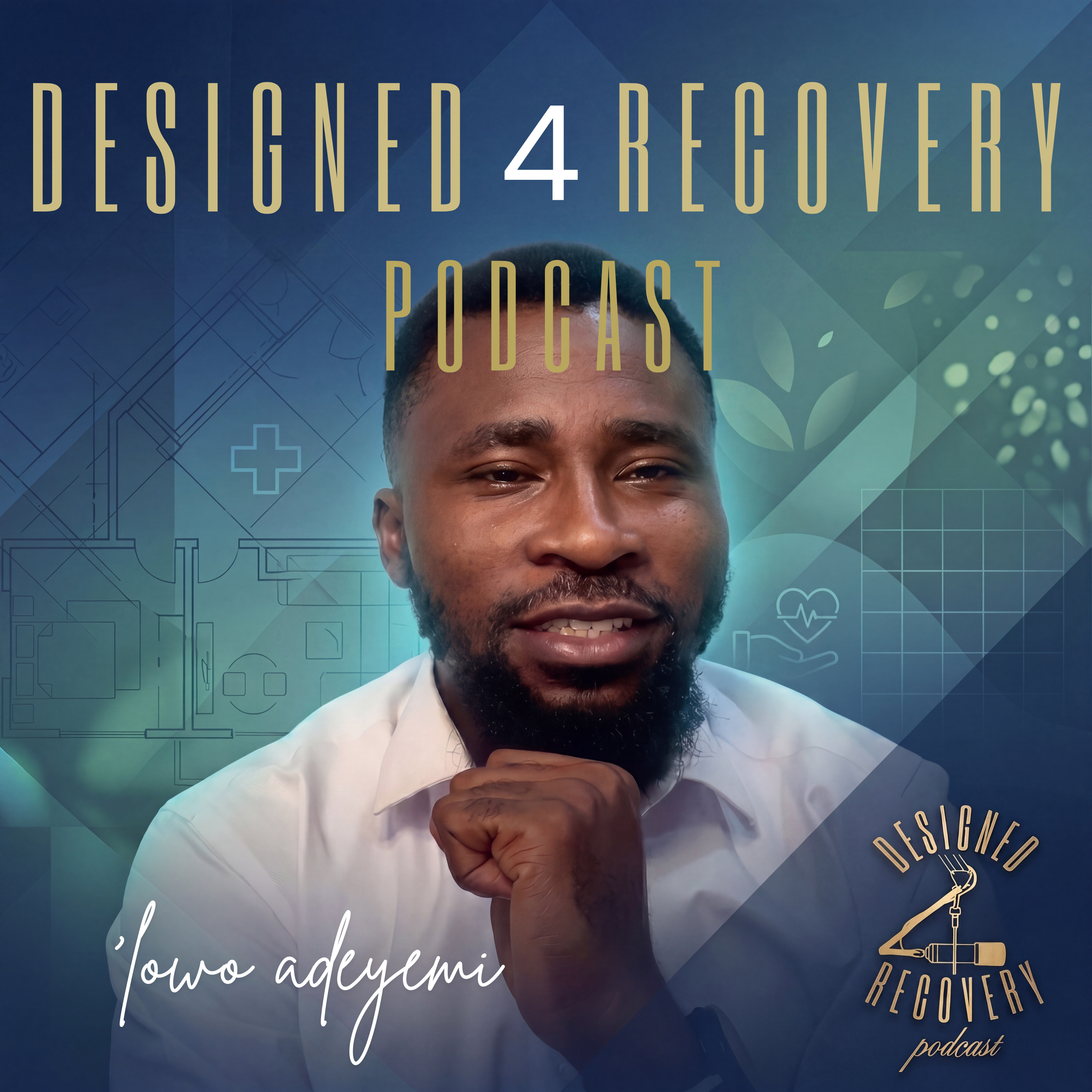
D4R Episode 32: Nicholas Kelly- Designing Around the Patient: Rethinking Healthcare From Inside out
Description
Hey! I'd love to hear your thoughts, send me a voice note.
Designed 4 Recovery – Holistic Care Gap Series
Episode: Designing Around the Patient: Rethinking Healthcare from the Inside Out
What does patient-centered care really mean if the environment itself creates stress, confusion, discomfort, or disconnection?
In this episode of Designed 4 Recovery, we explore one of healthcare’s most overlooked contradictions: the gap between patient-centered care and patient-centered design.
Joining the conversation is . Together, we unpack how healthcare environments influence healing far beyond treatment plans and clinical outcomes.
Summary
In this episode of Design for Recovery, host ‘lowo Adeyemi engages with Nicholas Kelly, a guest with a rare dual perspective—a Registered Dietitian who has also experienced healthcare firsthand as a patient. They explore the critical aspects of patient-centered design in healthcare environments, discussing how thoughtful design can enhance healing experiences. The conversation delves into the challenges faced by patients in hospital settings, the importance of comfort and navigation, and the need for collaborative design processes that include patient voices. The episode emphasizes the significance of creating healing environments that prioritize patient experience and comfort, ultimately redefining success in healthcare design.
🔍 In This Episode, We Explore:
Why healthcare environments deeply affect patient behavior and recovery
The emotional and physiological impact of design on healing
How hospital spaces can unintentionally create resistance to care
The overlooked connection between nutrition, environment, and recovery
Why control and dignity matter in patient-centered spaces
The role of lighting, noise, waiting experiences, and wayfinding in stress reduction
Why “patient-centered” often remains a slogan instead of a lived reality
The importance of involving patients in healthcare design decisions
Equity, inclusion, and culturally responsive healthcare environments
What healthcare designers and decision-makers need to hear directly from patients
💡 Key Takeaway
Patient-centered design must reflect the needs of patients.
Design should prioritize healing environments over clinical protocols.
The dual perspective of clinician and patient is invaluable.
Comfort and navigation are crucial in healthcare spaces.
The admission process is a critical point for design improvement.
Waiting areas often lack privacy, impacting patient experience.
Collaborative design should include diverse patient voices.
Cultural differences must be considered in healthcare design.
Success in healthcare design should focus on patient experience.
Designing for the majority can still accommodate diverse needs.
🎧 Who This Episode Is For
Healthcare Architects & Interior Designers
Hospital Administrators & Healthcare Leaders
Clinicians & Care Teams
Evidence-Based Design Professionals
Healthcare Students & Researchers
Anyone passionate about improving the patient experience
🌿 About Designed 4 Recovery
Designed 4 Recovery explores how healthcare design shapes human outcomes, emotional wellbeing, and recovery experiences. Through conversations, deep dives, and evidence-informed discussions, the podcast examines the intersection of healthcare, architecture, psychology, and healing.
📢 Connect & Share
If this episode resonated with you:
Share it with a healthcare professional or designer
Start conversations about patient-centered environments
Reflect on how the spaces around us influence care
Because better healthcare begins with better experi