Episode Details
Back to Episodes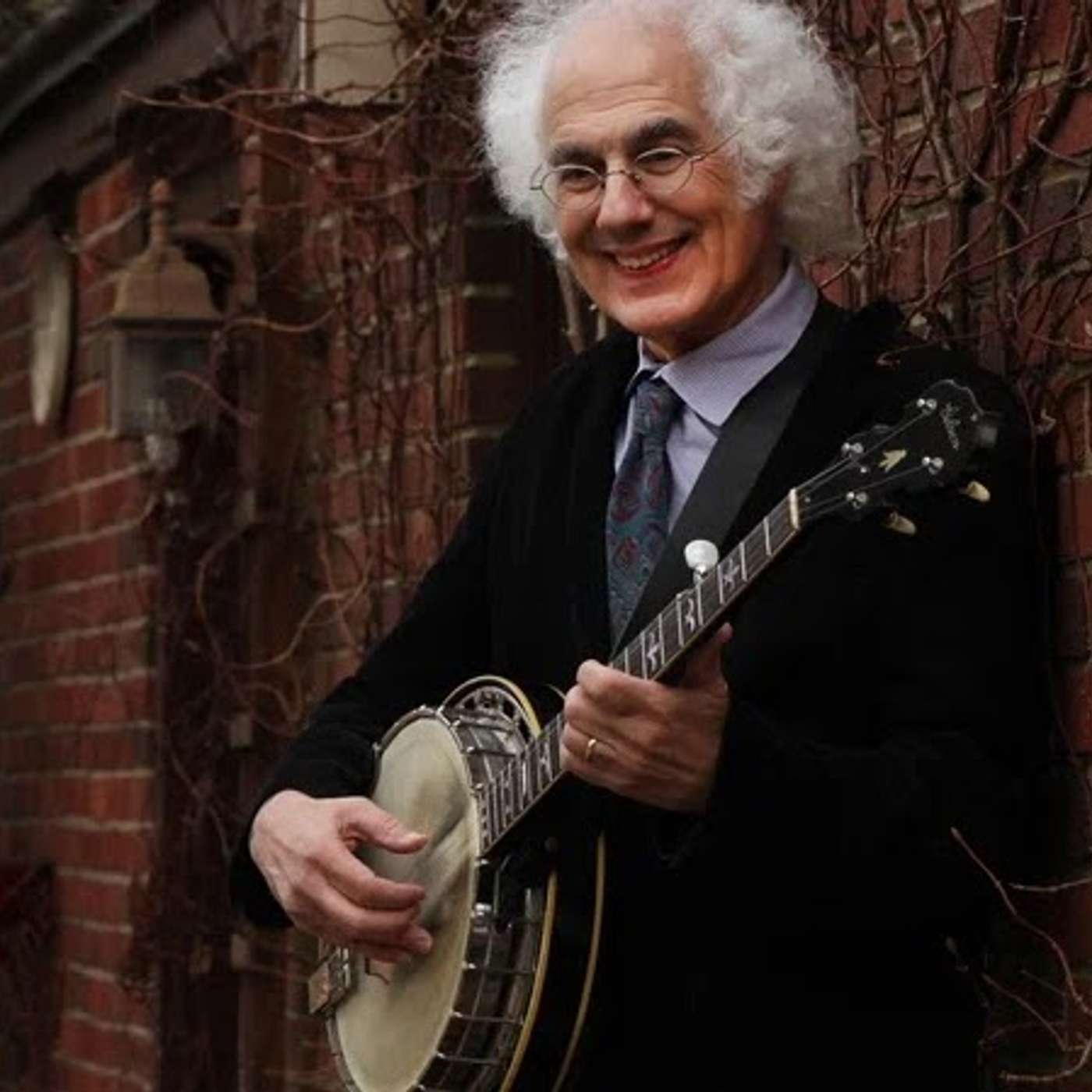
There are a Lot of People in a Tune: Stephen Wade on Banjo History, Folk Tradition, and Our Common Life
Description
Stephen Wade is a renowned banjo player, folklorist, and author. He joins today to discuss his new book, Our Common Life, and explore our shared musical inheritance, American folk culture, creative individuality, and the promises we make to those whose stories we carry.
Episode Summary
Every traditional song contains more than notes and words. It carries the traces of musicians, families, communities, migrations, technologies, institutions, and individual acts of invention. Bob Dylan may have sung about containing multitudes, but Stephen Wade gifts us with his wonderful and humane understanding of the multitudes contained in a tune.
In this episode of The Sum of All Wisdom, Scott Catey speaks with renowned banjo player, folklorist, historian, and author Stephen Wade about his new book, Our Common Life: Folk Songs from the Front Porch to the Concert Hall, published by the University of Illinois Press.
Stephen describes traditional music as a collection of “common possessions with individual contributions.” A tune may pass through generations, but it never remains unchanged. Each musician catches it, puts their hands on it, and contributes something of their own, sometimes surprisingly.
Beginning with Stephen’s childhood in Chicago, the conversation follows the people and encounters that shaped his musical life: sidewalk performer Casey Jones and his trained chicken Mae West; blues musicians Muddy Waters, Howlin’ Wolf, and Big Joe Williams; banjo teachers Fleming Brown and Doc Hopkins; and the musicians, writers, and working people whose lives populate Stephen’s research.
Along the way, Stephen traces the African and Caribbean ancestry of the banjo, the meeting of Black and European musical traditions, Chicago’s role as a crossroads for American music, and the relationship between changing instruments, technologies, dances, and communities.
But this is also a conversation about the responsibilities of memory. Stephen explains that his work represents “promises made” to people who trusted him with their knowledge and stories. Research, in that sense, becomes more than documentation. It is an ethical act: gratitude, reciprocity, and cultural preservation.
Episode Highlights
Scott and Stephen discuss:
- Growing up amid Chicago’s sidewalk culture, churches, record shops, radio stations, and blues clubs
- Casey Jones, the celebrated Chicago street performer who performed with a chicken named Mae West
- Hearing Muddy Waters, Howlin’ Wolf, Big Joe Williams, and Mahalia Jackson as a young person
- Stephen’s early discovery of guitar, five-string banjo, and American traditional music
- The differences among five-string, plectrum, tenor, fretless, and gourd banjos
- How musical styles, social dancing, technology, and instrument design influence one another
- Stephen’s apprenticeship with Fleming Brown and his relationship with Doc Hopkins
- Pete Seeger’s influential book How to Play the Five-String Banjo
- WLS, the National Barn Dance, and Chicago’s place in American broadcasting history
- The musical lineage connecting Dick Burnett, Doc Hopkins, Fleming Brown, and Stephen Wade
- The history of “Man of Constant Sorrow”
- Chicago as both an arrival point and a dissemination point for American music
- The African and Caribbean origins of the banjo
- Cultural sharing and cultural distinctiveness in American folk traditions
- William Sidney Mount’s painting Catching the Tune
- Folklorist and music librarian Dena Epstein
- Hilda Polacheck’s transformative childhood experience at Hull House
- The extraordinary moment Stephen discovered that the historical account he was reading belonged to Dena Epstein’s mother
- Will Keys, musical self-reliance, and making banjo strings from scr