Episode Details
Back to Episodes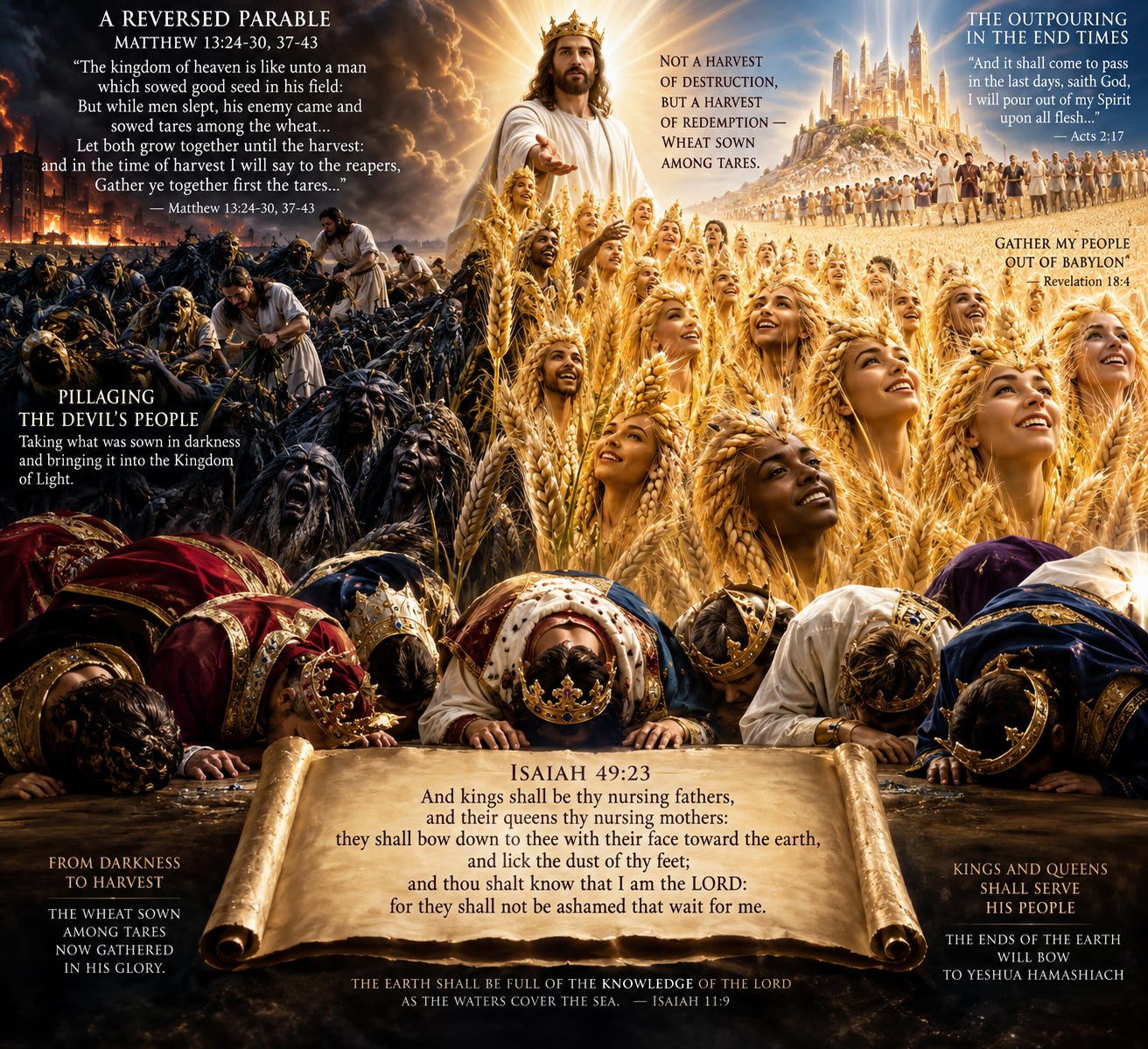
The Wheat Harvest
Description
Episode Description
In this teaching, the central theme is a prophetic picture of wheat being sown among tares as a reversal of Jesus’ parable in Matthew 13. Instead of the enemy sowing tares among God’s wheat, the message develops the picture of God sending His people into places associated with darkness, deception, paganism, and spiritual captivity so that a harvest can be brought into the Kingdom.
The teaching moves through covenant, faith, spiritual protection, freedom from the Law, the Stone who is Christ, opening prison doors, seeking first the Kingdom, the wheat and tares, Daniel and Babylon, the Magi, signs in the heavens, Revelation 12, judgment, repentance, mercy, and the reward associated with helping God’s people.
The major prophetic turning point occurs around 31:46, when the observation of wheat growing beside the road becomes a picture of the inverse of the wheat-and-tares parable. The teaching describes the wheat as appearing where tares would normally be expected and connects this with a present spiritual harvest.
Scriptures Used in the Teaching
* 00:00:53 — Galatians 5:16, 24–25“Crucify the flesh” and “walk in the Spirit.” Used in the opening prayer as a description of the believer’s spiritual posture.
* 00:01:12 — 1 John 4; 2 John 7–11Explicitly named at the beginning of the teaching. These passages concern confessing Jesus Christ as having come in the flesh and maintaining sound fellowship and doctrine.
* 00:01:55–02:19 — Galatians 3:7–9, 13–14, 26–29Used for being Abraham’s seed by faith and for the blessing of Abraham coming upon the Gentiles through Christ.
* 00:02:50 — Colossians 3:15–17 / 1 Thessalonians 5:18“Be ye thankful.” Gratitude becomes an important recurring theme throughout the episode.
* 00:04:31–04:47 — Matthew 7:24–27 / Luke 6:47–49The teaching speaks about standing on the Rock while storms beat against the house and still having confidence that the house will stand.
* 00:04:52 — Psalm 91:7–10“A thousand may fall at your side and ten thousand at your right hand,” but destruction will not come near the protected dwelling. Used as a promise of God’s protection.
* 00:06:15 — Matthew 6:10 / Luke 11:2“Thy will be done.” Prayer is presented as trusting God’s will rather than attempting to control every circumstance.
* 00:06:27–06:30 — Philippians 4:6–7“Make your request known” and allow the peace that surpasses understanding to guard your heart.
* 00:06:41 — Isaiah 49Explicitly named as one of the major passages behind the teaching. The speaker says Isaiah 49 suddenly caused the message to “click.”
* 00:07:16–07:48 — Luke 20:17–18 / Matthew 21:42–44“Whoever falls on that stone will be broken, but on whomever it falls, it will grind him to powder.” The Stone is identified as Jesus Christ, Yeshua HaMashiach.
* 00:07:59–08:04 — Luke 20:19The chief priests and scribes understand that Jesus has spoken the parable against them and seek to seize Him, but they fear the people.
* 00:08:37 — Luke 20:20“They watched him and sent spies who pretended to be righteous.” Used as a biblical example of people concealing their intentions while watching or attempting to trap someone.
* 00:09:24 — Luke 20:18The teaching returns to the Stone imagery and the warning of being crushed by the Stone rather than becoming broken before Christ.
* 00:11:12 — Daniel 4:13, 17, 23The teaching references the biblical language of “watchers.” The episode then develops its own interpretation of what these watchers represent.
* 00:11:34 — Matthew 18:6–7 / Romans 14:13“They put stumbling blocks.” Used for opposition deli