Episode Details
Back to Episodes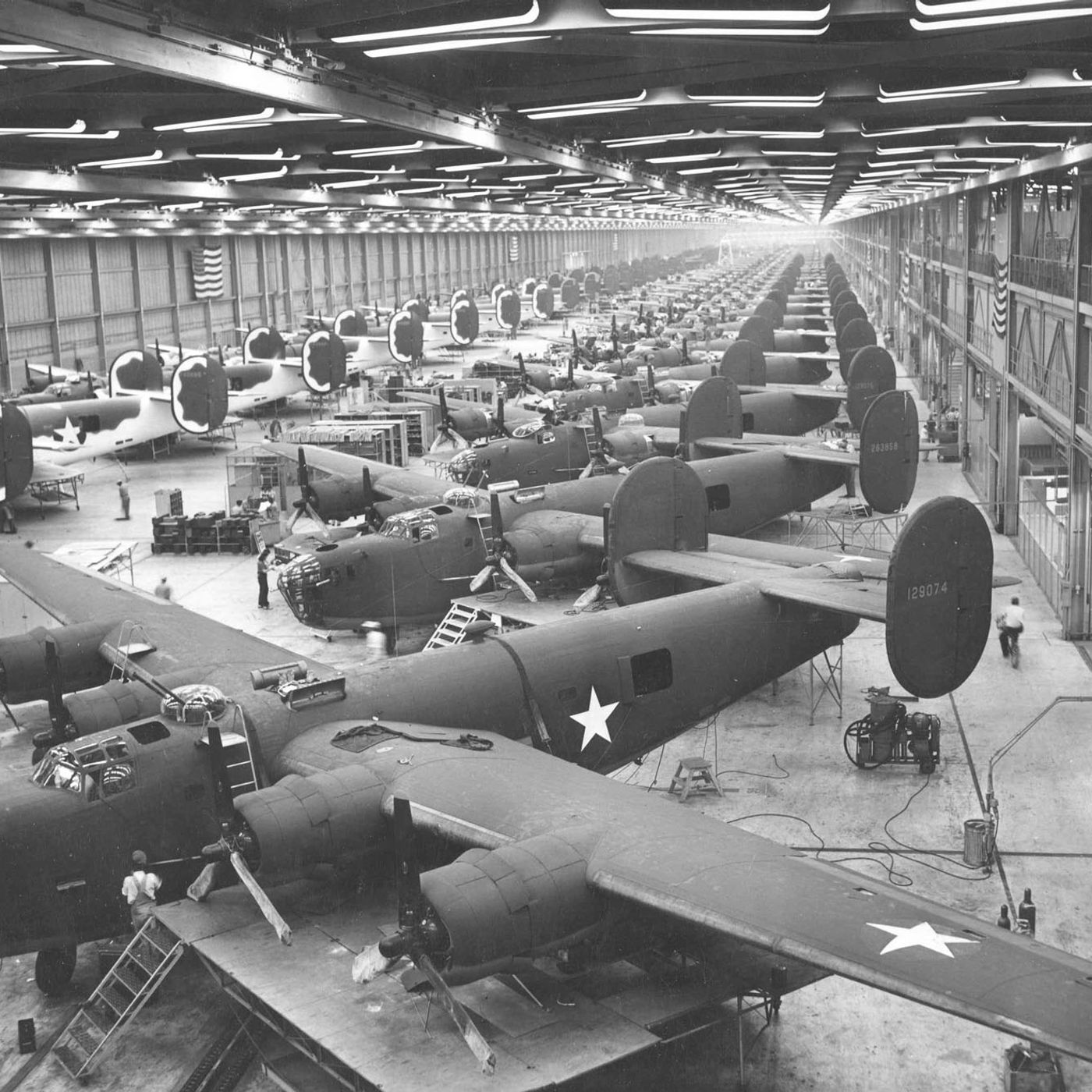
Unleashing America's Industrial Wartime Might - Arthur Herman
Published 1 month, 3 weeks ago
Description
CAPTION: B-24 CALIFORNIA
Unleashing America's Industrial Wartime Might
Arthur Herman, author of Freedom's Forge, chronicles how American private enterprise mobilized to win World War II. The narrative centers on two key figures: Bill Knudsen of General Motors and master builder Henry Kaiser. Knudsen, a Danish immigrant, used his expertise in flexible mass production to rapidly scale the manufacturing of tanks, artillery, and aircraft parts. Meanwhile, Kaiser revolutionized shipbuilding by constructing hundreds of crucial Liberty ships from California mudflats to keep Britain's Atlantic supply lines alive. The conversation also highlights the immense technological challenges of producing the complex B-29 Superfortress bomber. Ultimately, Herman argues that the "Arsenal of Democracy" succeeded because Washington chose to unleash private sector innovation and market incentives instead of imposing a highly centralized government command, a vital lesson for modern defense readiness. He directly contrasts this private success with the highly disastrous nationalized economic efforts of World War I. (1)