Episode Details
Back to Episodes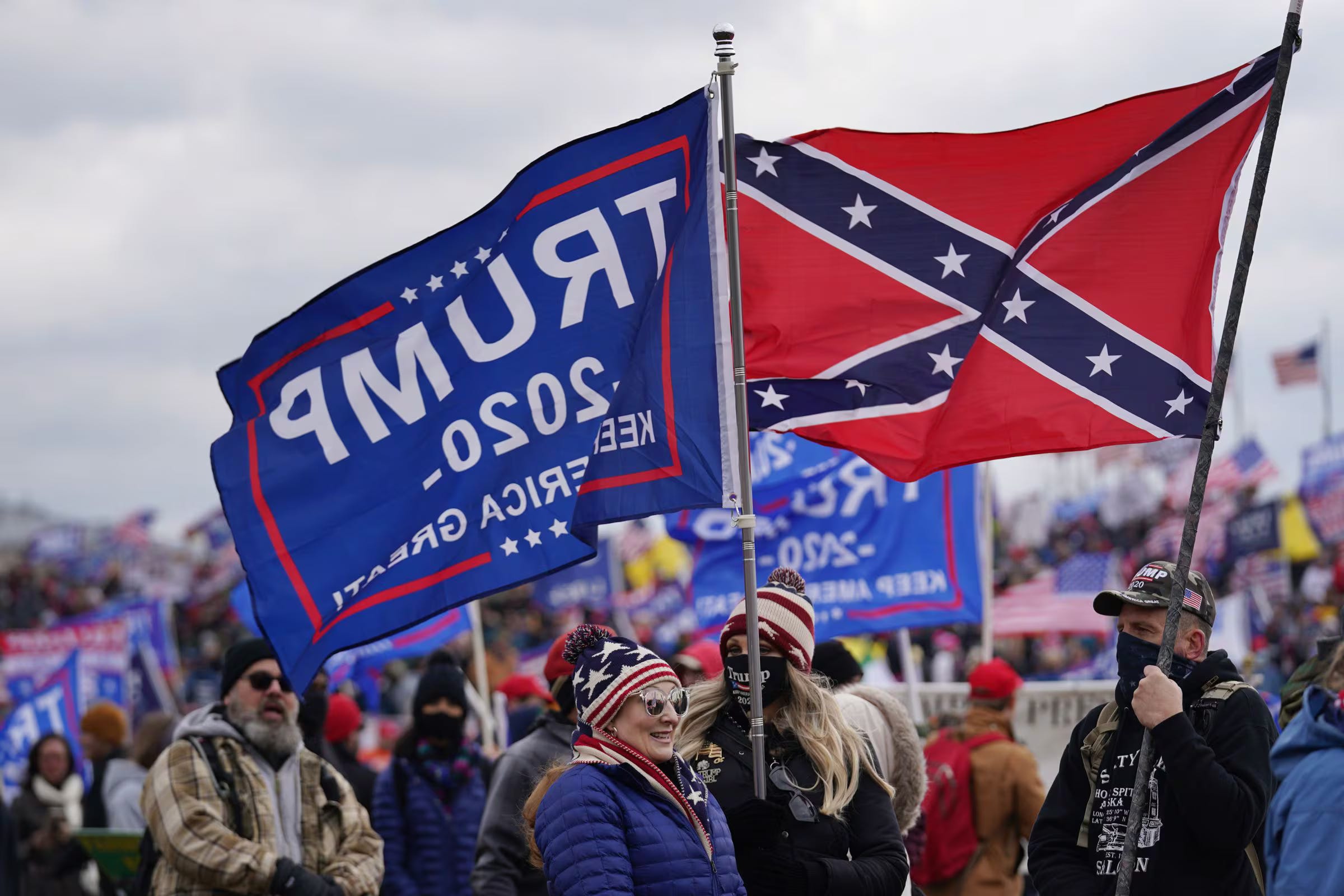
Why The Right Says the Party Switch Never Happened
Description
They will tell you the Republicans freed the slaves. They will tell you the Democrats founded the hood and burning cross crowd. They will tell you the parties never switched.
There is a psychological reason for that.
Ziva Kunda, psychologist at the University of Waterloo, spent her career studying how people process information that threatens what they want to believe. In 1990 she published one of the most cited papers in social psychology. She called the phenomenon motivated reasoning. The brain does not evaluate evidence objectively. It starts with the conclusion it needs to be true and works backwards. It recruits facts that support the conclusion and discards everything else.
Conservatives need the party switch to be a myth. Because if it is real, their party is the political heir to the Confederacy. So the brain goes to work. It finds the two facts that feel safe and stops there. Republicans freed the slaves. True. Democrats founded the hood and burning cross crowd. True. And it goes no further. Because going further is too dangerous.
So here is what actually happened.
For nearly a century after the Civil War, the South was a Democratic stronghold. Not because Southern Democrats were liberals. Because they were segregationists and the Republican Party was the party that had defeated them in the Civil War and freed their slaves. Southern Democrats didn’t share values with Northern Democrats. They shared an enemy. The Republican Party.
That changed in 1948 when Harry Truman desegregated the military. A faction of Southern Democrats walked out of the Democratic National Convention in protest and formed the States Rights Democratic Party, better known as the Dixiecrats. Their platform was explicit. Racial segregation. Opposition to federal civil rights legislation. Preservation of white supremacy as a legal and social structure. Their presidential candidate Strom Thurmond won four Southern states.
The Dixiecrats lost that election. But they had drawn a map.
In 1964 Lyndon Johnson signed the Civil Rights Act into law. That night he told his aide Bill Moyers that he thought they had just delivered the South to the Republican Party for a long time to come. Johnson understood that signing that bill was an act of political self-destruction for the Democratic Party in the South. He signed it anyway.
Barry Goldwater, the Republican presidential candidate that same year, voted against it. He didn’t use racial language. He called it an unconstitutional overreach by the federal government. But the effect was identical. Black voters who had been slowly migrating to the Democratic Party since the New Deal left the Republican Party entirely. And white Southern voters who were furious about civil rights saw a new home forming.
Richard Nixon’s team formalized what was already happening.
They called it the Southern Strategy.
Political strategist Kevin Phillips laid out the blueprint in his 1969 book The Emerging Republican Majority. The argument was clinical. Republicans were not going to win Black voters. So they should stop trying and go hunting where the ducks were. The ducks were white Southern voters radiating with rage over federal civil rights enforcement. Law and order. States rights. The silent majority. Every phrase was a signal. Every signal was received.
It worked beyond anything Nixon’s team had projected.
By the late 1970s the entire political leadership of the South had flipped from Democrat to Republican. By the 1990s the transformation was complete. The same states that had voted Democratic for a hundred years were now reliably Republican. The same states that flew Confederate flags as Democrats flew them as Republicans. The same politicians who had built careers on segregation either switched parties or were replaced by Republicans who adopted identical posit