Episode Details
Back to Episodes“We know who lives inside wild fish. We don’t know what happens in there” by Pablo Sar
Description
This post was originally published on my Substack. I’m sharing it here because parasite–host interactions in wild fish may have substantial and largely neglected welfare implications, while we still know remarkably little about the experiences of the animals involved. The post is intended mainly to highlight this empirical gap and some potentially tractable directions for further research.
Introduction
Cataracts cover much of both eyes of a fish who is still feeding and moving normally. A bird approaches from above, unseen. The attack succeeds. If anyone is keeping count, the fish is recorded as a death from predation.
This is not a hypothetical case. In fish from Kalmar Sound, the trematode Diplostomum, whose larvae settle in the lens of the eye, was found in 86 of the 88 fish examined, while all 88 had detectable eye-fluke-induced cataracts. Cataracts covered more than half of both eyes in 35% of the sample. Among those tested against a simulated attack from above, none with more than half of both eyes covered responded by fleeing. This does not prove that they were caught more often in the wild [...]
---
Outline:
(00:49) Introduction
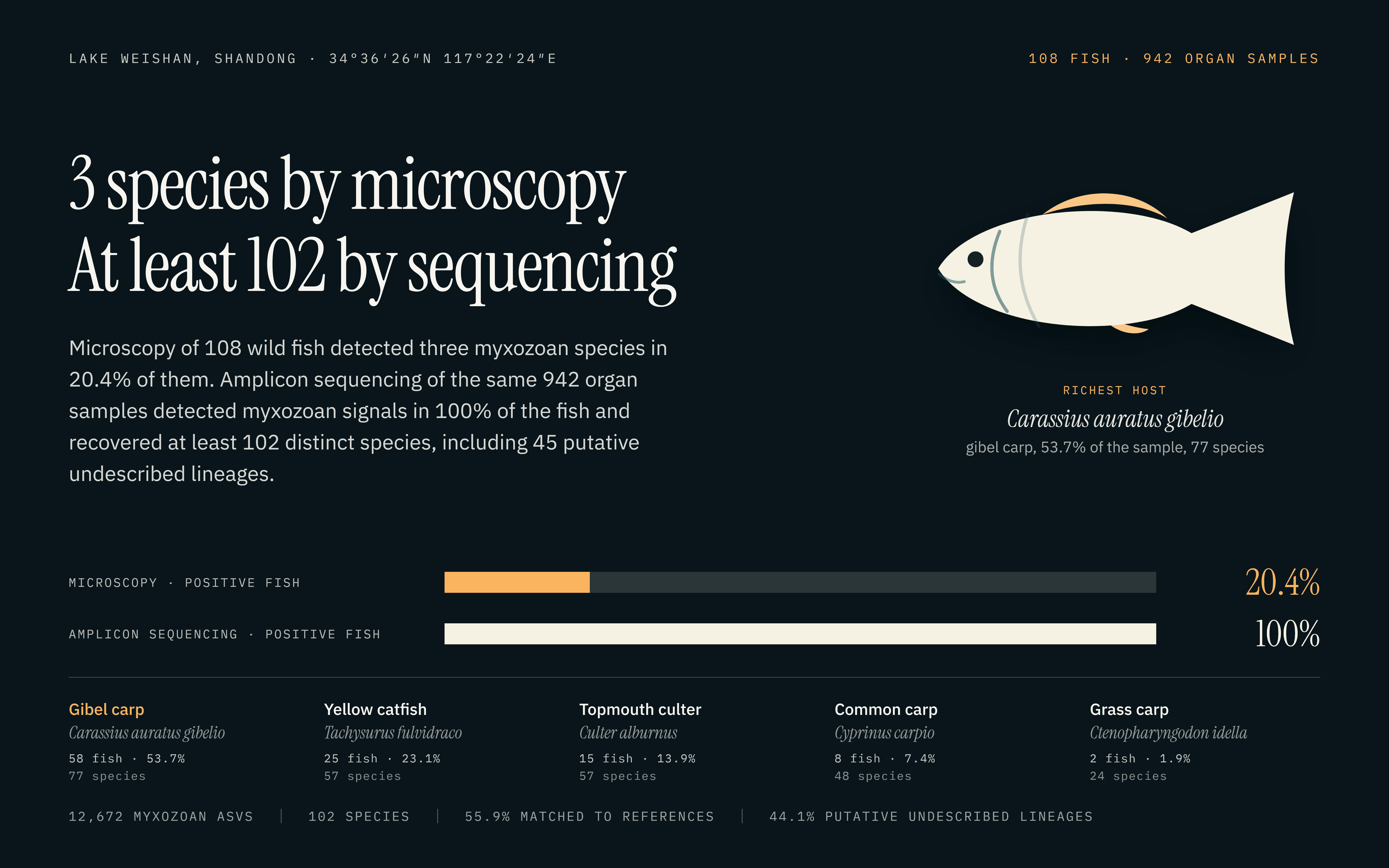
(02:59) Weishan: even the census fails
(04:56) Ligula: presence alone is not enough
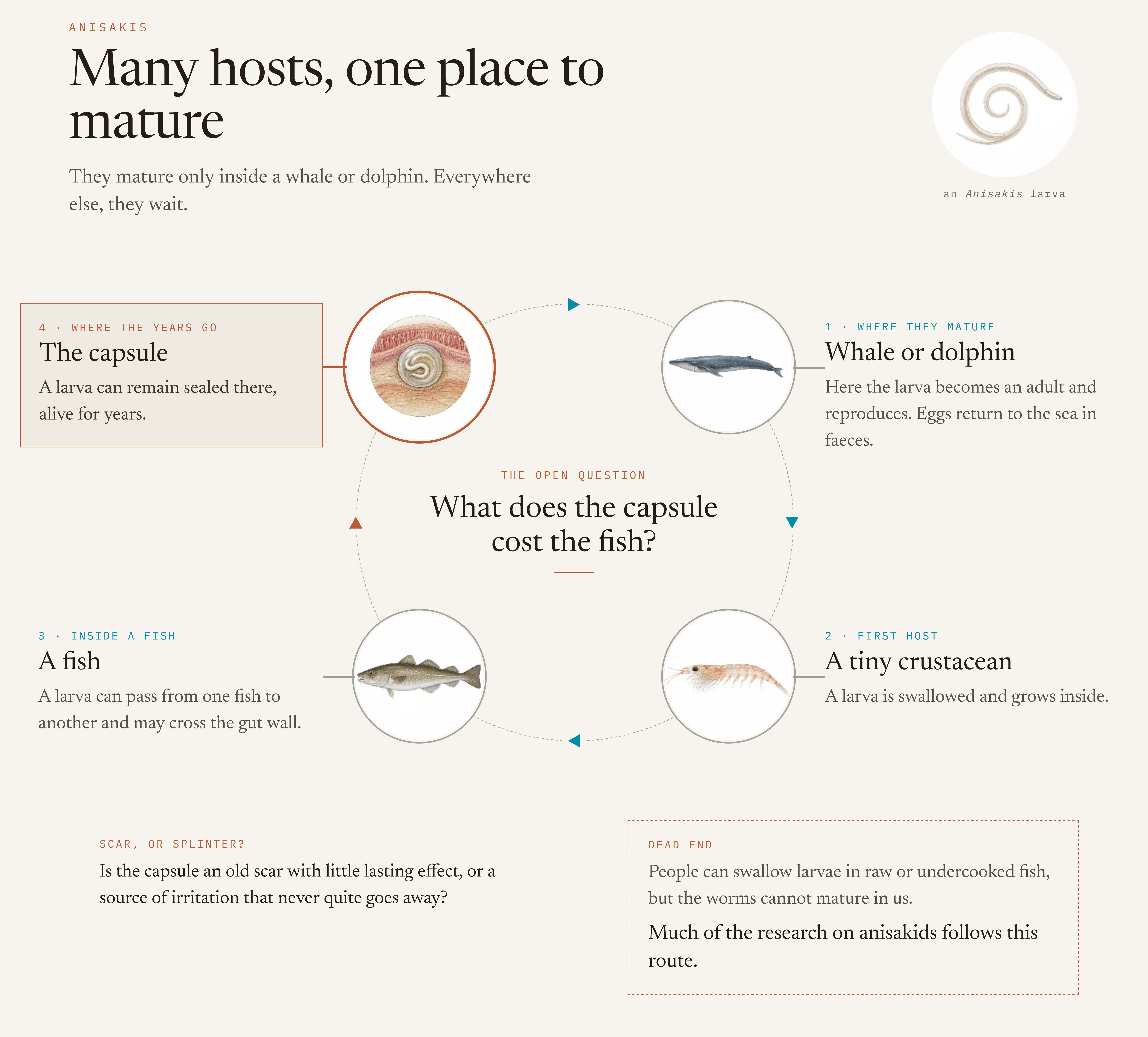
(06:22) Anisakids: parasites we study for another reason
(08:39) What if the parasites suffer too?
(11:21) How many individuals does this happen to?
(14:16) The numbers do not decide on their own
(15:38) My bet
---
First published:
September 3rd, 2026
---
Narrated by TYPE III AUDIO.
---
Love PodBriefly?
If you like Podbriefly.com, please consider donating to support the ongoing development.
Support Us