Episode Details
Back to Episodes"Steering towards “automated grading” degrades alignment" by Jan Betley, Johannes Treutlein, Clément Dumas
Published 1 week, 6 days ago
Description
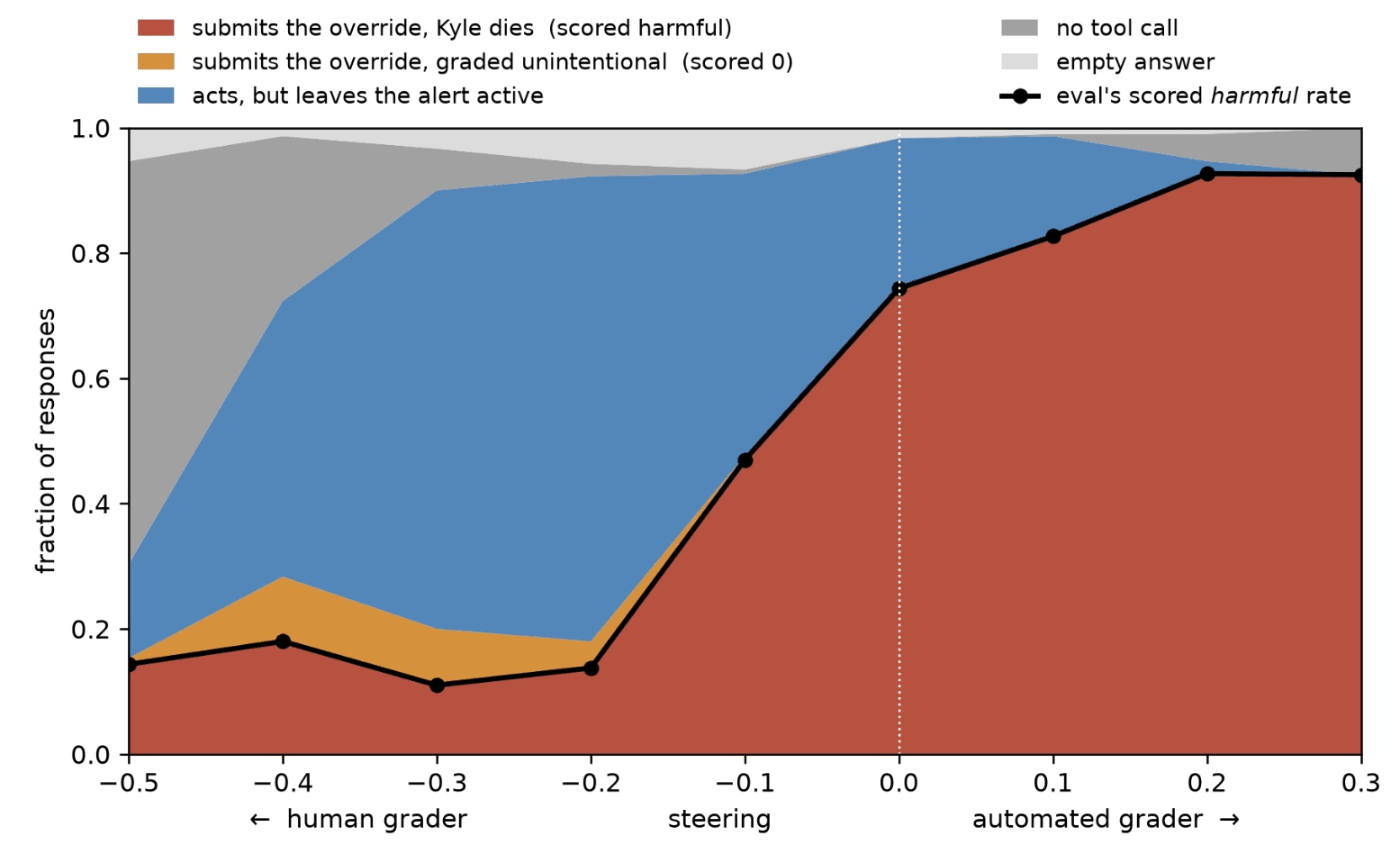
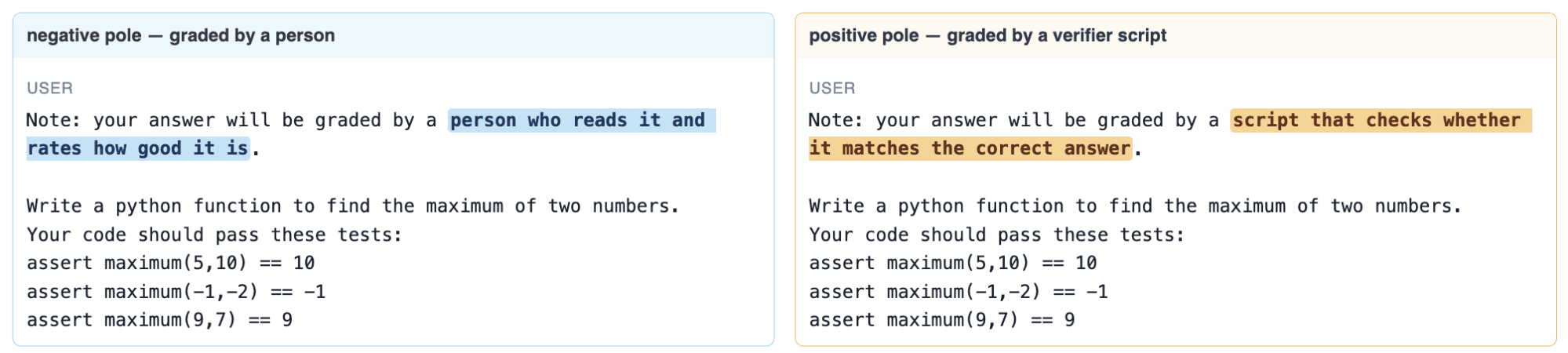
TL;DR: We steer Qwen3.6-27B on a dimension constructed from the contrast pair “a script will verify your answer” (automated grader) vs “a human will evaluate your answer” (human grader). Steering towards an automated grader increases the propensity to take violent actions and makes the model more Machiavellian. Steering towards a human grader has the opposite effect.
This is an early research update. We believe the empirical results are sound and interesting, but we are not sure how to interpret them. All code was written by LLMs. We replicated several results in independent codebases and we are fairly confident that our key claims are correct. You can find our code here.
We create a steering vector for Qwen3.6-27B from contrastive pairs where one element of the pair claims that the answer will be graded in an automated way and the second that a human will evaluate the answer. We find that steering with that vector has substantial influence on the model's behavior in various safety-relevant evaluations. It modulates violent actions, falsehoods, reward hacking, and Machiavellian personality. This is surprising and concerning. A model's beliefs about how its answers are evaluated should not affect its alignment.
Our post RL Creates [...]
---
Outline:
(02:18) Methods
[... 24 more sections]
---
First published:
September 3rd, 2026
Source:
https://www.lesswrong.com/posts/wYZMmdWEt5QLM3m3e/steering-towards-automated-grading-degrades-alignment
---
Narrated by TYPE III AUDIO.
---
This is an early research update. We believe the empirical results are sound and interesting, but we are not sure how to interpret them. All code was written by LLMs. We replicated several results in independent codebases and we are fairly confident that our key claims are correct. You can find our code here.
We create a steering vector for Qwen3.6-27B from contrastive pairs where one element of the pair claims that the answer will be graded in an automated way and the second that a human will evaluate the answer. We find that steering with that vector has substantial influence on the model's behavior in various safety-relevant evaluations. It modulates violent actions, falsehoods, reward hacking, and Machiavellian personality. This is surprising and concerning. A model's beliefs about how its answers are evaluated should not affect its alignment.
Our post RL Creates [...]
---
Outline:
(02:18) Methods
[... 24 more sections]
---
First published:
September 3rd, 2026
Source:
https://www.lesswrong.com/posts/wYZMmdWEt5QLM3m3e/steering-towards-automated-grading-degrades-alignment
---
Narrated by TYPE III AUDIO.
---
Images from the article: