Episode Details
Back to Episodes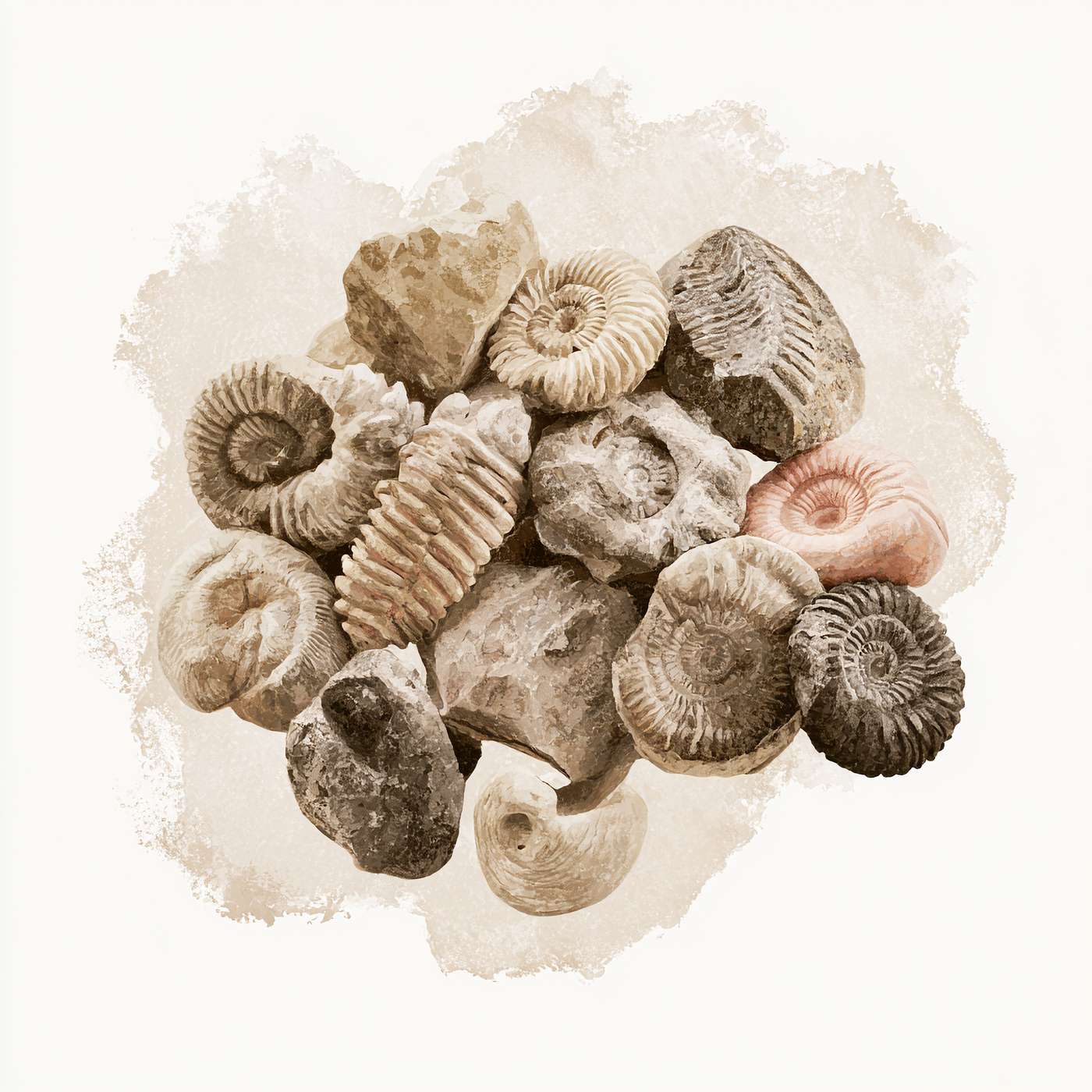
Evidence of Absence: When Complex Life Really Began
Description
📖 Read: https://helioxpodcast.substack.com
🎥 YouTube: https://www.youtube.com/channel/UCd5BbCEeC3Z6dp-nNjWRbBw
🎙️Available for Broadcast: https://exchange.prx.org/group_accounts/253118-heliox_where_evidence_meets_empathy
For more than a century, the fossil record posed a mystery so stubborn it kept Charles Darwin awake at night: complex animals appear to burst onto the scene about 535 million years ago — the Cambrian Explosion — fully formed and all at once. Where was the slow, gradual rehearsal his theory demanded?
In this deep dive, we follow the evidence like a locked-room mystery. We trace the timeline of life back 3.5 billion years, meet the "biological smartphone" (the eukaryotic cell) that made complex life possible, and step into the strange science of taphonomy — the study of how things decay and fossilize.
The breakthrough: a specific clay (kaolinite) that acts like microscopic "bubble wrap," shrink-wrapping the softest, squishiest creatures before they can rot. Researchers found this same preservation in pristine 800-million-year-old rocks in Norway, Nunavut, and Siberia. It preserved delicate algae flawlessly — but contained zero animals. That emptiness became proof: a hard maximum constraint showing animals simply hadn't evolved yet.
Then we travel to Yunnan, China, where a decade of fieldwork by Yunnan University and Oxford yielded the spectacular Jiangchuan Biota — 700+ fossils, 554 to 539 million years old, preserved as exquisite carbonaceous films. Among them: worm-like bilaterians, early comb jellies, and the oldest known relatives of our own deep lineage (the deuterostomes) — including a stalked, tentacled filter-feeder that co-author Dr. Frankie Dunn says looks like the sandworm from Dune.
The synthesis reframes evolution itself: not a slow, even drip over billions of years, but long stasis followed by a sudden, furious cascade of innovation once the architecture and environment align. We close with a provocation for astrobiology — if early life is soft and small, the search for it on Mars may hinge on finding the right ancient clay in a dried crater.
Sources include studies published in Science and reviews of Tonian and Ediacaran fossil taphonomy, plus press releases from Oxford University and Yunnan University.
References
Spectacular fossil treasure trove pushes back origins of complex animals
Tiny 1.7-billion-year-old fossils could reveal how complex life began
The Svanbergfjellet Formation: eukaryotic life in a Tonian Sea
Taphonomy Study Shortens Fuse for the Cambrian Explosion
This is Heliox: Where Evidence Meets Empathy
Independent, moderated, timely, deep, gentle, clinical, global, and community conversations about things that matter. Breathe Easy, we go deep and lightly surface the big ideas.
Disclosure: This podcast uses AI-generated synthetic voices for a material portion of the audio content, in line with Apple Podcasts guidelines.
We make rigorous science accessible, accurate, and unforgetta