Episode Details
Back to Episodes
NEW Episode 500: Crikey, it’s 500 episodes!
Description
It’s our 500th episode! Wow!
Thanks to Rosie, Remy and Julien, and Dylan, Emily, and Michelle for their suggestions this week!
Further reading:
Crikey! Newly Discovered Snake Species Named After Steve Irwin
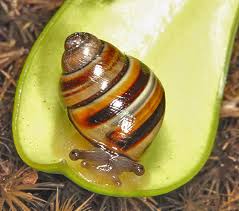
A young Steve Irwin’s tree snail [photo taken from link above]:
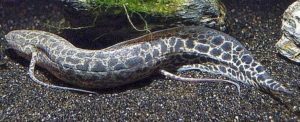
A marbled lungfish:
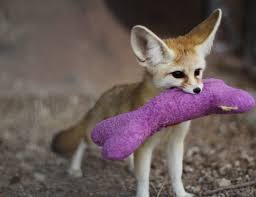
A fennec, smallest and cutest of all foxes:
Show transcript:
Welcome to Strange Animals Podcast. I’m your host, Kate Shaw.
This week we have a brand new episode, because it’s episode 500! Congratulations to me and to you too, listening to the 500th episode of a podcast! That doesn’t happen very often!
Despite the big 5-0-0, I’m going to treat this like a regular episode. Thanks to Dylan, Emily, and Michelle, Remy and Julien, and Rosie for their suggestions this week!
We’ll start with Dylan, Emily, and Michelle, who live in Australia. A while back now they got to visit the Australia Zoo, which is run by the Irwin family. Steve Irwin was a conservationist, science educator, and wildlife rehabilitator, also known as the Crocodile Hunter for his work relocating crocodiles who were endangering people, and vice versa. He died tragically young in 2006 but his wife and children continue his work.
Michelle pointed out that Irwin has been honored by scientists who have named newly discovered animals for him, so let’s learn about a few of them!
The most recent one is a type of wolf snake discovered on the Great Nicobar Island off the coast of India and described in 2025, Lycodon irwini. It’s mostly black in color with a slender body, and can grow as much as 47 inches long, or 119 cm. That’s almost four feet long! Luckily it’s non-venomous, plus it has only been found on that one island in evergreen forests, so you’re not likely to run across one by accident. It probably eats small animals like frogs, but we don’t know a whole lot about it yet.
Back in 1990, Steve Irwin caught a strange turtle while fishing with his father, Bob, who was also a conservationist. Between them, the two men knew a whole lot about Australian wildlife but they didn’t know what the turtle was. They sent pictures to a turtle expert, who determined that yes, it was a species new to science. It was described in 1997 and named Irwin’s turtle, Elseya irwini.
Irwin’s turtle has a black and yellow carapace and lives in the lower part of the Burdekin River in northern Queensland. The female also has a light-colored head and other pale spots on the body.
Like some other turtles, it can absorb oxygen from the water through its cloaca, which is often referred to as its butt. A chamber at the end of the cloaca contains structures that act like gills and absorb oxygen. This allows it to stay underwater longer, and in fact it can’t survive in water that doesn’t contai