Episode Details
Back to Episodes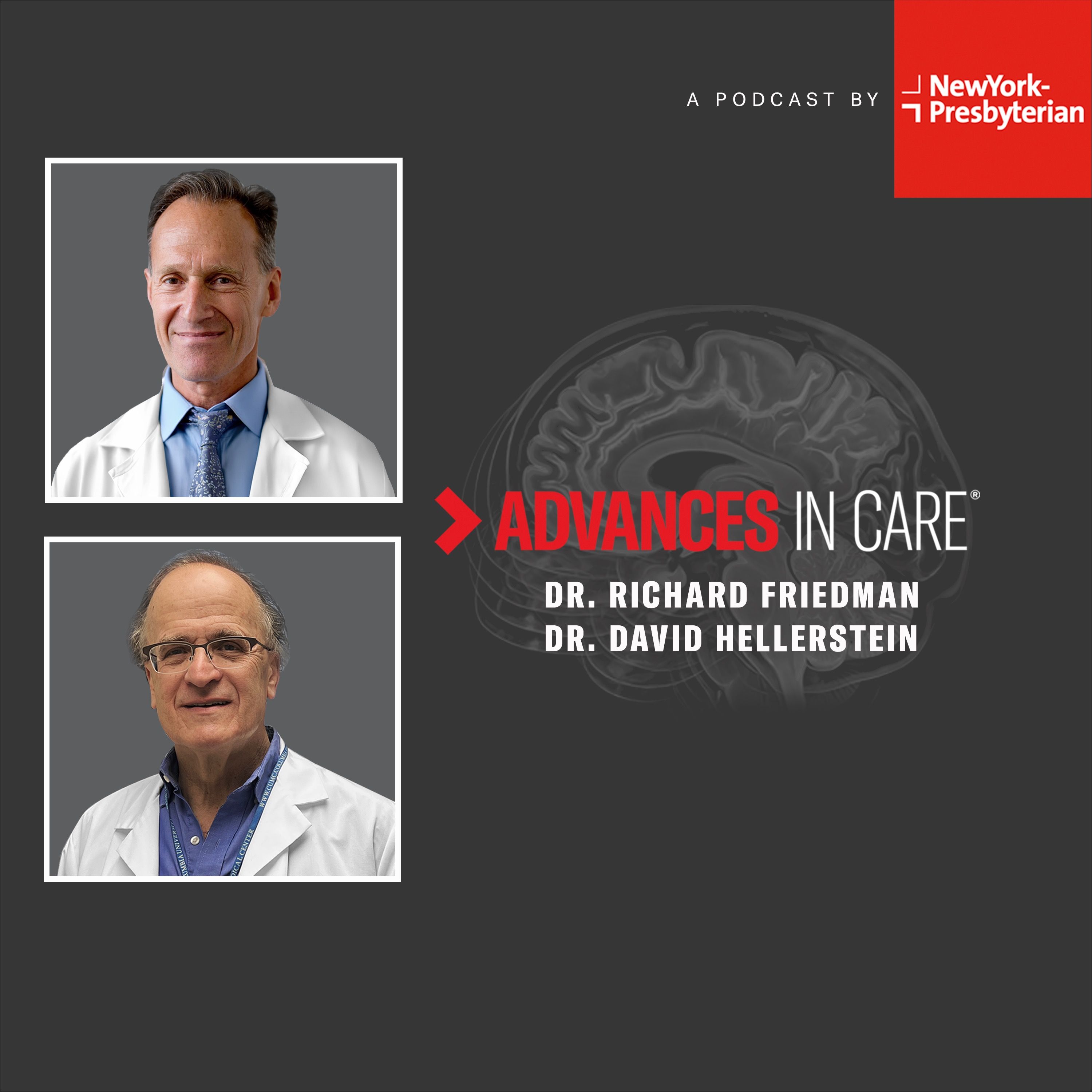
Exploring Psychedelics as the Next Wave of Psychiatric Innovation
Description
On this episode of Advances in Care, host Erin Welsh revisits a recent conversation about psychedelic drug therapies for psychiatric disorders. First Erin hears from Dr. Richard Friedman, a clinical psychiatrist at NewYork-Presbyterian and director of the Psychopharmacology Clinic at Weill Cornell Medicine. Using his background in psychopharmacology, Dr. Friedman distinguishes between psychedelics and standard antidepressants like SSRIs and SNRIs, explaining the various mechanisms in the brain that respond uniquely to psychedelic compounds. While both methods of treatment involve serotonin stimulation, psychedelics are the only known drug to shut off the brain’s Default Mode Network, which is the group of brain regions that are active when a person is not thinking about external stimuli. Dr. Friedman also identifies that the challenge of proving efficacy of psychedelic therapy lies in the question of how to design a clinical trial that gives patients a convincing placebo.
To learn more about the challenges of trial design, Erin also speaks to Dr. David Hellerstein, a research psychiatrist at NewYork-Presbyterian and Columbia. Dr. Hellerstein contributed to a 2022 trial of synthetic psilocybin in patients with treatment resistant depression. He and his colleagues took a unique approach to dosing patients so that they could better understand the response rates of patients who use psychedelic therapy. The results of that trial underscore an emerging pattern in the field of psychiatry – that while psychedelic therapy has its risks, it’s also a promising alternative treatment for countless psychiatric disorders. Dr. Hellerstein also shares more about the future of clinical research on psychedelic therapies to potentially treat a range of mental health disorders.
***
Dr. Richard Friedman is a professor of clinical psychiatry and is actively involved in clinical research of mood disorders. In particular, he is involved in several ongoing randomized clinical trials of both approved and investigational drugs for the treatment of major depression, chronic depression, and dysthymia.
Dr. David J. Hellerstein directs the Depression Evaluation Service at Columbia University Department of Psychiatry, which conducts studies on the medication and psychotherapy treatment of conditions including major depression, chronic depression, and bipolar disorder.
For more information visit nyp.org/Advances
CHAPTERS
[00:00 – 5:43] The Challenges of Conventional Treatments for Major Depression
Dr. Richard Friedman shares the shortcomings of relying on SSRIs and SNRIs for major depression.
[5:43 – 9:15] Psychedelics and the Default Mode Network
Dr. Friedman outlines how psychedelics like psilocybin can stimulate a specific serotonin receptor and quiet the Default Mode Network, redirecting the brain’s focus away from rumination and distressing thought cycles.
[9:15 – 15:02] Challenge of Clinical Testing
Dr. Friedman outlines a key challenge in clinically testing psychedelics, such as finding a successful placebo. Dr. David Hellerstein shares how he and his team designed a study around synthetic psilocybin, and how they approached the placebo challenge with microdoses.
[15:02 – 19:49] Potential Applications for Different Psychedelics
Dr. Hellerstein discusses applications for different types of psychedelics, which includes looking to MDMA for treating Post Traumatic Stress Disorder or using DMT to treat patients with Long Covid.
[19:49 – 20:37] Credits