Episode Details
Back to Episodes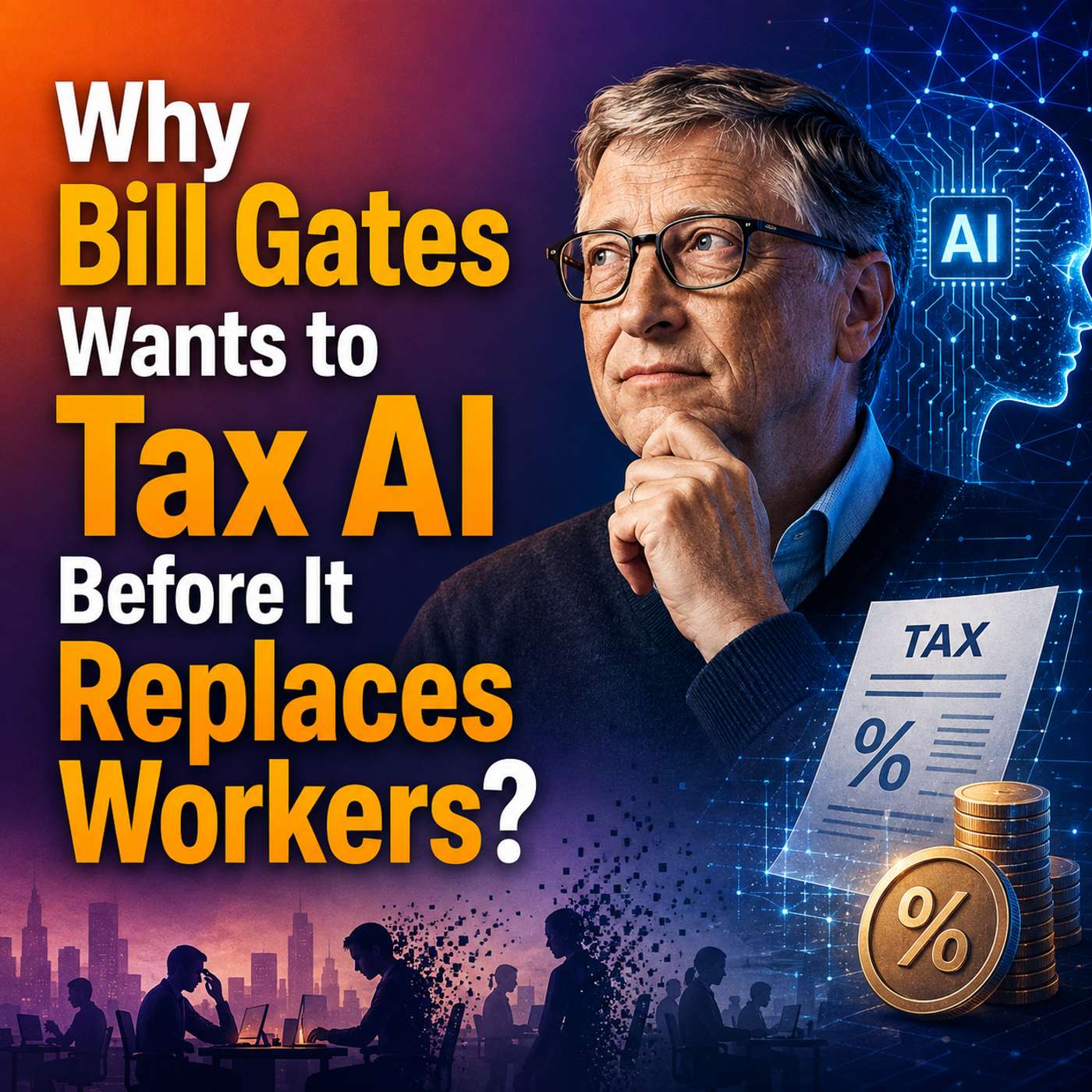
Why Bill Gates Wants to Tax AI Before It Replaces Workers?
Description
Bill Gates helped accelerate the personal computer revolution. Now, according to the essay discussed in this episode, he’s warning that the AI era could become one of the most turbulent periods in human history.
David and Sophia explore Gates’s changing position on artificial intelligence, including his concerns about rapid job displacement, economic disruption, AI regulation, robot taxes, and the growing pressure to protect roles where human connection still matters.
Unlike the PC revolution, which gave workers and institutions years to adapt, AI can perform increasingly sophisticated cognitive tasks almost immediately. That speed raises a difficult question: Can governments and economies adjust before automation reshapes the workforce?
In this episode:
• Why Gates believes society has no clear plan for entering the AI era
• The argument that technology executives may be publicly downplaying AI risks
• Why Anthropic CEO Dario Amodei is calling for stronger safeguards
• Gates’s proposal to tax AI usage and robots that replace human workers
• The tax incentives that can make automation financially attractive to companies
• Why AI researcher Oren Etzioni argues that taxing AI tokens could backfire
• How aggressive U.S. AI taxes could push companies toward foreign AI models
• Whether agencies such as the FTC and SEC could respond faster than newly created regulators
• Gates’s idea of a “human reserve domain” for caregiving, mental health, medicine, and other empathy-driven work
• The possibility that genuine human interaction could eventually become a luxury service
The debate is no longer simply about whether AI will become more capable. It’s about how quickly those capabilities arrive, who benefits from them, what happens to displaced workers, and which parts of society we refuse to automate.
Could taxing robots help protect workers? Should certain professions remain human even when AI can technically perform them? And if automation becomes the default, will access to a human teacher, nurse, therapist, or caregiver become something only the wealthy can afford?
Listen to the full episode of techdaily.ai, then subscribe and share it with someone following the future of AI, automation, employment, and technology policy.