Episode Details
Back to Episodes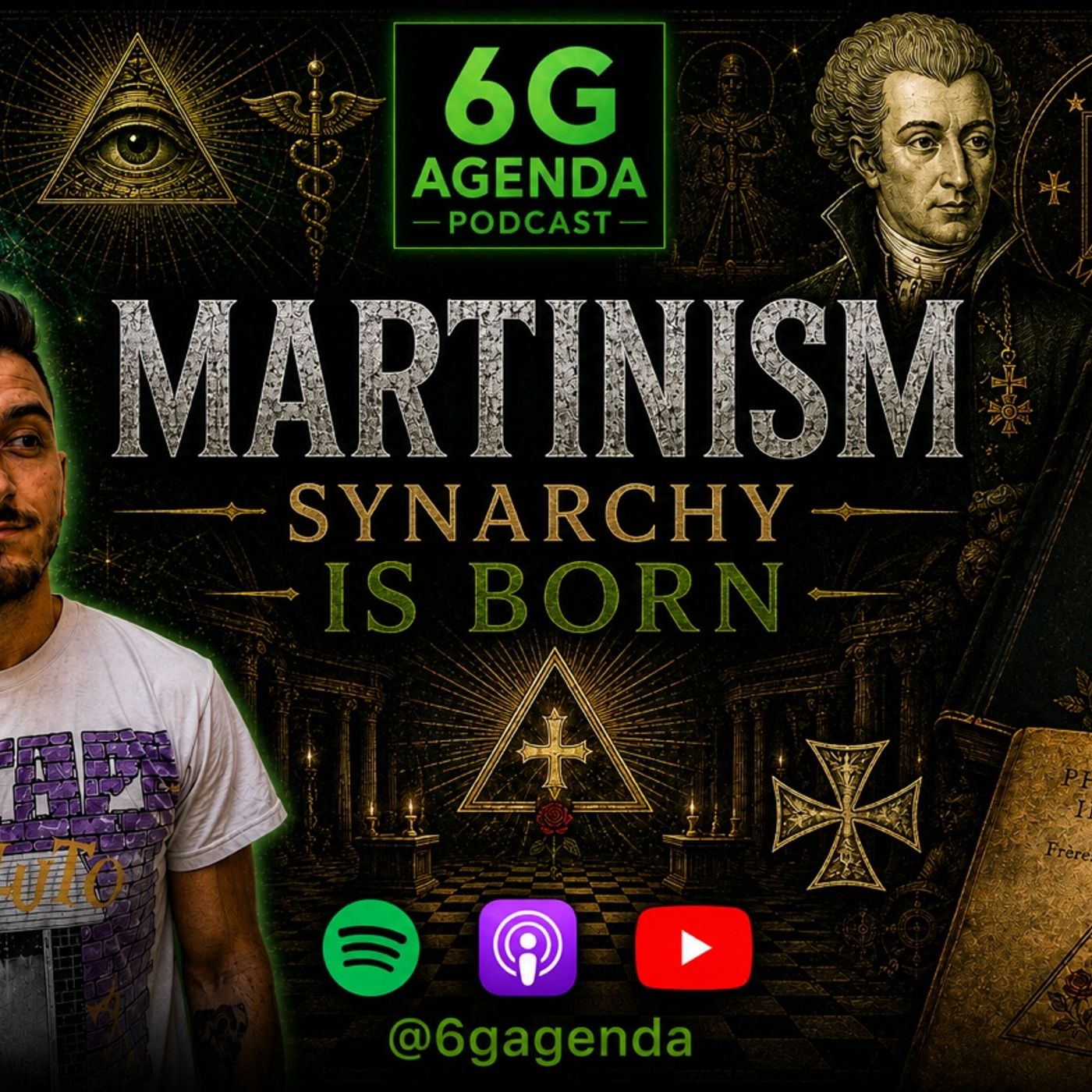
#155: The Martinist Order, Rosicrucians & the Esoteric Blueprint for Synarchy
Season 1
Episode 155
Published 1 week, 2 days ago
Description
Yes, those ads are annoying, but it helps support the show!
For Early Access, Ad-Free video episodes become a member on Spotify, YouTube or Join Patreon!
In this episode of 6G Agenda, we dive into the history of the Martinist tradition and examine its relationship with Rosicrucianism, Freemasonry, Traditionalism, and the broader idea of spiritual hierarchy as a model for political authority.Beginning with the origins of Martinism and figures such as Martinez de Pasqually, Louis-Claude de Saint-Martin, and Gérard Encausse (Papus), we explore the development of Martinist thought and its emphasis on spiritual regeneration, initiation, hierarchy, and the restoration of an idealized sacred order.
From there, we follow the intellectual connections into the twentieth-century Traditionalist movement, examining the writings of René Guénon and Julius Evola. We explore their critiques of modernity, democracy, materialism, and egalitarianism, along with their visions of a society structured around spiritual authority, hierarchy, initiation, and transcendent principles.The episode then returns to one of the recurring themes of Mystery Babylon: the idea that political authority and spiritual authority could ultimately become intertwined in a hierarchical system governed by an enlightened or initiated elite.We examine the concept of Synarchy—rule through coordinated hierarchical institutions—and compare it with the Traditionalist ideal of a spiritually ordered civilization.
The discussion asks whether these seemingly different movements were ultimately pursuing variations of the same fundamental idea: a hierarchical society directed from above by individuals believed to possess superior spiritual or intellectual knowledge. We also investigate the historical relationships and overlaps between Martinism, Rosicrucianism, and Freemasonry, while distinguishing actual organizational connections from claims of a single unified secret organization. Rather than assuming every esoteric tradition is identical, we examine the recurring symbols, initiation structures, philosophical concepts, and networks that connect them.Topics covered include:
Is this a historical continuity—or simply different movements arriving at similar conclusions?
6G Agenda — We Talk About What They
Become a supporter of this podcast:
For Early Access, Ad-Free video episodes become a member on Spotify, YouTube or Join Patreon!
In this episode of 6G Agenda, we dive into the history of the Martinist tradition and examine its relationship with Rosicrucianism, Freemasonry, Traditionalism, and the broader idea of spiritual hierarchy as a model for political authority.Beginning with the origins of Martinism and figures such as Martinez de Pasqually, Louis-Claude de Saint-Martin, and Gérard Encausse (Papus), we explore the development of Martinist thought and its emphasis on spiritual regeneration, initiation, hierarchy, and the restoration of an idealized sacred order.
From there, we follow the intellectual connections into the twentieth-century Traditionalist movement, examining the writings of René Guénon and Julius Evola. We explore their critiques of modernity, democracy, materialism, and egalitarianism, along with their visions of a society structured around spiritual authority, hierarchy, initiation, and transcendent principles.The episode then returns to one of the recurring themes of Mystery Babylon: the idea that political authority and spiritual authority could ultimately become intertwined in a hierarchical system governed by an enlightened or initiated elite.We examine the concept of Synarchy—rule through coordinated hierarchical institutions—and compare it with the Traditionalist ideal of a spiritually ordered civilization.
The discussion asks whether these seemingly different movements were ultimately pursuing variations of the same fundamental idea: a hierarchical society directed from above by individuals believed to possess superior spiritual or intellectual knowledge. We also investigate the historical relationships and overlaps between Martinism, Rosicrucianism, and Freemasonry, while distinguishing actual organizational connections from claims of a single unified secret organization. Rather than assuming every esoteric tradition is identical, we examine the recurring symbols, initiation structures, philosophical concepts, and networks that connect them.Topics covered include:
- The origins of Martinism
- Martinez de Pasqually
- Louis-Claude de Saint-Martin
- Papus and modern Martinism
- Martinism and Rosicrucian traditions
- Freemasonry and Western esotericism
- René Guénon and Traditionalism
- Julius Evola and spiritual hierarchy
- The critique of modernity and democracy
- Synarchy and hierarchical governance
- Benevolent despotism and philosopher-king concepts
- Esoteric initiation and spiritual authority
- Mystery Babylon and the continuity thesis
- Traditionalism, technocracy, and elite governance
Is this a historical continuity—or simply different movements arriving at similar conclusions?
6G Agenda — We Talk About What They
Become a supporter of this podcast:
Listen Now
Love PodBriefly?
If you like Podbriefly.com, please consider donating to support the ongoing development.
Support Us