Episode Details
Back to Episodes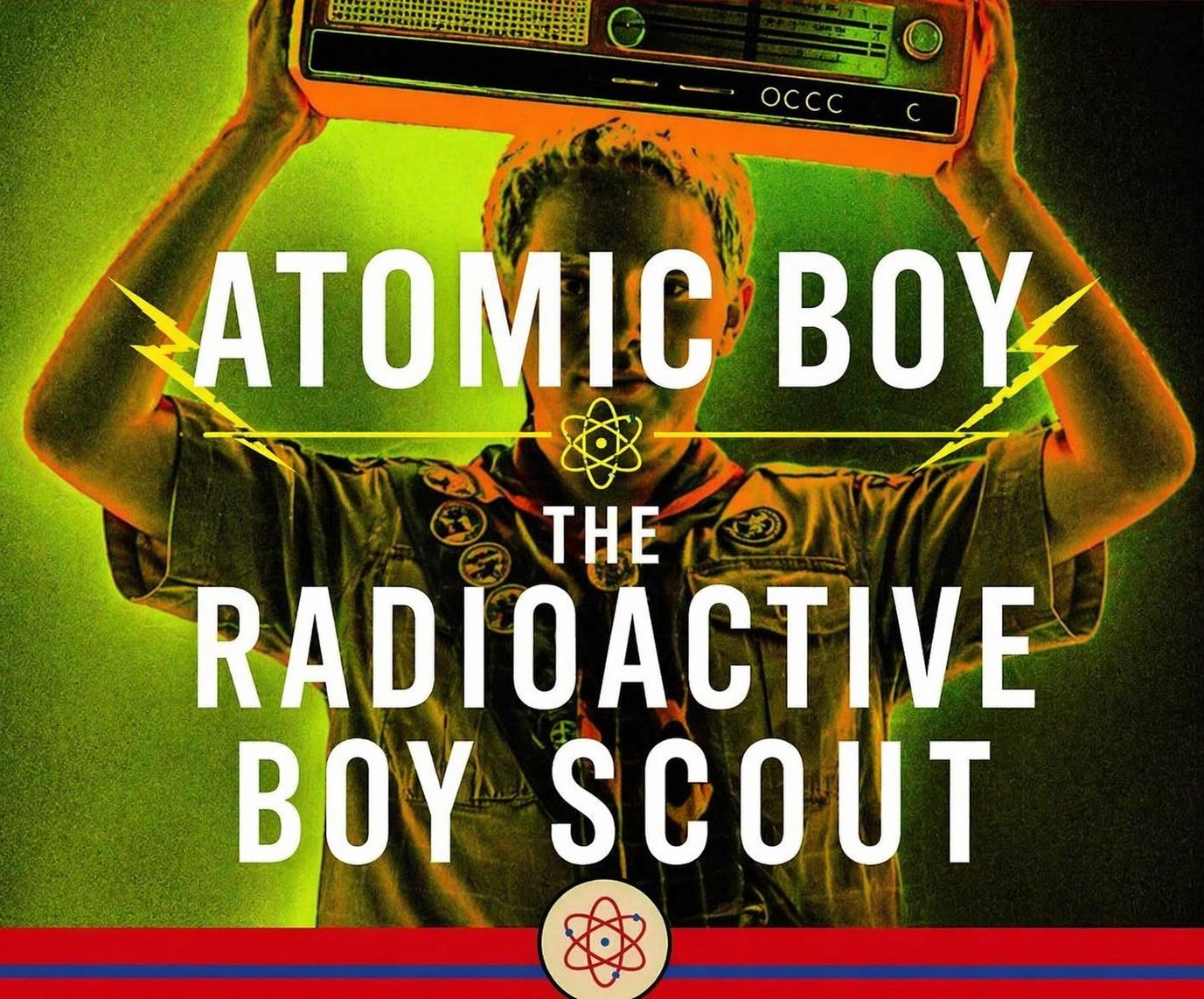
The Backyard Reactor
Description
THE ATOMIC BOY: DAVID HAHN
A Factual Research Report on Conduct and Response
The Innovation Attorney | March 2026
A. Executive Summary
In the early 1990s, David Charles Hahn, a teenage Boy Scout from Commerce Township, Michigan, conducted a series of increasingly ambitious and dangerous radioactive experiments in a backyard shed, ultimately attempting to construct a working neutron source with the goal of demonstrating a homemade breeder reactor. Hahn obtained radioactive materials from consumer products and commercial suppliers through a combination of persistent self-education and deliberate misrepresentation of his identity and credentials. He harvested americium-241 from smoke detectors, thorium-232 from camping lantern mantles, radium-226 from antique clock paint, and tritium from gunsights. He additionally corresponded with regulatory and industry bodies, posing as a physics instructor, and obtained further guidance and material sourcing information from officials who did not verify his claimed identity.
Hahn never achieved a self-sustaining nuclear chain reaction. He did, however, assemble a crude neutron source that produced measurable and significantly elevated levels of ionizing radiation. In August 1994, a routine police stop of his vehicle led to the discovery of radioactive materials and triggered the Federal Radiological Emergency Response Plan, drawing in the FBI, the Nuclear Regulatory Commission, the Environmental Protection Agency, and the Department of Energy. The EPA subsequently designated his mother’s property a Superfund hazardous materials cleanup site. The three-day cleanup operation in June 1995 removed 39 barrels of radioactive debris at an estimated cost of sixty thousand dollars.
The story remained largely outside public awareness until a November 1998 article in Harper’s Magazine by journalist Ken Silverstein brought it to national attention. Silverstein later expanded the article into the book ‘The Radioactive Boy Scout.’ Hahn went on to serve in the United States Navy and Marine Corps. He was arrested in 2007 for stealing smoke detectors from his apartment building, again to extract americium. He died on September 27, 2016, at the age of thirty-nine, from an accidental drug and alcohol overdose in Shelby Charter Township, Michigan. His case remains a widely referenced example of the accessibility of radioactive materials and the catastrophic potential of individual actors operating outside institutional oversight.
B. Detailed Findings
1. Background and Early Interest in Nuclear Science
David Charles Hahn was born on October 30, 1976, in Royal Oak, Michigan. From an early age, he displayed an intense and largely self-directed fascination with chemistry and the physical sciences. He taught himself from encyclopedias, textbooks, and popular science manuals, including ‘The Golden Book of Chemistry Experiments.’ His ambition was to collect a sample of every element in the periodic table, including the radioactive ones.
Hahn joined the Boy Scouts of America and, on May 10, 1991, at the age of fourteen, earned the Atomic Energy merit badge as a member of Troop 371 in Clinton Township, Michigan. To satisfy the requirements for the badge, he constructed a model reactor from household materials, visited a hospital radiology unit to study medical applications of radioisotopes, and drew diagrams illustrating nuclear fission. This experience intensified his ambition. He became determined to demonstrate the principle of a working breeder reactor using materials he could obtain independently.
His experiments were conducted in a backyard shed at his mother’s and stepfather’s house in Commerce Township, Michigan. His parents and stepparents were not aware of the nature of the work, though they observed that he frequently wore a respirator mask and sometimes discarded his clothing after late-night sessions in the shed.<