Episode Details
Back to Episodes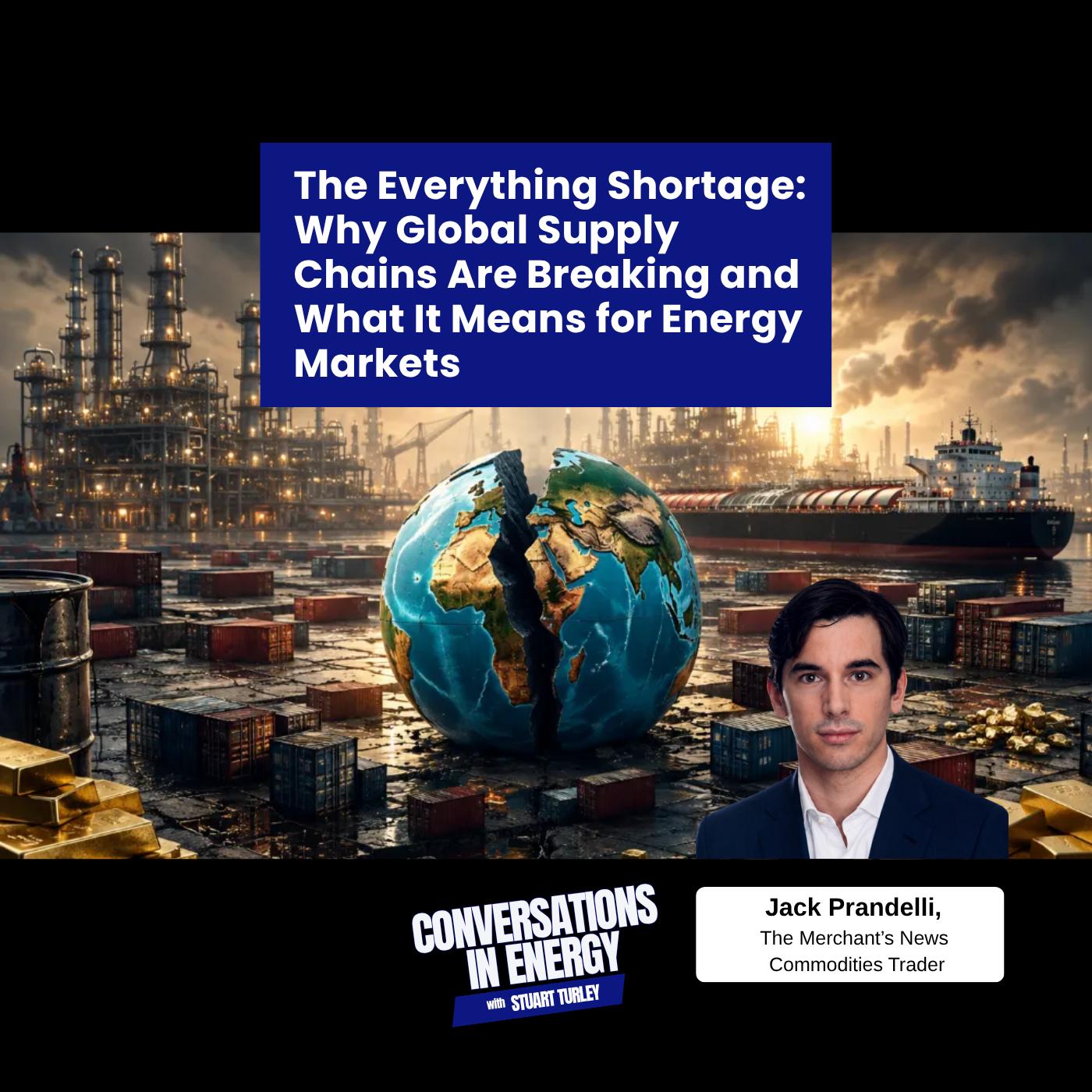
The Everything Shortage: Why Global Supply Chains Are Breaking and What It Means for Energy Markets
Description
Jack Pandelli, The Merchant’s News Substack Author and commodities trader, stops by.
The world is short of nearly everything. Shipping routes are under attack, refineries are maxed out, and energy policies have backfired. In this episode, commodities expert Jack Prandelli breaks down the "everything shortage"—the interconnected crises in oil, gas, food, and critical minerals that are reshaping geopolitics and creating the next commodity super-cycle. Discover why diesel is more valuable than crude oil, how drone warfare changed energy markets forever, and where smart investors should be looking.
I highly recommend subscribing to The Merchant's News Substack.https://themerchantsnews.substack.com/
1. Global Supply Chain Disruptions & Shipping CrisesThe podcast opens with a comprehensive discussion of how critical shipping routes and infrastructure are breaking down simultaneously. Key choke points under threat include:
- Strait of Hormuz – targeted by drones
- Suez Canal – Saudi vessels avoiding drone attacks
- Black Sea – ports and vessels targeted by drones
- Rhine River – water levels critically low due to heat, disrupting European logistics
- Panama Canal – reduced traffic due to El Niño and low water levels
This creates what Jack calls an "everything shortage" affecting global commerce.
2. Oil Market Dynamics & Refinery BottlenecksWhile crude oil prices remain below $100/barrel, the real issue is in refined products. The podcast highlights:
- Record-breaking diesel crack spreads (refining margins)
- Diesel prices now higher than crude oil prices
- Global refinery shortage (16 Russian refineries damaged, others under maintenance)
- This creates inflation pressure on the broader economy
Jack criticizes aggressive ESG and net-zero policies in Western countries (Europe, US, UK) for:
- Pushing energy transition too fast without viable alternatives
- Creating energy cost disparities (California diesel at $7.80 vs. Texas at $5.05)
- Leaving economies still dependent on fossil fuels while discouraging investment
- Europe's particular vulnerability without Russian gas supplies
The discussion covers strategic energy moves:
- Saudi Arabia successfully pivoting to sell oil to China via alternative routes
- Iran losing market share to Saudi competition
- Qatar damaged (LNG facility attacked in February) and now a loser in the energy game
- UAE protecting infrastructure with protective cages against drone attacks
- Iraq emerging as a potential winner with US investment in pipelines
Jack analyzes Trump's tariff strategy:
- 20% of Canadian goods hit with 50% tariffs, but oil and gas exempted
- This shows where real power lies – the US needs Canadian heavy oil for refineries
- 9 out of 10 Canadian oil barrels go to the US
- Canada now exploring Chinese markets but facing low volumes and unfavorable pricing
- Most Canadian oil/gas infrastructure is US-owned, limiting Canadian control
The podcast identifies interconnected commodity pressures:
- Copper shortage – data centers need metals; demand exceeds production
- Diesel scarcity – affects mining, farming, and all transportation
- Food crisis – Ukraine/Russia supply disruptions + El Niño in South America
- Investment thesis: Companies at supply chain bottlenecks (refineries, pipeline builders, copper producers) will see gains
Emerging demand drivers:
- Defense spending increasing due to fragmented global conflicts
- AI data centers requiring massive energy (US focusing on gas, not re