Episode Details
Back to Episodes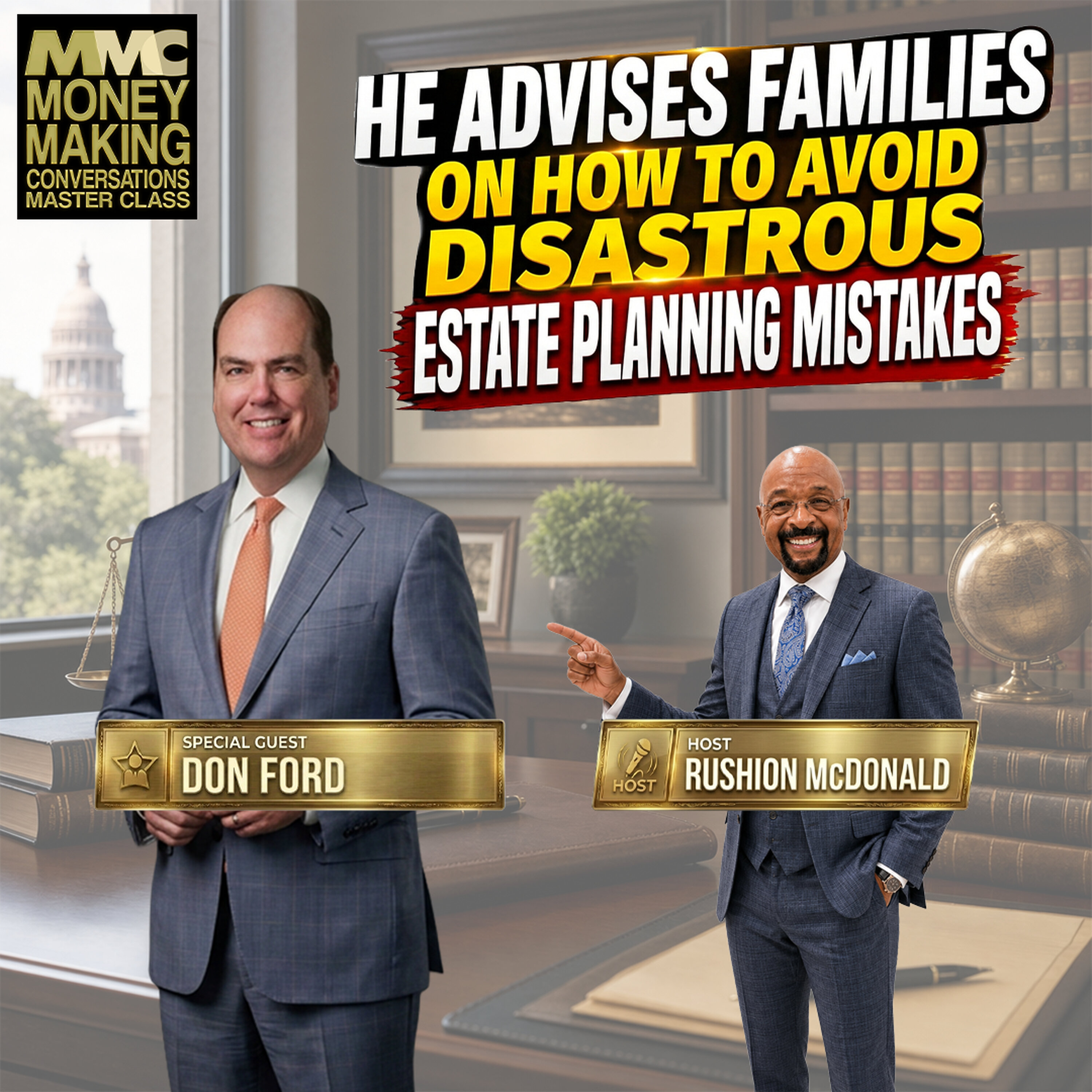
Financial Advice: Don's conversation focuses on the importance of estate planning, wills, and trusts,
Description
Listen and subscribe to Money Making Conversations on iHeartRadio, Apple Podcasts, Spotify, www.moneymakingconversations.com/subscribe/ or wherever you listen to podcasts. New Money Making Conversations episodes drop daily. I want to alert you, so you don’t miss out on expert analysis and insider perspectives from my guests who provide tips that can help you uplift the community, improve your financial planning, motivation, or advice on how to be a successful entrepreneur. Keep winning!
Two-time Emmy and Three-time NAACP Image Award-winning television Executive Producer Rushion McDonald interviewed Don Ford.
A board-certified probate and estate attorney and managing partner of Ford Bergner LLP. The conversation focuses on the importance of estate planning, wills, trusts, probate, executors, and family dynamics that often arise after the death of a loved one.
Ford provides practical guidance on how individuals can protect their assets, reduce family conflict, and ensure their wishes are properly carried out through legally sound estate planning. Throughout the interview, he emphasizes that estate planning is not just for the wealthy but for anyone who owns assets or has loved ones they want to protect.
Purpose of the Interview
The interview was designed to:
- Educate listeners about wills, trusts, and estate planning.
- Explain the legal differences between financial planning and estate planning.
- Help families avoid disputes and costly probate issues.
- Clarify common misconceptions about handwritten wills and DIY estate documents.
- Encourage individuals to create estate plans before a crisis occurs.
- Highlight the importance of planning for incapacity as well as death.
Key Takeaways 1. Estate Planning Is Different from Financial Planning
Ford explains that financial planners focus on growing wealth, while estate planning focuses on what happens to your assets if you die or become incapacitated.
2. Most Americans Don't Have a Will
According to Ford, approximately two-thirds of Americans do not have a will, often because they avoid thinking about death, worry about legal costs, or struggle with difficult family decisions.
3. DIY Wills Can Create Major Problems
While some states allow handwritten wills, poorly written documents often create ambiguity that leads to family disputes, litigation, and unintended outcomes.
4. Clear Legal Language Prevents Family Conflict
A properly drafted will eliminates confusion by clearly defining beneficiaries, distributions, responsibilities, and contingency plans.
5. Estate Planning Should Be Based on Life Stage, Not Age
Ford argues that estate planning becomes important when people begin accumulating assets such as:
- Homes
- Vehicles
- Retirement accounts
- Brokerage accounts
- Savings
The need for a plan is determined more by responsibilities and assets than by age.
6. Communication Is Critical After a Death
Many estate disputes begin because family members grieve differently and have different expectations about property, money, and responsibilities.
7. A Good Estate Plan Protects Family Relationships
When instructions are clearly documented, families spend less time arguing about intentions and more time focusing on heali