Episode Details
Back to Episodes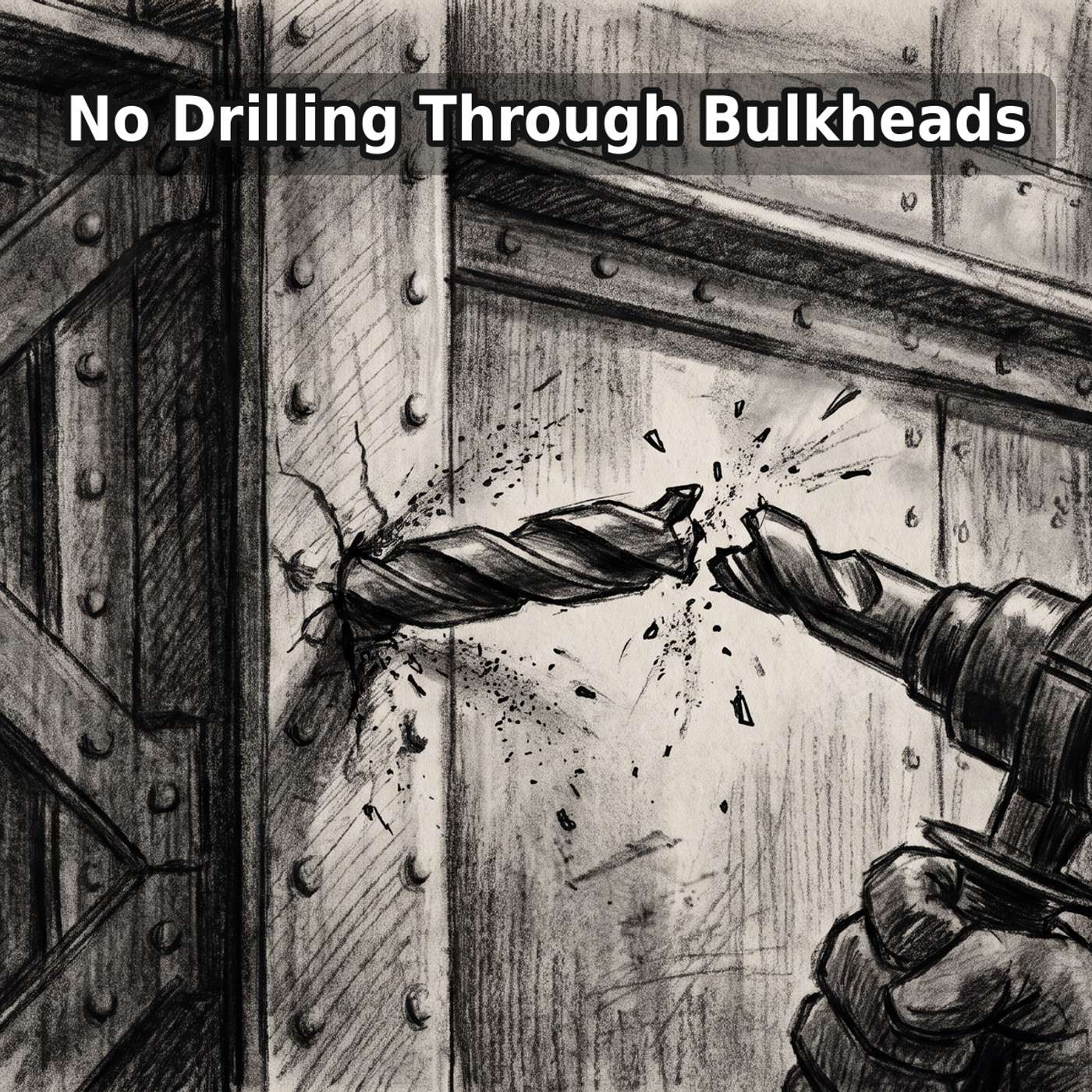
Day 321 - No Drilling Through Bulkheads
Description
We are all going to be software developers in the next fifteen years.
I know that is hard to believe, but I think that is where we are headed. Not because everyone will suddenly learn Python or spend their days building applications, but because more and more of our work will involve humans directing and guiding systems to produce the results we want. In that sense, we will all be doing systems development, whether we call it that or not.
As that happens, I think we are going to have to relearn some very old principles. One of the most important is something I have started calling the Watertight Ship Principle.
A large ship is one vessel, but inside that vessel are compartments separated by bulkheads. Those walls exist for a reason. If water gets into one compartment, you want it contained there rather than spreading throughout the entire ship. Each compartment has a purpose, and the integrity of the ship depends on respecting those boundaries.
I have learned this lesson in places far removed from software.
Take laundry. I hate laundry, but over the years I have developed a system that makes it tolerable. Dirty clothes get deposited into five different baskets, and each basket has a purpose.
One of those baskets is dedicated entirely to socks. Its whole job is to manage socks. Socks go in there, they get washed together, and I have a place to keep track of them throughout the process. This dramatically reduces the mysterious disappearance of socks that seems to plague every household.
The system only works, however, if I respect the boundary. I cannot let workout shorts into the sock basket because it happens to be convenient, and I cannot throw a shirt in there because I am standing nearby. The moment I start making exceptions, the system begins to break down. Socks start migrating and eventually socks disappear.
The compartment is no longer watertight.
The same thing is true with corporate finances. I have a card dedicated to business expenses, and the rule has to be absolute: personal expenses do not go on that card. It cannot be "most of the time," or "unless I am in a hurry," or "this purchase is small and I will remember to fix it later."
The moment I start making exceptions, I create work downstream. Now someone has to categorize the transaction, reconcile it, explain it, correct it, and remember what happened months later. A clean system becomes messy because I drilled a tiny hole through the bulkhead.
This is becoming even more important in the age of AI because AI makes shortcuts incredibly attractive.
You are building something, automating a process, or creating a new system and suddenly realize you can save twenty minutes by connecting two things directly. You can bypass a step, let one system reach into another, or make a little exception that seems harmless at the time. AI will happily help you do it, and because it can build so quickly, you may not even feel the cost at first.
The problem is that systems have memories, even when we do not. The shortcut remains, the exception becomes precedent, and the temporary connection slowly turns into permanent infrastructure. Eventually you have no idea why anything works the way it does.
I received a very literal reminder of this the other day when we suddenly had ants in the house. I became curious about how they were getting inside and started tracing their path until I eventually found the entrance.
I had created it.
Months earlier, I had been working on some project and needed to run a cable. Rather than finding the proper route, I took the easy way out and drilled a hole. Eventually the project was abandoned and the cable disappeared, but the hole remained. Apparently the ants were more than happy to make use of the infrastructure I had left behind. Without realizing it, I had built them a tiny highway directly into my bathroom.
T