Episode Details
Back to Episodes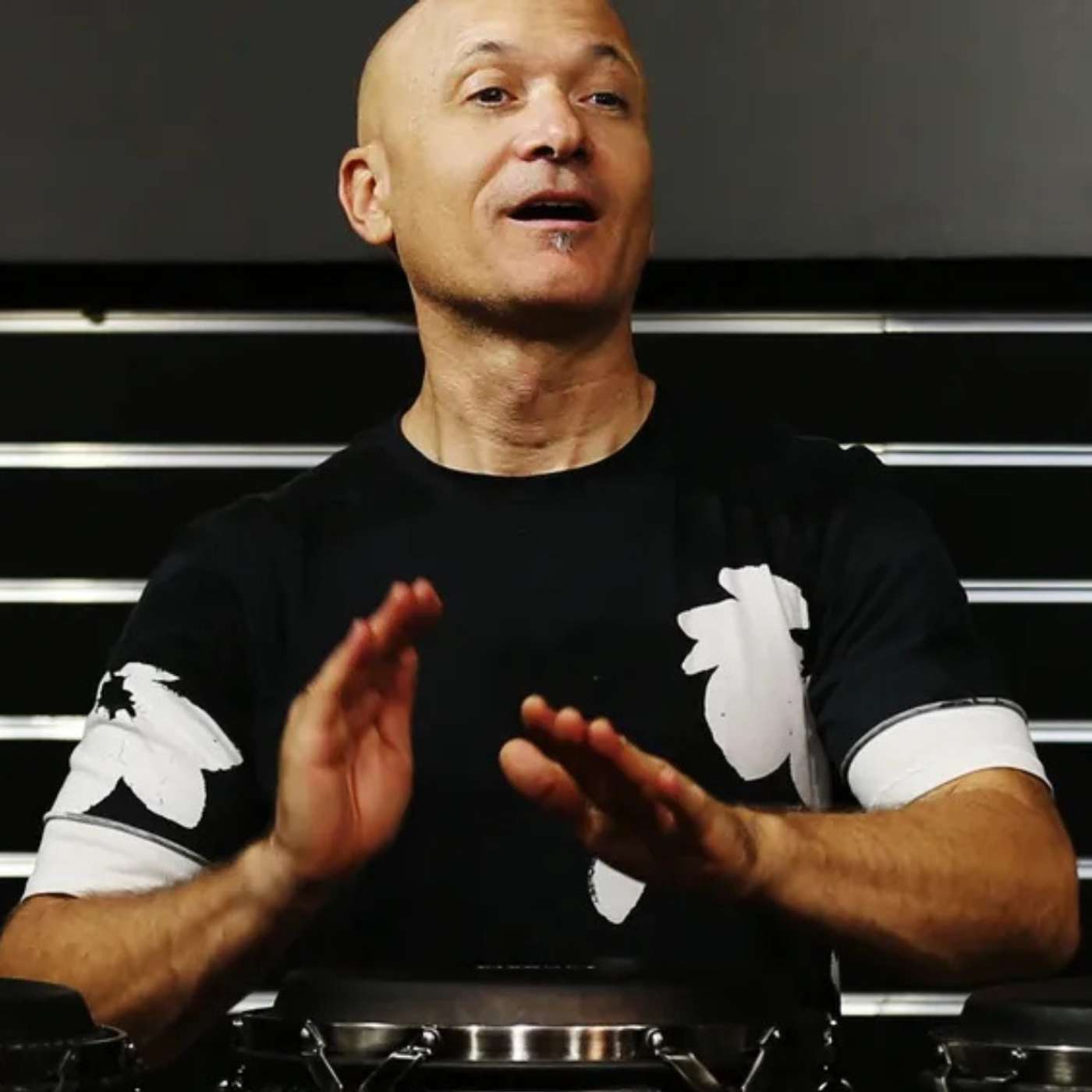
You Already Know How to Make Music: Kalani Das on play, listening, imperfection, and finding our way to music
Description
What if learning music begins with listening, not learning how to play an instrument or reading notation?
Find a sound. Notice it. Find another one. Play with them. Follow your curiosity. Make a mistake. Keep going.
For Kalani Das, musician, educator, music therapist, author, and master percussionist, music begins with experience, not rules, notation, or technique.
In this episode of The Sum of All Wisdom, Kalani joins me for a wide-ranging exploration of what happens when we stop treating music as something we have to master and begin treating it as something human beings naturally do.
Kalani traces his journey from a dyslexic kid struggling with conventional music lessons to drummer, performer, educator, Orff Schulwerk practitioner, music therapist, and facilitator of musical experiences for people of widely different ages and abilities.
Along the way, he challenges some remarkably persistent assumptions about learning and creativity.
Notation isn't music. Technique isn't a prerequisite for expression. Teachers don't always need to provide answers. And sometimes the most powerful thing a facilitator can do is create a space—and then get out of the way.
Kalani also performs twice for us.
First, he builds an original piece in real time through live looping, moving among percussion, keyboard, ukulele, bass sounds, and Native American-style flute. The performance leads to one of the episode's most important observations: perfection isn't the point.
“Good enough is not only good enough. Good enough is great.”
Later, the conversation turns toward silence, attention, technology, and the grounding experience of making sound. Kalani combines drum, drone, flute, and a reading about space for a striking demonstration of what can emerge from simplicity.
We also explore Kalani's work in music therapy, including traumatic brain injury and addiction recovery; his discovery of Orff Schulwerk; improvisation and play; the importance of letting learners discover things for themselves; and music's extraordinary capacity to create connection.
Ultimately, this is a conversation about permission: permission to play, to experiment, to make mistakes, to listen, and to discover what happens next.
As Kalani puts it near the end of our conversation, being musical is “a way that we not only celebrate who we are, but it's how we remember who we are.” And from there, he’s got one more incredible insight that follows.
It can also help us “create who we want to be.”
Episode Highlights
· Why conventional music lessons can sometimes create barriers to music
· Beginning with sound and experience rather than notation
· What Kalani learned from Orff Schulwerk
· Play, experimentation, and the natural ways children learn
· Why a teacher can be more powerful as a facilitator
· Kalani's live-looping process and multi-instrument studio
· Why “good enough is great”
· Native American-style flutes and musical accessibility
· Music therapy, traumatic brain injury, and addiction recovery
· Creating musical experiences that include different abilities
· Silence as an invitation to participation
· Listening in a distracted, screen-saturated world
· Drumming, embodiment, presence, and flow
· Why simplicity can be extraordinarily powerful
· Music as a way of celebrating, remembering—and creating—ourselves
Music Featured in this Episode:
- In-episode demonstration & performance
Used with permission
About the Artist
Kalani Das is a musician, percussionist, educator, author, music therapist, and internationally experienced facilitator whose work b