Episode Details
Back to Episodes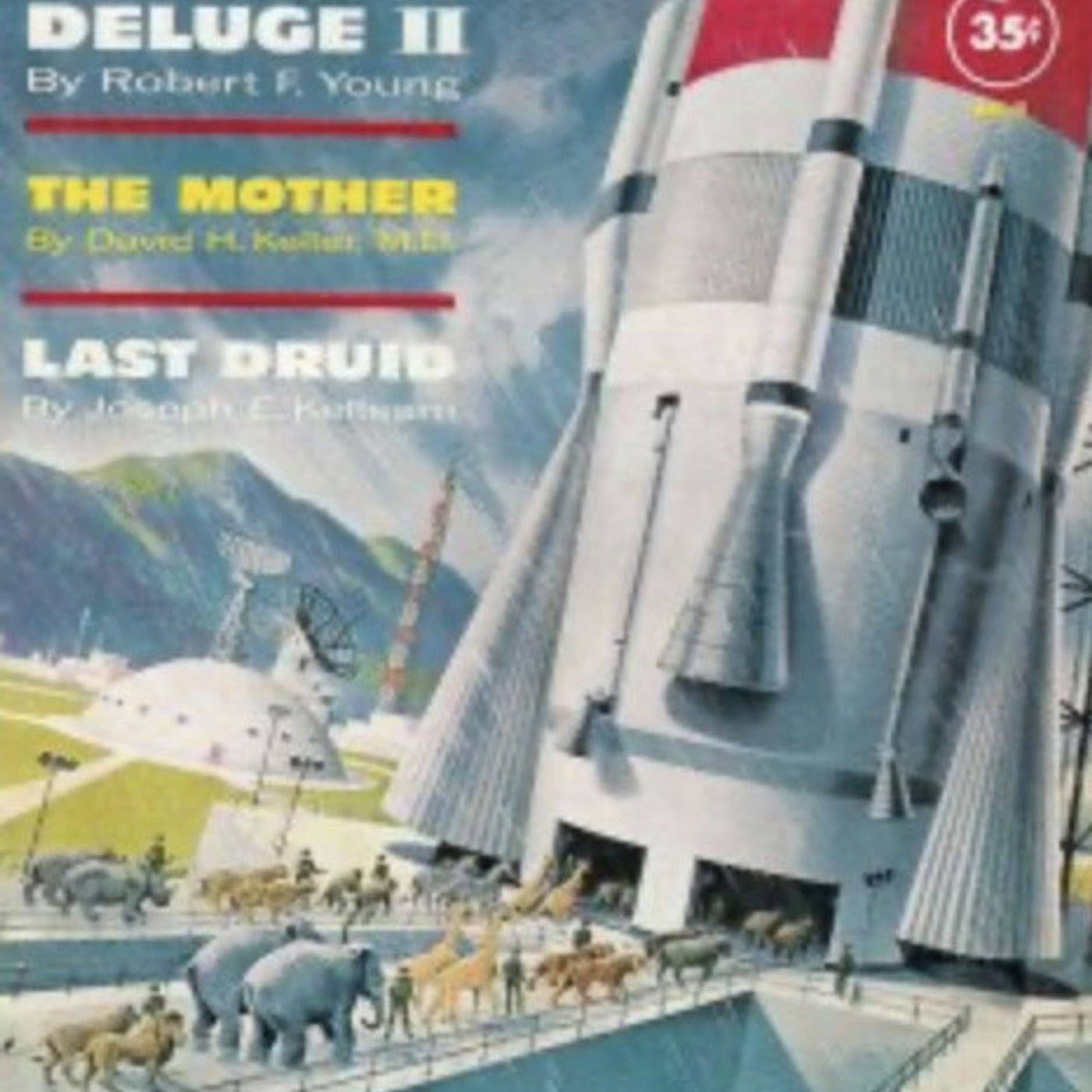
CONTENTS THE JOHN BATCHELOR SHOW, 8-25-2026 COVER OF FANTASTIC MAGAZINE OCTOBER 1961 Liz Peek, columnist for The Hill and Fox News, discusses the surprising resilience of the American economy, noting that small businesses are reporting strong hiring and
Description
CONTENTS THE JOHN BATCHELOR SHOW, 8-25-2026
COVER OF FANTASTIC MAGAZINE OCTOBER 1961
Liz Peek, columnist for The Hill and Fox News, discusses the surprising resilience of the American economy, noting that small businesses are reporting strong hiring and profitability growth based on broad National Federation of Independent Business and Bank of America data. While consumer spending remains robust, recent data reveals a K-shaped economy, where higher-income homeowners spend extensively on renovations while lower-income consumers trade down at Walmart. Rising interest rates present a critical challenge, slamming the housing market and significantly increasing interest payments on the massive national debt. Lastly, the administration's tariff conflict with Canada is criticized as a major, highly unfortunate, and economically damaging political mistake. (1)
Jonathan Schanzer, Executive Director of the Foundation for Defense of Democracies, evaluates the Treasury's initial tranches of secondary sanctions targeting entities trading with Iran, including firms in China and the UAE. Although these measures stop short of targeting major Chinese banks, they provide President Trump with leverage ahead of his Washington summit with Xi Jinping. Within the Middle East, Schanzer warns that regional powers are hedging their bets. Saudi Arabia may be negotiating a separate peace with the Houthis and Iran, which could undermine US sanctions. Additionally, the US controversially rescinded Syria's state sponsor of terror status following the rapid rise of former al-Qaeda commander Ahmed al-Shara. (2)
Mary Kissel, Senior Fellow at the Hudson Institute and former Senior Advisor to the Secretary of State, analyzes Trump's "maximum pressure" campaign against Iran, asserting that its success relies on penalizing large Chinesefinancial institutions. However, Beijing holds significant economic and military leverage over the US, including export controls on critical minerals. Regarding North America, Kissel describes the escalating trade war with Canada as a "loser's game" driven by domestic politics. She stresses that the 50% tariffs on essential materials like Canadianaluminum and auto parts disrupt deeply integrated supply chains. Consequently, this trade conflict severely harms ordinary consumers and threatens Republican control of key Senate seats in critical border states of Maine and Michigan. (3)
Colonel Jeff McCausland, US Army (Retired) and Visiting Professor at Dickinson College, warns that the US foreign policy process has collapsed under President Trump, who relies on personal loyalty over expert advice. This is illustrated by Trump's sudden decision to reduce joint US-South Korea military exercises without notifying allies. McCausland argues this undercuts South Korea while offering concessions to a nuclear-armed dictator, Kim Jong-un, who actively supplies weapons to Russia for the Ukraine war. Furthermore, he criticizes the "economic D-Day" against Iran as highly insincere given key delays in sanctioning China, and strongly condemns the trade war against Canada, a loyal ally with a rich military history. (4)
Listen Now
Love PodBriefly?
If you like Podbriefly.com, please consider donating to support the ongoing development.
Support Us