Episode Details
Back to Episodes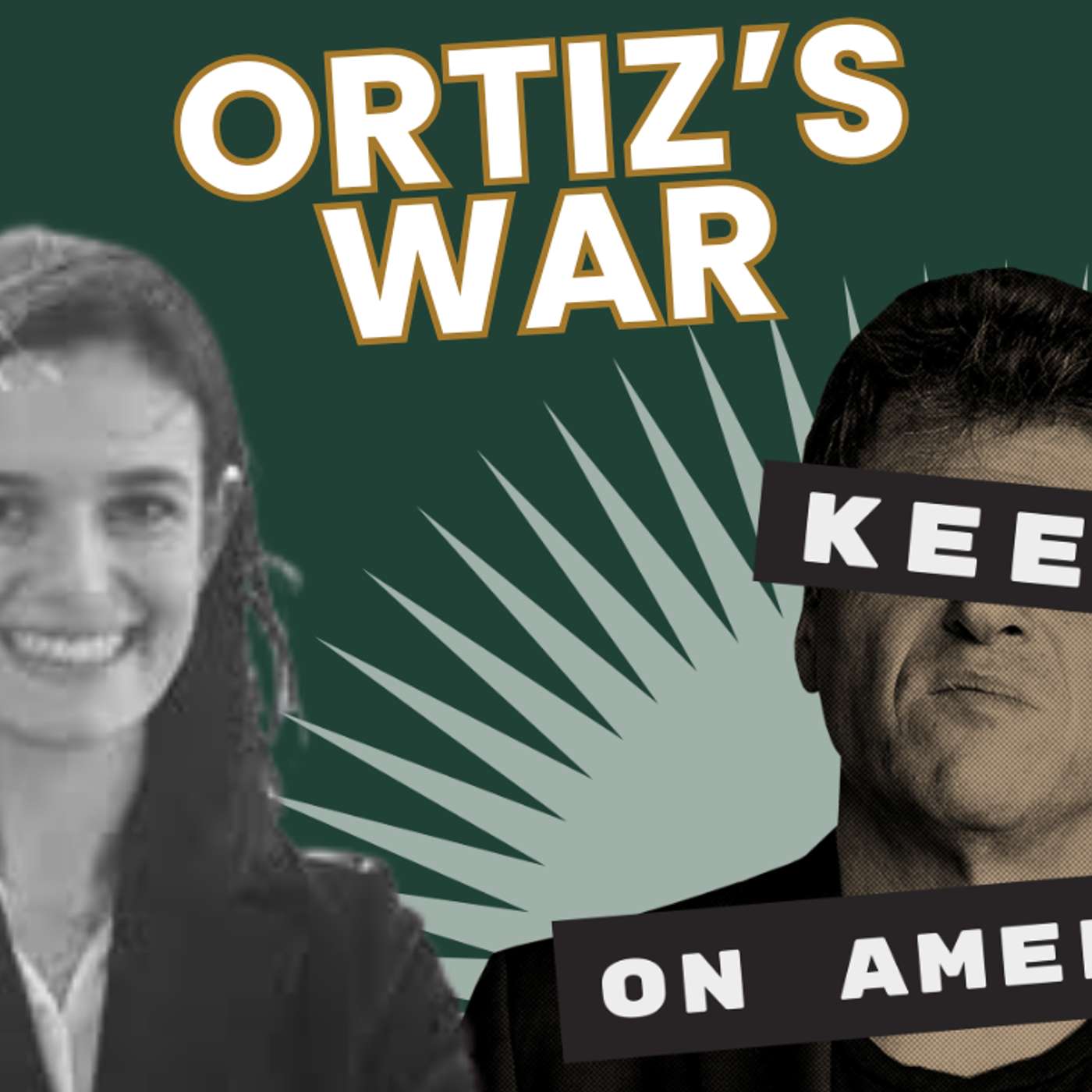
An Unknown American Hero: Katie S. Sanders on the Man Who Saved Her Grandfather's Life in WW2.
Description
Grandfathers, grandfathers. Yesterday, David Baerwald talked about his grandfather, Ernst Baerwald, an American spy in Second World War Japan. Today, Katie S. Sanders talks about her grandfather, Murray Simon, whose life was saved by an American spy in Second World War France. In Ortiz’s War, co-authored with historian Nicholas Reynolds, Sanders writes about Peter Ortiz, who became the Allies’ secret weapon against the Nazis in France.
With his stunning looks, Ortiz might have been a Hollywood creation. Polylingual Franco-American aristocrat, French Foreign Legion, race-car driver, circus lion tamer, the most battle-decorated member of America’s first spy agency. He even played himself (anonymous brave soldier) in a number of post-war Hollywood movies. I wish he was my grandfather.
Five Takeaways
• The Spy Who Saved Her Grandfather. Murray Simon was a 23-year-old Jewish kid from Queens who had never flown before the Army Air Forces trained him — then sent him over occupied France in a black-painted B-24 Liberator carrying spy supplies and carrier pigeons for the resistance. Shot down on May 6, 1944, a month before D-Day, on an OSS mission whose standing advice was don’t get shot down — spies were tortured and killed, not taken prisoner — he was hidden by a Bulgarian-born Jew passing as Catholic, a man with an eight-month-old daughter and a pregnant wife who was “already supposed to be dead” and opened his door anyway. Smuggled onward, Murray was intercepted by Peter Ortiz — and made it home to the GI Bill, a family, and what he called “the warm womb of Uncle Sam.” Katie never met him; the book is her way of meeting him. “I gravitate towards stories of resistance, probably in part because I’m a product of one.” Publication day: the anniversary of the liberation of Paris.
• No Peacetime Soldier. Peter J. Ortiz’s résumé reads like an unpublishable novel: son of a founding editor of Paris Vogue; French boarding-school runaway into the Foreign Legion (North Africa, Casablanca included); merchant seaman, dude-ranch manager, race-car driver, circus lion tamer; wounded fighting the Germans in 1940, captured, serially escaped — once off a hospital train under a dead soldier’s identity; docked in New York the day after Pearl Harbor and enlisted in the Marines, rising to become the most battle-decorated member of the OSS and one of the most decorated Marines of the war. His military file: not a good candidate for a desk job, ever. He spoke five languages, not Wikipedia’s ten (“Wikipedia is a storyteller”), walked into bars in occupied France wearing his Marine uniform, and wrote his own epitaph in a twenty-page memoir: “I’m no peacetime soldier.” Afterward: John Ford’s Hollywood, minor roles, his own uniforms as costume — and no bragging, ever.
• The Heroic Surrender at Centron. The book’s climax is Operation Union II, August 1944 — Ortiz’s own inter-Allied mission into the Alps, culminating in the massive “Le Grand Parachutage” supply drop to the Maquis. He recruited his own Parris Island parachute instructors — Marines who remembered the legionnaire who blew them all away at boot camp — plus Francis Coolidge: Harvard dropout, fellow Foreign Legion veteran, and great-great-great-grandson of Thomas Jefferson. When his patrol was surrounded at the village of Centron by vastly superior German forces on a murderous late-war rampage, Ortiz chose saving the town over fighting — the surrender as the war’s most heroic act, bravery as the capacity to think while being shot at. Centron celebrates him every year; Katie was just there with