Episode Details
Back to Episodes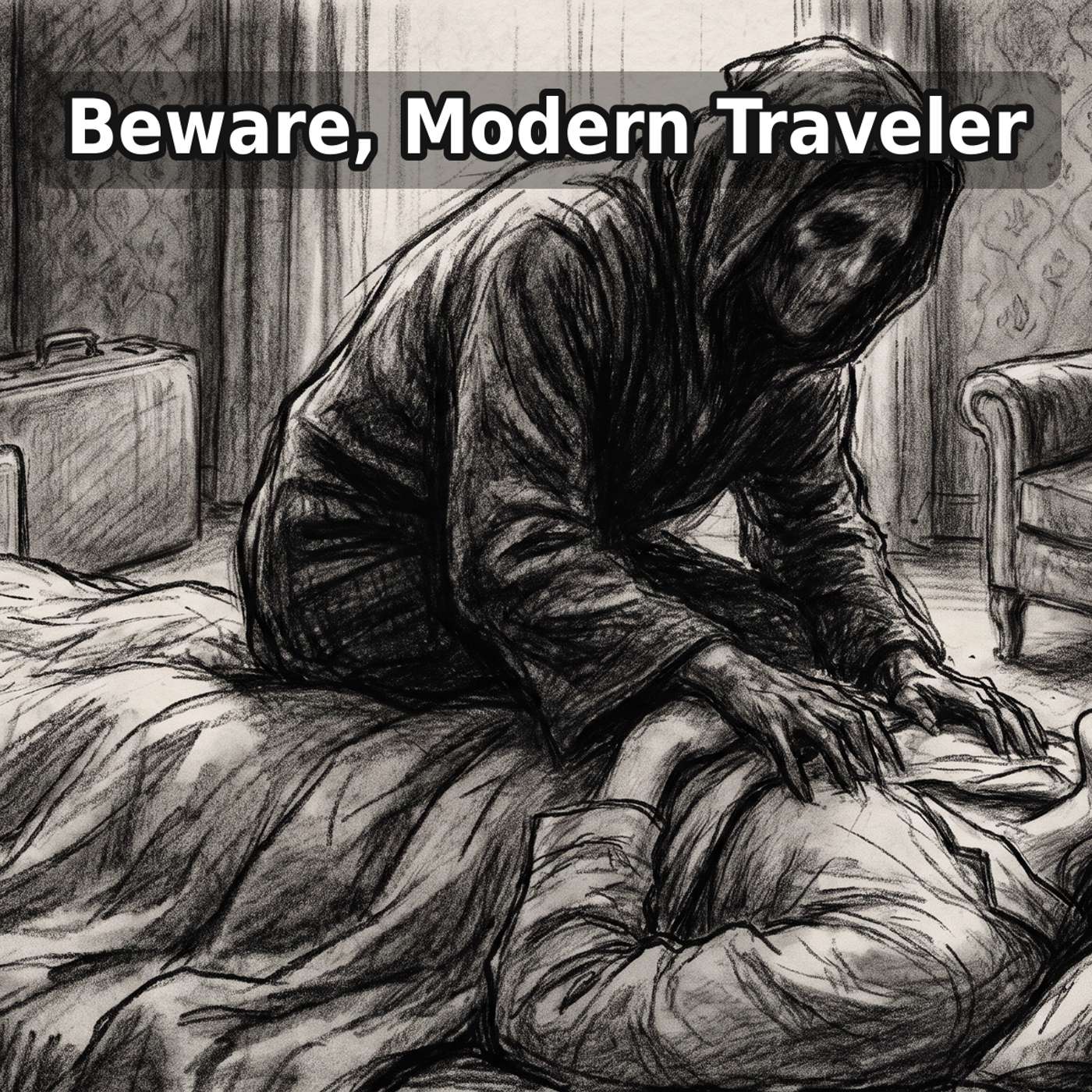
Day 320 - Beware, Modern Traveler
Description
Be wary, modern traveler.
One of the oldest habits of the human mind is also one of the easiest to miss. When confronted with ambiguity, complexity, or something we cannot fully explain, we give it a name. The name helps because it takes something shapeless and puts a boundary around it. It gives us something we can talk about, warn others about, blame, and sometimes even treat.
The danger comes later, when we forget that the name was originally just a model.
For centuries, people reported waking in the night unable to move. Some felt pressure on their chest. Others sensed someone standing in the room. Some saw a figure approaching the bed or believed that something was physically holding them down. Different cultures developed different explanations for these experiences, and in parts of medieval Europe one of those explanations was the incubus, a demon believed to visit people while they slept.
Today we have a different name: sleep paralysis.
Our modern understanding is unquestionably better. We know that REM sleep involves temporary muscle paralysis and that consciousness can sometimes return before that paralysis has completely released. We understand something about the neurological machinery involved. Yet there is still something important to notice. The people who spoke of the incubus were not necessarily inventing the experience. They were describing something human beings continue to experience today. What changed most dramatically was the explanation.
That should make us humble.
There seems to be a recurring pattern in the way humans deal with the unknown. We observe something we cannot explain, recognize a pattern, give it a label, build an explanatory story around it, and eventually accept that story so thoroughly that the label begins to feel like reality itself.
The ancient person might say, “An incubus attacked him.” Another generation might say, “It must have been God’s will.” The modern person has a different vocabulary. “She’s bipolar.” “He’s autistic.” “That’s trauma.” “It’s systemic.” “The algorithm did it.” “That’s misinformation.” “The science says.”
These statements are certainly not equivalent. Some describe phenomena supported by enormous bodies of evidence, and modern science can tell us far more about human behavior and physiology than our ancestors could have imagined. But that is not really the point. The point is that the human mind can use all of these labels in the same psychological way, as a means of turning uncertainty into apparent understanding.
We hear the word and experience the relief of recognition. “Oh, that’s what it is.”
But sometimes what we really mean is, “Oh, that’s what we call it.”
Those are not the same thing.
Once a label becomes widely accepted, another problem appears. We begin interpreting new observations through it. A person has dramatic mood changes, so every future emotional reaction is interpreted through a diagnosis. A child behaves differently from other children, so every unusual habit becomes evidence of a category already assigned. A company unexpectedly becomes popular, and we say, “the algorithm.” A political event surprises us, and we reach for whichever ideological explanation our group already prefers.
Eventually the category begins absorbing everything around it. The label that was created to describe the observations starts being offered as the cause of the observations.
Why does he behave that way? Because he has X.
How do we know he has X? Because he behaves that way.
We have gone in a circle.
Philosophers call part of this process reification. We create an abstraction or category and gradually begin treating it as though it were a concrete thing. The map starts replacing the territory.
I think this reveals something uncomfortable about us:
human beings have always manufactured certainty faster than they m