Episode Details
Back to Episodes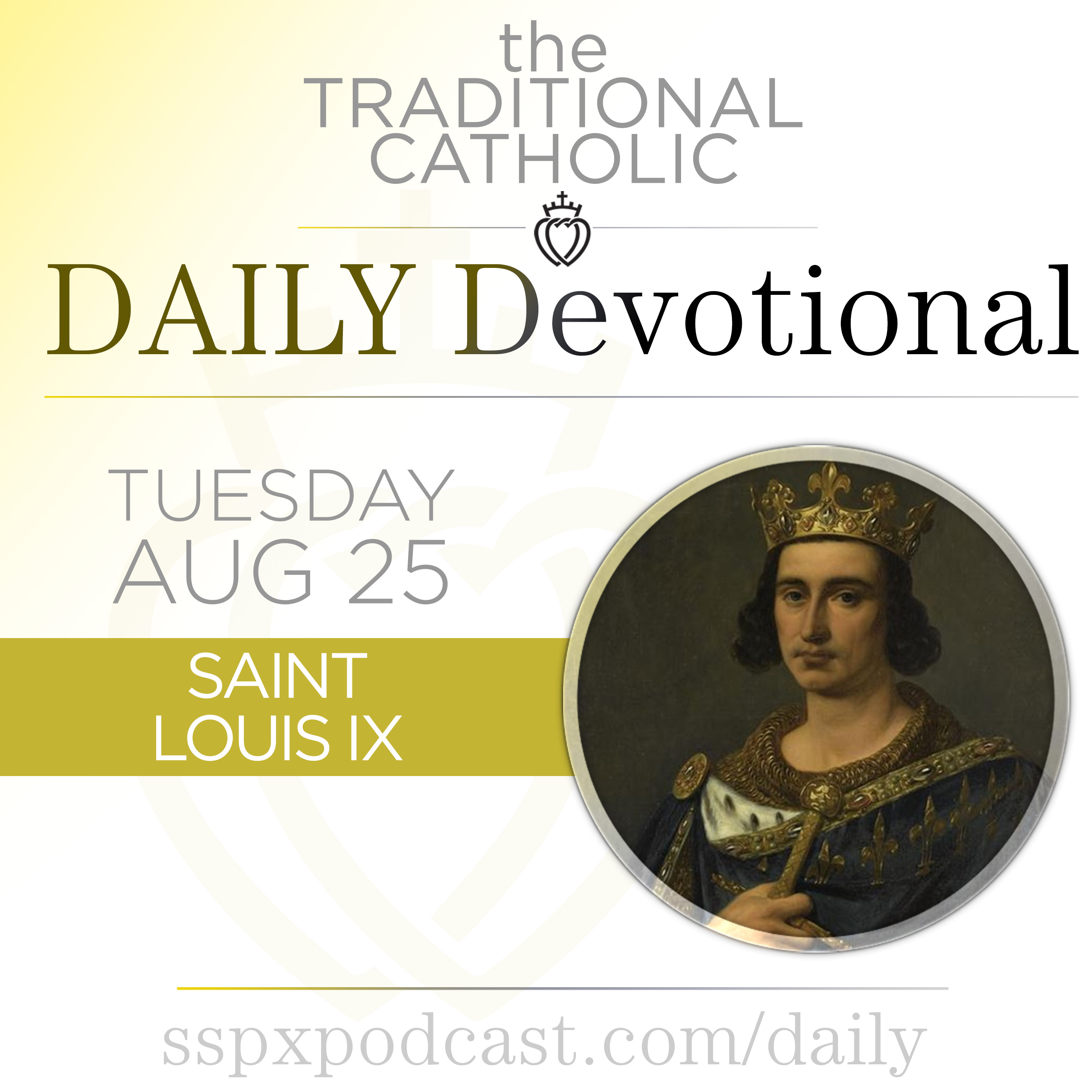
Aug 25 – S Louis IX
Description
Sources Used Today:
- "Confession: Remedy for Sin" — From Trinity Sunday to the Assumption
- "Papal Infallibility: What Are the Limits?" (FSSPX.news)
- The SSPX Podcast: "Abp. Lefebvre Audiobook Chapter 14: Superior General" (SSPX Podcast)
- View on YouTube
- Listen & Subscribe on SSPXpodcast.com
- The Spiritual Life — Archbishop Marcel Lefebvre (Angelus Press)
Please support our new project, the Archbishop Lefebvre Biography Audiobook:
- Learn more:https://www.youtube.com/watch?v=Y-Wp4MQdK2o
- Donate:https://sspx.gifts/audiobook
Saint Louis IX of France is one of those saints whose life raises an interesting question: what does holiness look like when you are one of the most powerful people in Europe?
Louis became king of France at only twelve years old in 1226. His mother, Blanche of Castile, governed while he was young and gave him an intensely Catholic upbringing. One line traditionally attributed to her captures that formation: she would rather see her son dead than know he had committed a mortal sin.
Louis apparently took that seriously.
As an adult, he built his day around Mass, the Divine Office, government business, and care for the poor. He regularly invited poor people to his table and personally served them. He founded hospitals and charitable institutions and was known for hearing the complaints of ordinary people who otherwise had little access to a king.
There's a wonderful image associated with Louis as judge.
Rather than always sitting in some intimidating royal courtroom, he sometimes heard cases beneath an oak tree at Vincennes. People could approach the king directly, explain their dispute, and ask for justice. Whether every detail of the famous image is literal or idealized, it reflects how medieval Christians remembered him: a ruler who believed kingship meant responsibility before God.
Louis also left behind one of the most spectacular buildings in Paris.