Episode Details
Back to Episodes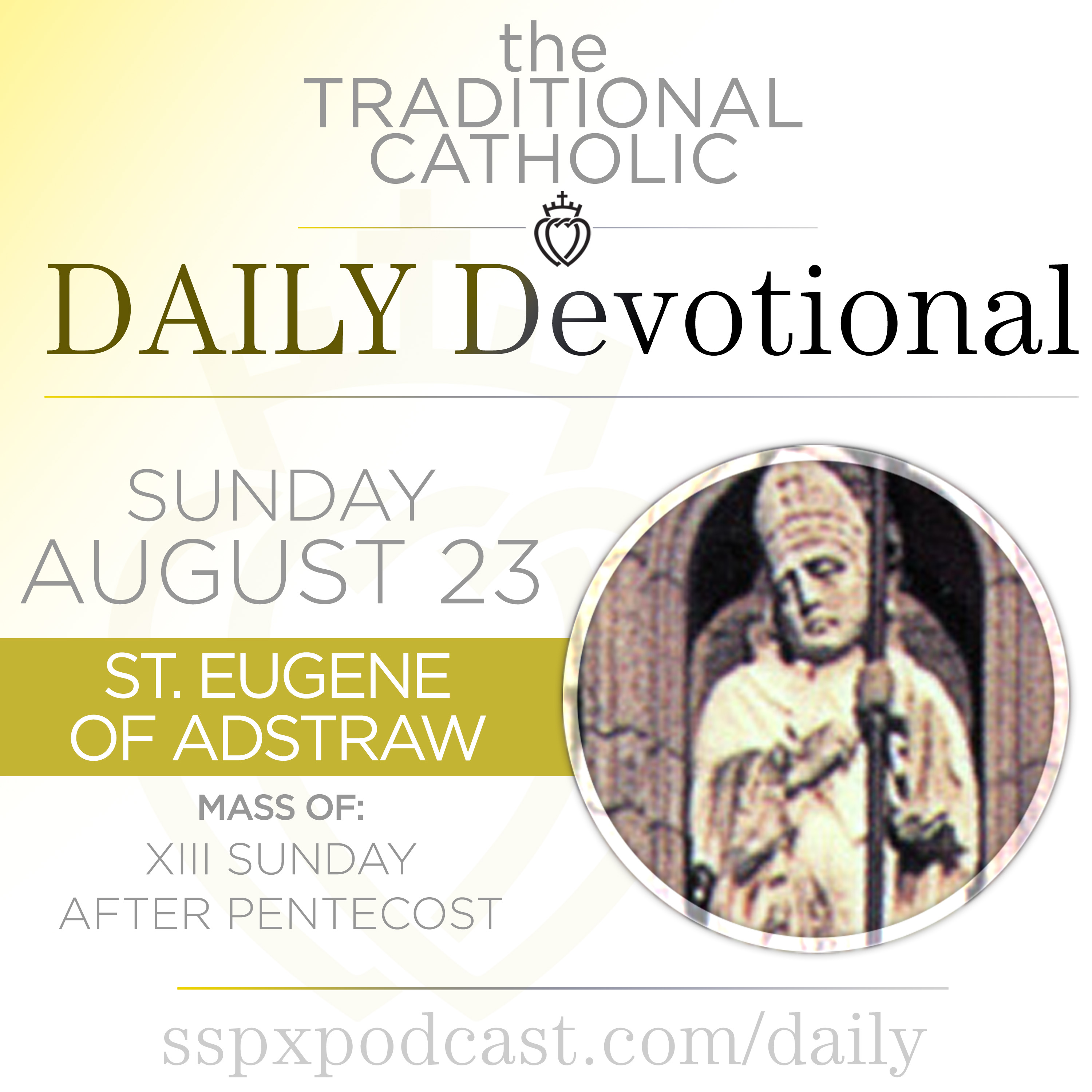
Aug 23 – XIII Sun of Pentecost / S Eugene of Ardstraw
Description
Sources Used Today:
- "Our Native Misery" — From Trinity Sunday to the Assumption
- "Archbishop Lefebvre's Apostolic Journey - Part 4" (FSSPX.news)
- The Spiritual Life — Archbishop Marcel Lefebvre (Angelus Press)
Please support our new project, the Archbishop Lefebvre Biography Audiobook:
- Learn more:https://www.youtube.com/watch?v=Y-Wp4MQdK2o
- Donate:https://sspx.gifts/audiobook
Saint Eugene of Ardstraw is one of those early Irish saints whose biography has almost disappeared, but whose name somehow survived for fifteen centuries.
His original Irish name was Eoghan, which eventually gave us forms like Owen and Eugene. He lived sometime around the sixth century, during that remarkable period when Ireland was becoming filled with monasteries, schools, and missionary communities.
According to tradition, Eugene's childhood took a dramatic turn when he was captured by raiders and carried across the Irish Sea to Britain.
Eventually, he escaped.
But something important had happened during those years away. Eugene had encountered monastic Christianity and received an education among religious communities. So when he returned to Ireland, he came back prepared to take part in the enormous missionary movement then transforming the island.
Later traditions connect him with several famous centers of early Christianity, including the community associated with Saint Ninian in Britain and, back in Ireland, with Kevin of Glendalough. With saints from this period, it's difficult to separate every historical detail from stories added centuries later. But Eugene clearly belonged to the network of monks who moved between Ireland and Britain carrying books, learning, and the faith with them.
Eventually he settled at Ardstraw, in what is now County Tyrone in Northern Ireland.
The name itself is interesting. Ardstraw comes from the Irish Ard Sratha, meaning roughly "height of the river valley" or "height of the strath." Eugene established a monastery there and became