Episode Details
Back to Episodes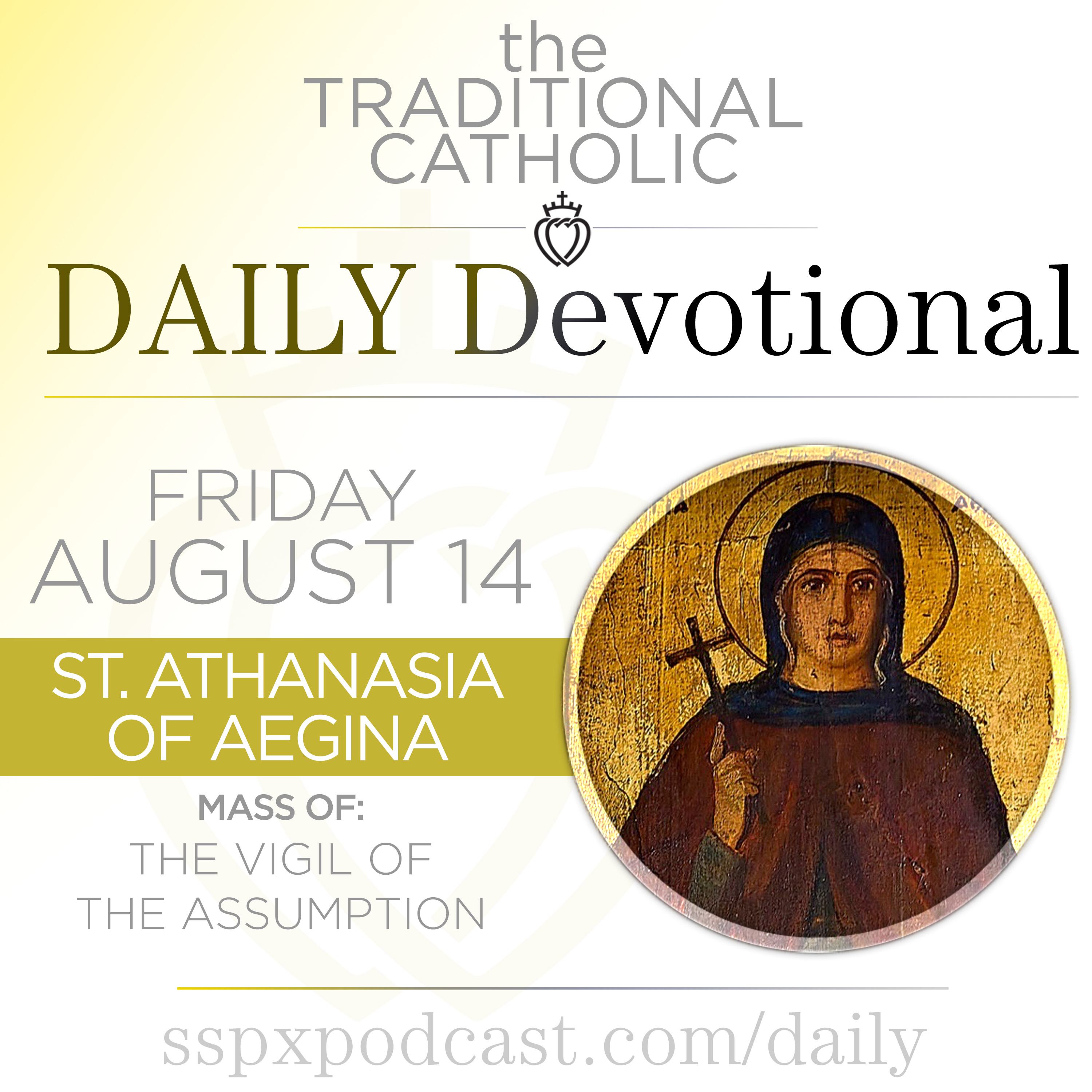
Aug 14 – Vigil of Assumption / S Athanasia of Aegina
Description
Sources Used Today:
- "The Mortification of the Tongue" — From Trinity Sunday to the Assumption
- "What Is the Doctrinal Credibility and Moral Authority of Cardinal Fernández?" (FSSPX.news)
- The SSPX Podcast: "Catechism #4: Why We Call God Father" (SSPX Podcast)
- View on YouTube
- Listen & Subscribe on SSPXpodcast.com
- The Spiritual Life — Archbishop Marcel Lefebvre (Angelus Press)
Please support our new project, the Archbishop Lefebvre Biography Audiobook:
- Learn more:https://www.youtube.com/watch?v=Y-Wp4MQdK2o
- Donate:https://sspx.gifts/audiobook
Saint Athanasia of Aegina lived in ninth-century Greece, and her story begins with something she didn't particularly want: marriage.
Athanasia had hoped from a young age to dedicate her life completely to God. But her parents had other plans, and while still a teenager she was married to a young military officer.
The marriage lasted only sixteen days.
Her husband was killed during an Arab raid on the island of Aegina, leaving Athanasia a widow almost immediately.
She still hoped for religious life, but circumstances intervened again. According to her ancient biography, an imperial decree encouraged unmarried and widowed women to marry soldiers, and Athanasia entered a second marriage. This time, however, something remarkable happened.
Her husband began sharing her desire for a more serious spiritual life.
Together they gave generously to the poor and opened their home to people in need. Eventually, with Athanasia's encouragement, her husband entered a monastery. Athanasia was finally free to pursue the religious life she had wanted for years.
She gathered several other women around her and formed a small community. Athanasia became their abbess, bu