Episode Details
Back to Episodes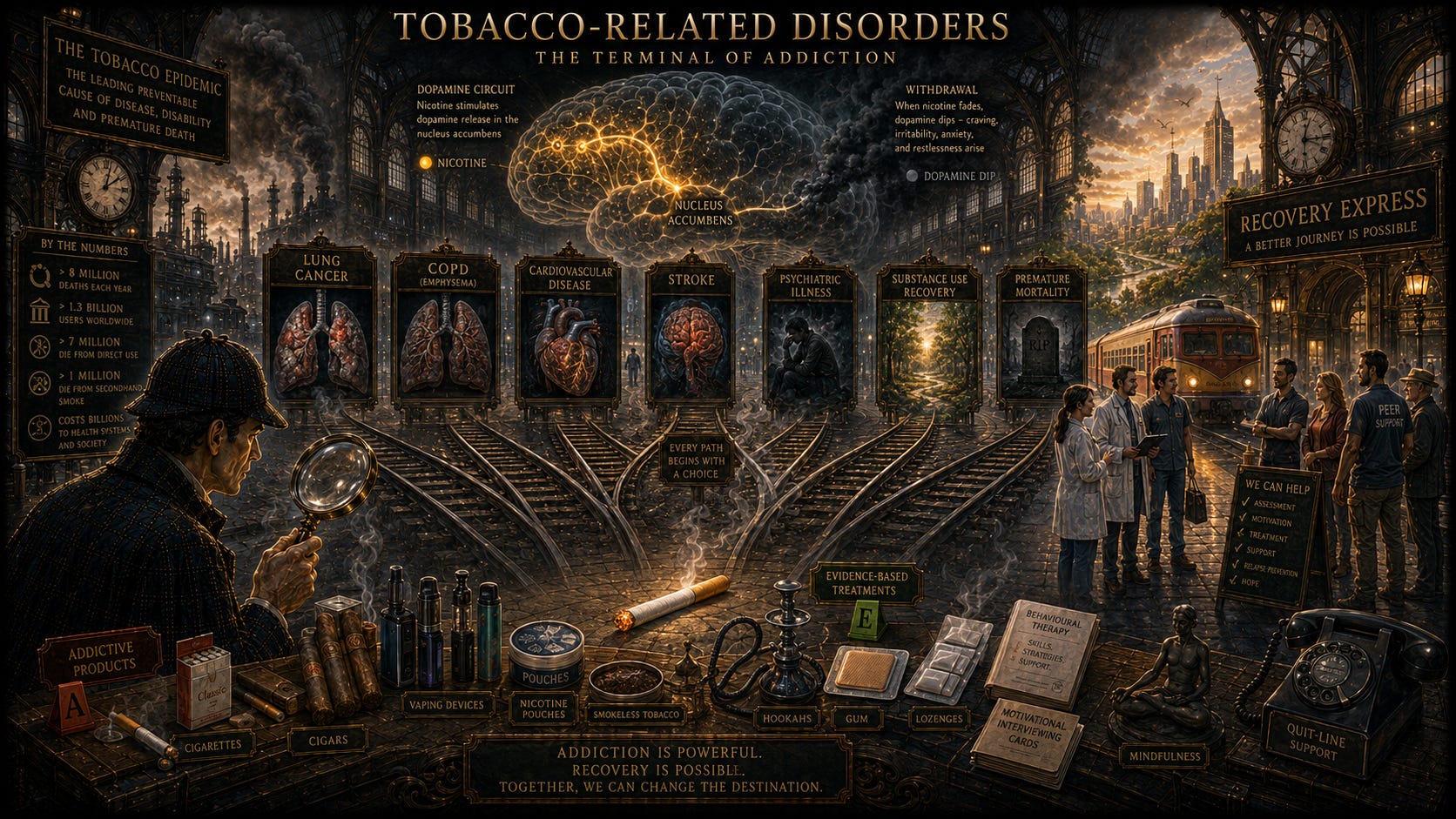
PSYCH 088: Tobacco-Related Disorders
Description
Medlock Holmes is summoned to investigate the greatest unsolved epidemic in modern psychiatry.
Unlike the previous cases, there is no mystery about what causes the deaths.
The evidence has been overwhelming for decades.
Yet millions continue to use the substance.
The mystery is not what tobacco does.
The mystery is why humanity continues to smoke despite knowing the truth.
Holmes begins where every psychiatrist must begin-with nicotine.
Nicotine is one of the most powerfully addictive substances known, reaching the brain within seconds after inhalation. Each cigarette reinforces a rapid cycle of reward, relief from withdrawal, habit formation, and conditioned learning. Over years, smoking becomes far more than a behaviour-it becomes woven into identity, routines, relationships, stress management, and emotional regulation.
As Holmes surveys the city, he notices something deeply troubling.
The burden of tobacco is not shared equally.
Psychiatric patients smoke at dramatically higher rates than the general population. Individuals with schizophrenia, mood disorders, anxiety disorders, substance use disorders, trauma histories, and adverse childhood experiences are disproportionately affected. Tobacco contributes substantially to the reduced life expectancy seen in severe mental illness-not because of psychiatric disease itself, but because of cardiovascular disease, respiratory illness, cancer, and other smoking-related conditions.
Following the trail, Holmes uncovers an old misconception.
For years, clinicians believed smoking helped psychiatric patients cope-that quitting might worsen their mental illness. Yet the evidence now tells a different story. Smoking cessation does not worsen long-term mental health. Instead, many patients experience improvements in mood, anxiety, quality of life, physical health, finances, and recovery from other addictions.
Holmes next examines the neurobiology.
Nicotine binds to nicotinic acetylcholine receptors, activating dopaminergic reward pathways within the mesolimbic system. Withdrawal emerges quickly because nicotine levels fall rapidly, producing irritability, anxiety, depressed mood, restlessness, poor concentration, insomnia, increased appetite, and intense craving. Smokers often continue smoking not to become intoxicated, but simply to avoid withdrawal.
The investigation widens.
Modern nicotine addiction extends far beyond cigarettes. Cigars, cigarellos, hookahs, smokeless tobacco, nicotine pouches, vaping devices, and electronic cigarettes all deliver nicotine through different routes, each carrying its own misconceptions regarding safety. Holmes carefully separates evidence from marketing, recognising that newer products often create new pathways into nicotine dependence, particularly among adolescents.
Treatment, Holmes realises, is remarkably effective when approached systematically.
Every patient should be asked about tobacco use.
Every smoker should receive brief advice to quit.
Every smoker should be offered evidence-based treatment.
Behavioural therapies, motivational interviewing, relapse prevention, mindfulness approaches, quit-lines, and community supports work even better when combined with pharmacotherapy. Nicotine replacement therapy, bupropion, and varenicline substantially improve quit rates, while newer interventions such as transcranial magnetic stimulation continue to emerge.
Finally, Holmes confronts the greatest irony of the case.
The deadliest addictive disorder in psychiatry is also among the most treatable.
The greatest tragedy is not that tobacco addiction exists.
It is that clinicians sometimes fail to treat it.
Key Takeaways
* Tobacco use disorder is the most prevalent substance use disorder worldwide and remains the leading preventable cause of death.
* Psych