Episode Details
Back to Episodes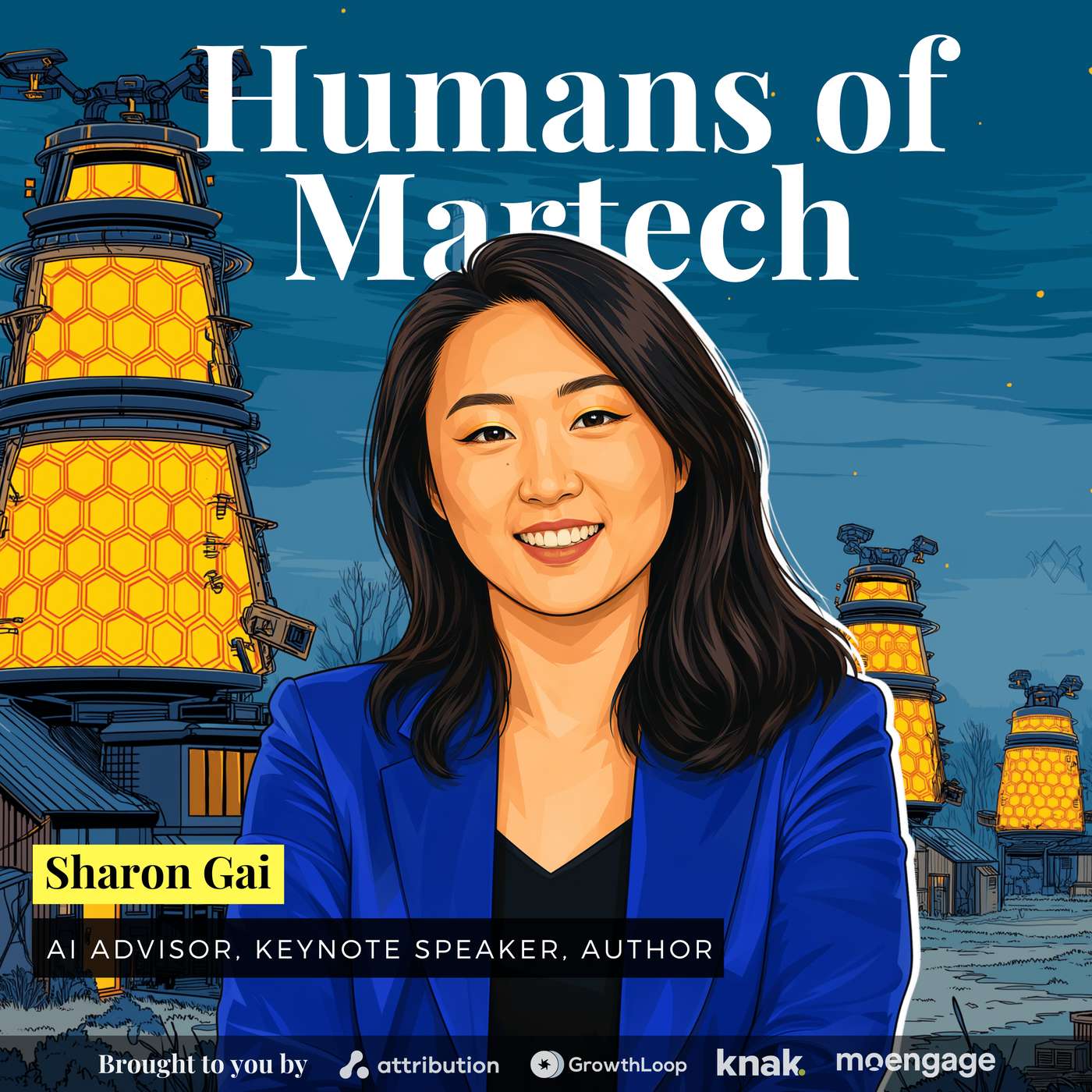
232: How taste can be codified into systems and is no longer a durable skill, and what's next with Sharon Gai
Description
What's up everyone, today we have the pleasure of sitting down with Sharon Gai, author, keynote speaker, and educator.
We'll cover:
- (00:00) - Intro
- (01:21) - In This Episode
- (05:20) - How AI Moves Marketing Creativity Up the Abstraction Layer
- (09:08) - Why Taste Is No Longer a Durable Human Skill
- (15:33) - What Human Work Looks Like After AI Learns Taste
- (20:41) - How to Codify Taste Into Your AI Systems
- (27:20) - Why Hands-On Execution Still Builds Judgment AI Can't Copy
- (36:48) - How to Build a Personal AI Strategy and Learn How to Learn
- (39:31) - Why Seeing Your Job as Tasks Rather Than a Role Future-Proofs Your Career
- (48:12) - Why You Should Tinker With AI Before You Cut Back on Meetings
- (54:13) - How Students Can Adapt to Graduating Into an AI Economy
- (01:02:13) - How to Decide What Deserves Your Energy
Summary: Sharon Gai wrote a book telling everyone that taste and judgment were the durable human skills AI couldn't touch, then went on record to take half of it back. In this episode she walks through why taste is now codifiable, why originality still belongs to humans, and how she pulled a McKinsey-grade deck out of Claude by feeding it her own best work. We get into the lost generation of junior executors, the beekeeper mindset that separates orchestrators from busy bees, and a token-maxing hot pot dinner that made her swear off wasting agents. She even hands over a deathbed test for deciding what deserves your energy. If you've ever wondered which of your skills actually survive the next few years, this one is a map.
About Sharon Gai
Sharon Gai is an author, keynote speaker, and educator who helps professionals future-proof their careers in an AI-driven economy. She teaches on Maven and speaks to audiences around the world about how AI is reshaping creativity, work, and the roles people play inside their companies. Her latest book uses the image of busy bees and beekeepers to argue that the future belongs to the people who orchestrate AI rather than execute every task themselves.
Before writing and speaking full time, she spent years in enterprise tech, starting out helping IT directors and CIOs build data centers at the dawn of the cloud era. That hands-on background shows up throughout her work, especially in how she thinks about the difference between doing the work and orchestrating it.
How AI Moves Marketing Creativity Up the Abstraction Layer
When cameras got cheap, painters thought they were finished. Why spend weeks rendering a face in oil when a machine could capture it in a fraction of a second? Plenty of people called photography mechanical, soulless, artless. The threat was real, and the outcome was stranger than anyone expected. Freed from copying the world exactly, painters walked through a door cameras couldn't follow, into Impressionism, Cubism, and everything that made modern art feel alien at first. Sharon sees the same door swinging open for marketers right now, and the word she keeps returning to is abstraction.
Walk through any art museum and you can watch this happen on the walls. The 1800s rooms are full of precision: portraits rendered to the eyelash, battle scenes with every horse in place, oceans and landscapes you could almost step into. Then you reach the modern wing, and some people stop and say "I could have done that." The work got harder to read. You have to stand there a moment, wonder who the artist was and why they picked this particular black over a lesser one. The craft survived by climbing a level, from rendering reality to deciding what the piece should mean.
Sharon's marketing version is concrete. A few years ago you drew up a Facebook ad yourself, designed the banner, and loaded it into the platform's back end by hand. Now that whole chain can run on its own. So what does the ma