Episode Details
Back to Episodes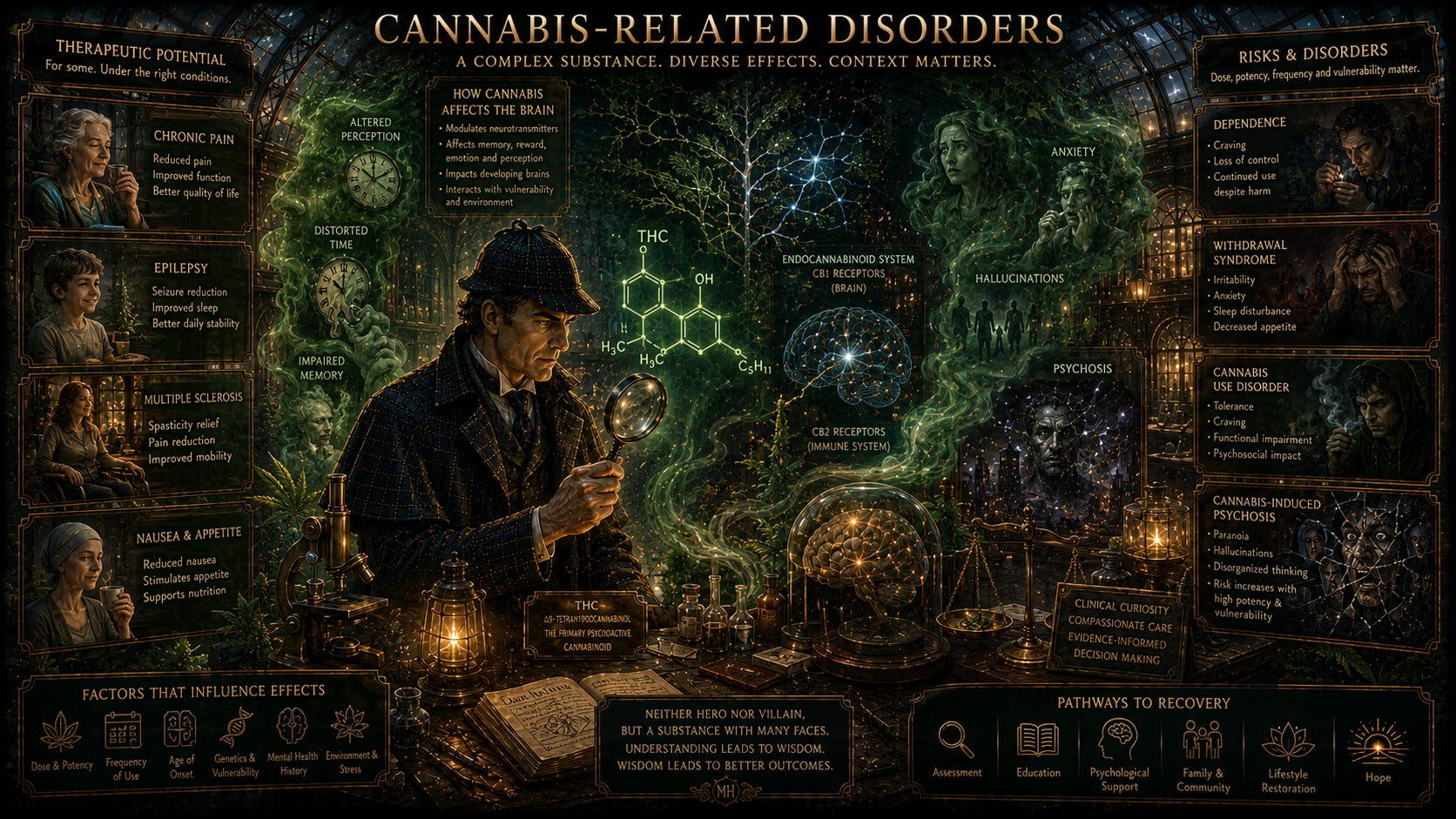
PSYCH 085: Cannabis-Related Disorders
Description
Cannabis is often viewed as harmless, natural, or even medicinal, yet its relationship with mental health is far more complex. In this episode, Medlock Holmes investigates how THC alters brain function, why some people develop dependence while others do not, and the growing evidence linking cannabis with anxiety, psychosis, cognitive impairment, and withdrawal. As cannabis becomes increasingly potent and widely available, Holmes uncovers the delicate balance between therapeutic potential and psychiatric risk.
Key Takeaways
* Cannabis is the most widely used illicit drug worldwide.
* THC is the primary psychoactive cannabinoid and acts mainly through CB1 receptors in the brain.
* Modern cannabis products contain much higher THC concentrations than in previous decades.
* Cannabis can be smoked, vaped, ingested as edibles, or consumed as concentrated extracts.
* Acute intoxication commonly causes euphoria, relaxation, altered perception, impaired attention, poor short-term memory, and slowed reaction time.
* Motor coordination and driving ability are significantly impaired during intoxication.
* Regular cannabis use can lead to Cannabis Use Disorder, characterised by impaired control, craving, tolerance, withdrawal, and continued use despite harm.
* Approximately 1 in 10 people who ever use cannabis develop dependence, rising to around 1 in 3 among regular users.
* Withdrawal usually begins within 24–48 hours and includes irritability, anxiety, insomnia, reduced appetite, restlessness, depressed mood, sweating, tremor, headache, and abdominal discomfort.
* Heavy cannabis use is associated with poorer educational outcomes, reduced cognitive performance, and impaired memory, particularly with early adolescent use.
* High-potency cannabis increases the risk of psychotic symptoms and may precipitate schizophrenia in genetically vulnerable individuals.
* Continued cannabis use after a first episode of psychosis is associated with poorer clinical outcomes and higher relapse rates.
* Cannabis may also worsen anxiety, trigger panic attacks, and contribute to cannabinoid hyperemesis syndrome in chronic heavy users.
* Acute cannabis use increases heart rate and can pose cardiovascular risks in susceptible individuals.
* There is no approved pharmacological treatment for Cannabis Use Disorder.
* The most effective treatments combine motivational enhancement therapy (MET), cognitive behavioural therapy (CBT), relapse prevention, contingency management, and family-based interventions for adolescents.
* Medicinal cannabinoids have evidence for selected conditions including chemotherapy-induced nausea, multiple sclerosis spasticity, certain epilepsies, and some chronic pain conditions, but evidence remains limited for many psychiatric disorders.
This is a public episode. If you'd like to discuss this with other subscribers or get access to bonus episodes, visit drmanaankarray.substack.com/subscribe