Episode Details
Back to Episodes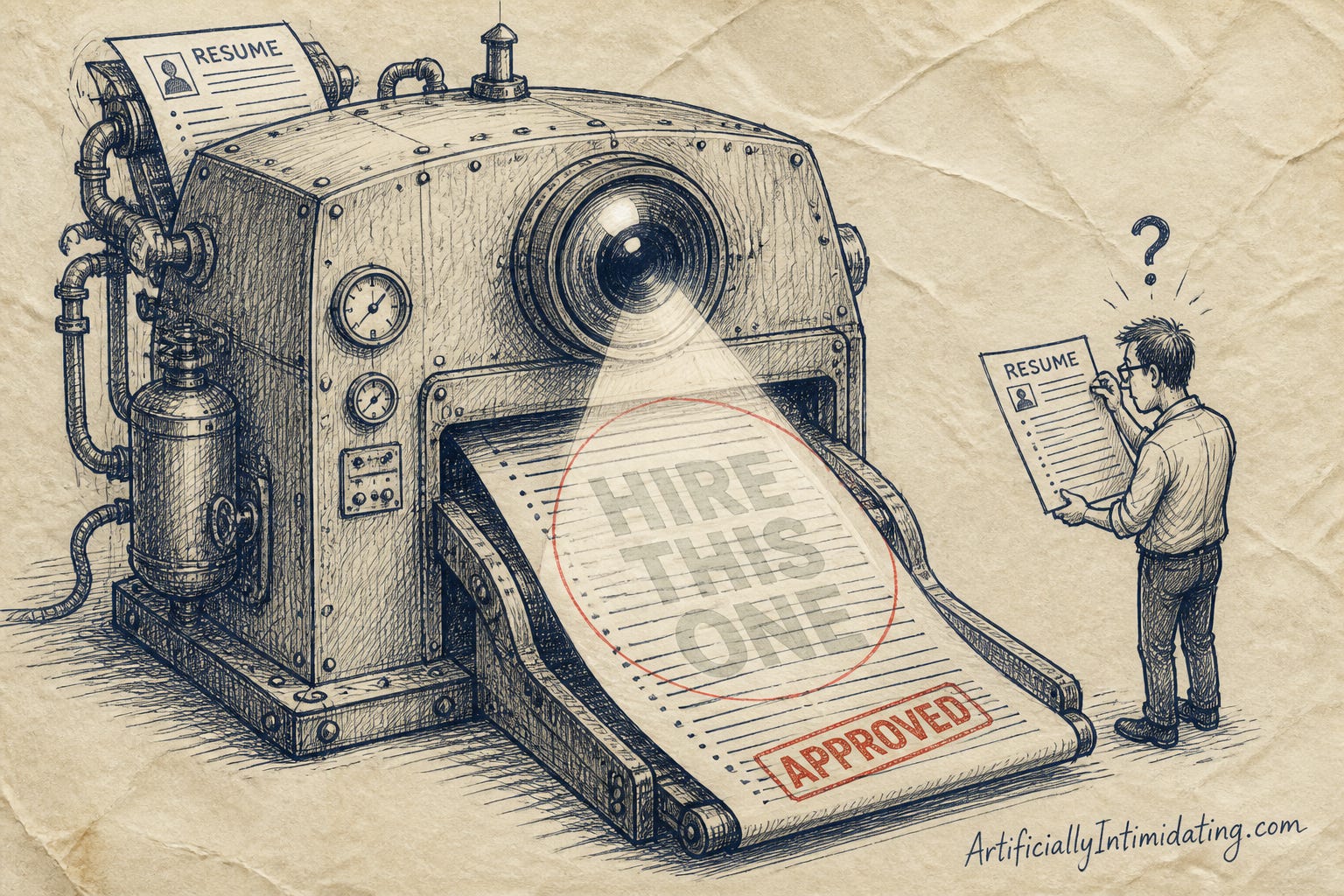
Nobody Wants the Smartest Model Anymore -- AI Brief August 8
Description
Good day, humans. Today’s theme snuck up on me: almost nobody in this brief is trying to buy the smartest AI. Databricks published a playbook for deliberately not paying for genius, Cloudflare shipped a browser that renders worse on purpose, and the Department of Energy is handing model weights out for free. Also, job applicants have started leaving secret notes for the robot reading their résumé. Let’s get into it.
Repo Madness is live!
A new thing I’m doing — one open-source repo at a time, what it does, what expensive thing it kills, and whether I’d actually run it.
* ai-job-search — A laid-off geophysicist built a job search agent on Claude Code and got hired in 69 applications. It’s been #1 on GitHub Trending, and it refuses to lie on your résumé. What it replaces, and the one thing that’ll stop you.
* browser-use — Cloudflare’s new agent browser is a closed beta. The open-source one has 108,000 stars, MIT licensing, and outranks OpenAI, Anthropic and Google on the benchmark. What it replaces, and where free stops.
The Smartest Model Is No Longer the Point
Source: Databricks
What happened: Databricks published a playbook for stopping AI coding bills from growing exponentially, reviewed by infrastructure leaders at Stripe, Coinbase, Uber and Ramp. Its central claim is that companies should chase the “efficiency frontier” — the cheapest model that still clears the quality bar for ordinary work — rather than the intelligence frontier everyone writes headlines about.
Why it matters: If you hand AI tools to every engineer, the bill curves upward faster than revenue does. Databricks says unglamorous fixes work: routing each request to the cheapest capable model cut average task cost by more than 30%, and tuning how much context gets stuffed into every request cut token spend nearly in half with no drop in quality. Yesterday we ran Garry Tan telling founders to own their intelligence rather than rent it — this is the enterprise accounting version of the same argument.
What everyone’s saying: The receipts are what traveled. Stripe evaluated Opus 4.7, found it no better than 4.6 while costing more, and declined to make it available internally. Databricks reported the same cost regression moving from Opus 4.8 to 5.0. The post landed on Hacker News under the blunter headline “Databricks drove down AI coding spend 70%.”
My read between the lines: This is a pricing memo aimed at the labs, dressed as an engineering post. Databricks already moved its default coding model to GLM — a Chinese open-weight model that matched Opus on its internal benchmark at about a third less per task — and has now published that logic with four other companies’ names attached. Nobody is claiming frontier models aren’t smarter. They’re claiming the difference isn’t worth the invoice, and that argument only has to win once per procurement cycle.
📖 Further reading: Fable 5 Costs 2x Opus — and Using It Wrong Costs You More Than That — Databricks is doing at company scale exactly what th